Thor: The Thunderer and the Red-Bearded Shield of Midgard

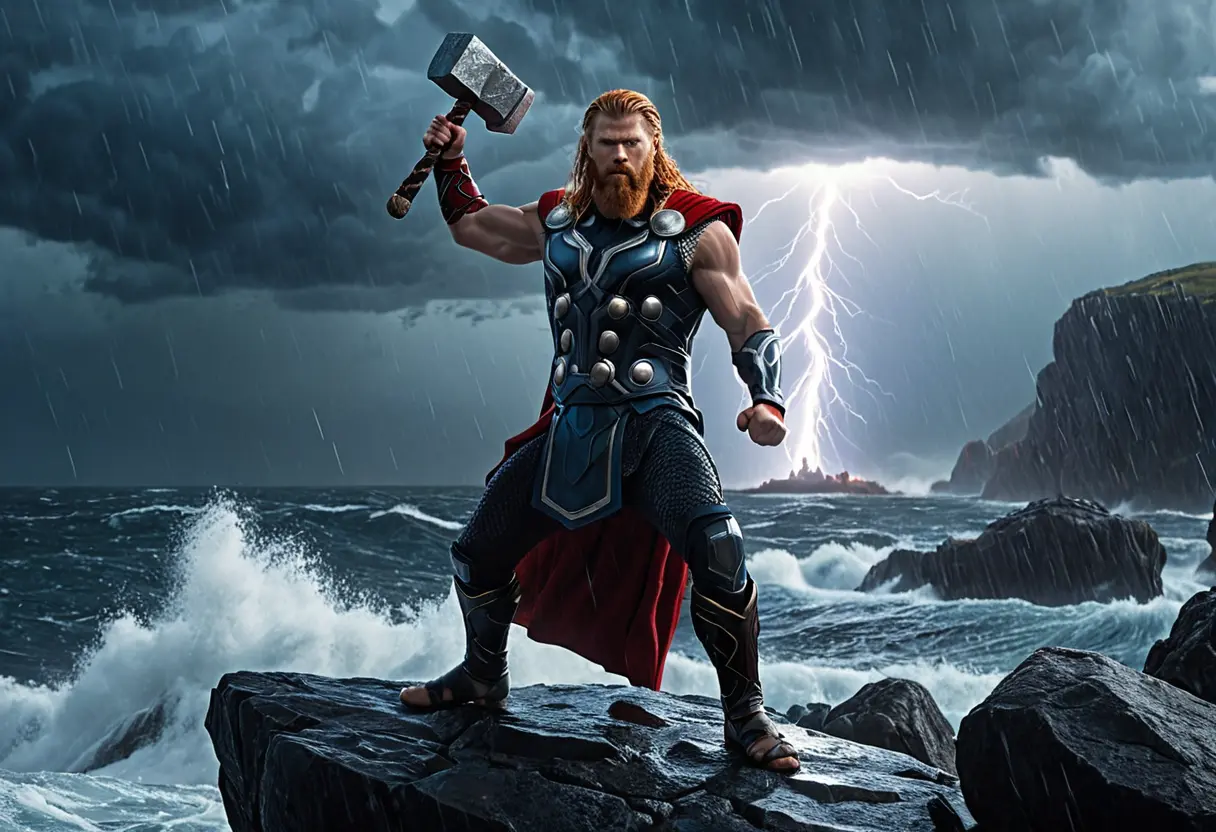
The People’s God: Honest Might
Thor was loved because he was straightforward. He didn’t lie, he didn’t plot, and he didn’t hide his emotions. If he was hungry, he would eat two entire oxen in one sitting. If he was angry, he would level a mountain.
In the harsh climates of Scandinavia, where life was a constant battle against the elements, Thor’s directness was a comfort. He was a god you could understand—a blue-collar deity who performed the “heavy lifting” of the cosmos to keep the world turning.
The Trinity of Power: The Relics of the Thunder God
Thor’s legendary strength was multiplied by three magical artifacts, forged by the dwarves at the behest of Loki:
Mjölnir (The Crusher) : A hammer that never misses its target and always returns to the hand. Its strikes are the source of lightning, and it has the power to bless as well as destroy.
Megingjörð (The Power Belt) : A simple belt that, when fastened, doubles Thor’s already immense god-like strength.
Járngreipr (The Iron Gauntlets) : Necessary to handle the white-hot handle of Mjölnir and to grip the weapon with crushing force.
With these three tools, Thor was essentially a one-man army, keeping the giant legions at bay for eons.
The Eternal Rivalry: The Fisher of the World Serpent
The defining legend of Thor’s life is his struggle with Jörmungandr , the Midgard Serpent. Loki’s child was cast into the ocean, where it grew so large it bit its own tail, encircling the entire world.
Thor once went on a fishing trip and used the head of a giant’s ox as bait to hook the serpent. He dragged the monstrous head above the waves, and as he raised Mjölnir to deliver the killing blow, his terrified companion cut the line, allowing Jörmungandr to sink back into the depths. This unresolved tension is the “high-resolution” centerpiece of Norse mythology, a conflict that could only be resolved in the final moments of existence.
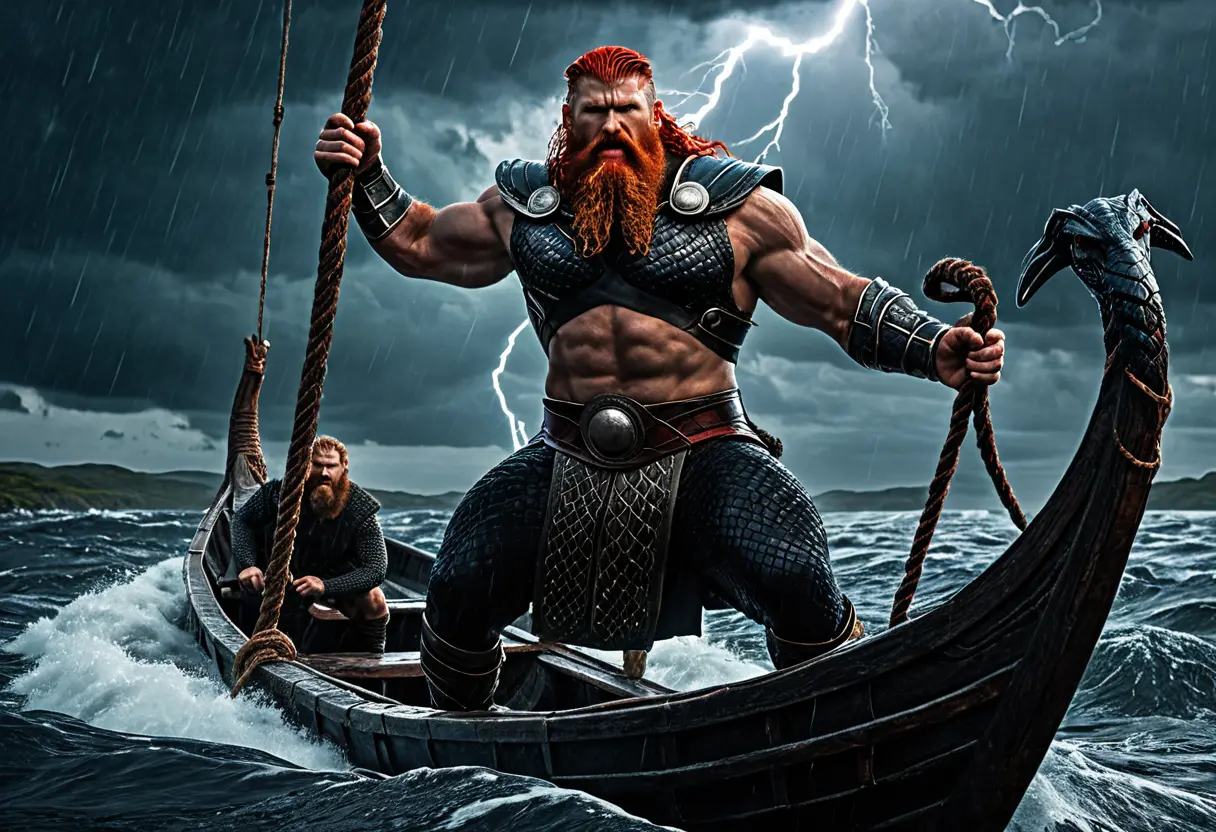
Legacy: From Thursday to Hollywood *Thursday : The day of the week is named after him (Thor’s Day), a translation of the Latin Day of Jupiter (the Roman thunder god). *The Hero vs. The God : Modern pop culture has turned Thor into a blonde, noble prince. However, the original myths describe a man with a wild red beard, a fierce temper, and a hearty appetite for ale and meat. He was less of a refined knight and more of a “holy brawler”—a wild, untamed protector of the common man.
Thor reminds us that while wisdom (Odin) and change (Loki) are necessary, the world survives on the back of those willing to stand their ground and fight for what is right.