Norse Mythology: The Epic of Ice, Fire, and Inevitable Twilight

Beyond the frozen fjords of the ancient North lies a world of profound wisdom, violent courage, and an acceptance of the end. Unlike many other belief systems, Norse Mythology does not offer the comfort of eternal peace. Instead, it presents a reality where even the gods are mortal, and the measure of a hero is how they face a destiny they cannot change.

In this sub-category, we archive the data points of the Aesir and the Vanir , the giants of the frost, and the intricate web of the Nine Worlds.


1. The Pantheon of the Obssessed and the Strong

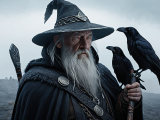
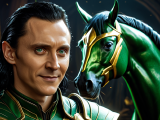
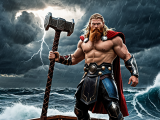
The gods of the North are far from perfect. They are reflections of human struggle, elevated to a cosmic scale. *Odin: The All-Father : The supreme deity who traded his eye for wisdom and sacrificed himself to himself. He is the cold strategist who prepares for a war he knows he will lose. *Thor: The Shield of Midgard : The red-bearded, hot-tempered protector of commoners. Armed with his hammer Mjölnir, he is the only one strong enough to hold back the tide of chaos. *Loki: The Architect of Chaos : Neither fully god nor fully giant, Loki is the catalyst of every great myth. He is the jester who gives the gods their tools and the traitor who brings their end.


2. The Final Performance: Ragnarök

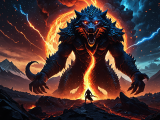
The defining feature of Northern thought is the prophecy of the end. Ragnarök is not just a battle; it is the “High-Resolution” reset of the universe. It is the moment where every choice made by Odin, every trick played by Loki, and every blow struck by Thor reaches its inevitable climax.

We explore the duels of the gods, the burning of the World Tree, and the surprising seeds of rebirth that emerge from the ashes of the old world.


Analysis: The Philosophy of the Shield-Wall

Norse Mythology teaches us Amor Fati —the love of one’s fate. In a world where gravity is absolute and entropy is king, the Vikings looked at the oncoming storm and decided to fight anyway. This spirit of “defiant hope” continues to influence modern storytelling, from The Lord of the Rings to contemporary superhero narratives.

The Northern Archive Odin: The One-Eyed Seeker of TruthLoki: The Trickster of the Nine WorldsThor: The Thunderer and the Common ManRagnarök: The Twilight and the Rebirth Sharpen your axe and steady your spirit. The twilight is coming, and there is much to learn before the fire falls.

Thor: The Thunderer and the Red-Bearded Shield of Midgard

The People’s God: Honest Might Thor was loved because he was straightforward. He didn’t lie, he didn’t plot, and he didn’t hide his emotions. If he was hungry, he would eat two entire oxen in one sitting. If he was angry, he would level a mountain. In the harsh climates of Scandinavia, where life was a constant battle against the elements, Thor’s directness was a comfort. He was a god you could understand—a blue-collar deity who performed the “heavy lifting” of the cosmos to keep the world turning.

Ragnarök: The Twilight of the Gods and the Epilogue of Existence

The Prelude: The Decay of Order Ragnarök is not a sudden explosion; it is the culmination of a long moral and physical entropy. Fimbulwinter : A terrifying winter that lasts for three consecutive years without a single summer. Frost and famine grip the world, and hope begins to freeze. The Collapse of Kinship : As survival becomes impossible, human morality disintegrates. Brothers kill brothers, and children turn against their parents.

Odin: The One-Eyed All-Father, Seeker of Forbidden Wisdom

The Price of Wisdom: A Self-Sacrifice to Himself Odin’s power is not a divine gift; it is the result of brutal transactions. He realized early on that to survive the coming twilight of the gods, he needed wisdom beyond the limits of immortality. *The Mimir’s Well : To drink from the Well of Wisdom, Odin removed his own right eye and cast it into the depths as an eternal payment.

Loki: The Architect of Chaos and the Fatal Trickster

The Catalyst of Change: A Moral Gray Zone Loki lacks the martial honor of Thor or the profound magic of Odin. His weapon is the silver tongue and the ability to weave through any conflict. He is responsible for the gods’ most iconic artifacts: Thor’s hammer Mjölnir, Odin’s spear Gungnir, and the ship Skíðblaðnir. However, in almost every case, these treasures were obtained only because Loki had first gotten the gods into a disastrous situation through his own reckless pranks.