The Trimurti: The Cosmic Engine of Creation, Preservation, and Absolute Destruction
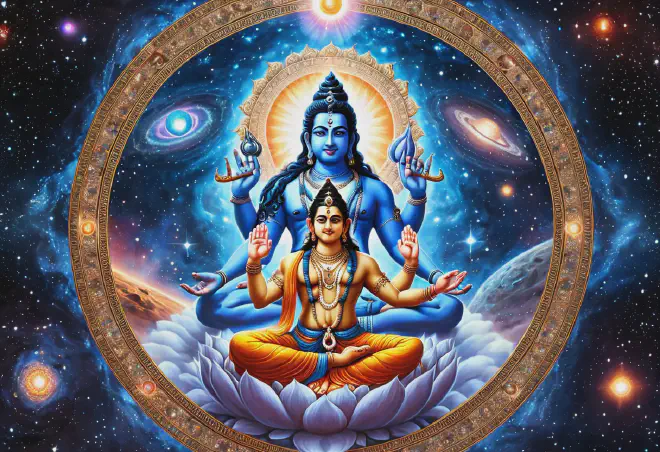
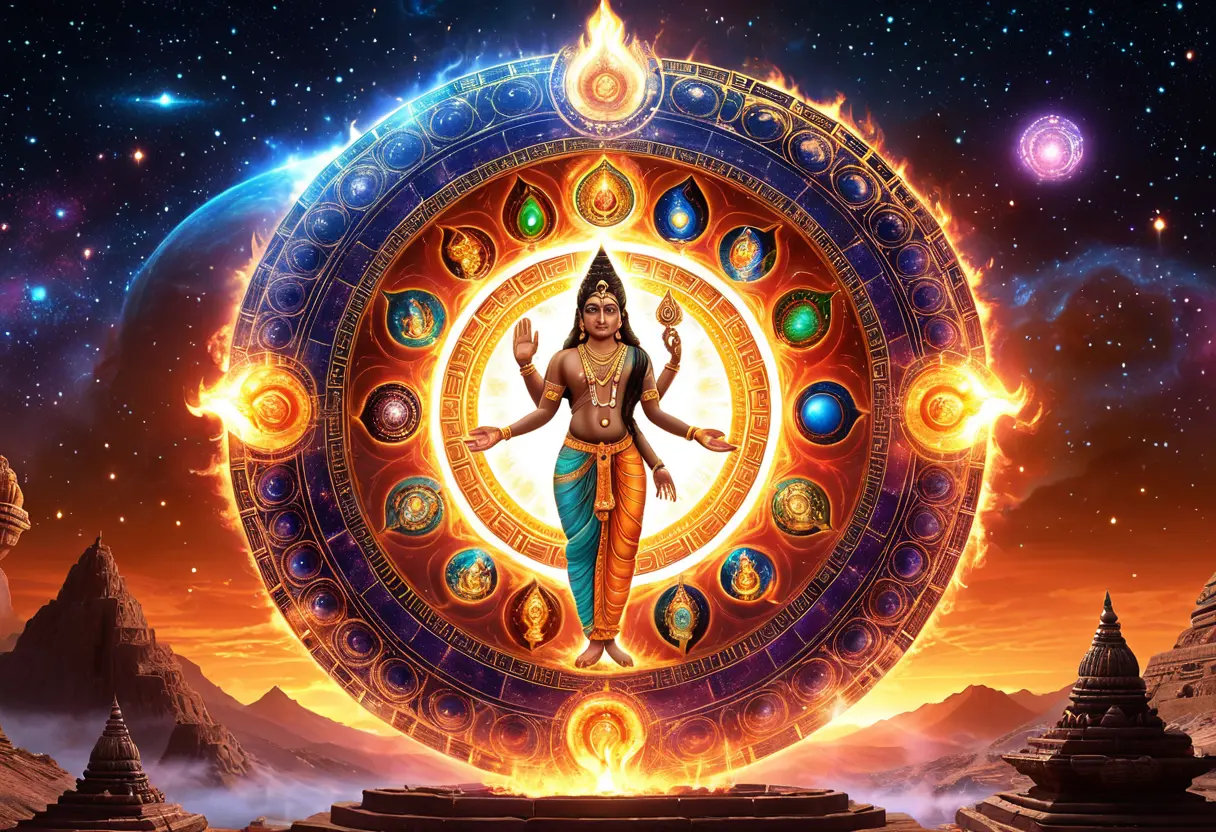
Brahma: The Architect and the Silence of Completion Brahma is the creator, the four-faced god who spoke the Vedas into existence and manifested the physical universe from the void. Each of his heads continuously recites one of the four sacred texts, maintaining the blueprint of reality.
However, Brahma occupies a unique and somewhat tragic place in Indian worship. Unlike Vishnu and Shiva, who have millions of devotees, only a handful of temples in India are dedicated to him. Mythologically, this is often explained through his obsession with his own creations or a curse from Shiva. Philosophically, it suggests a profound truth: Creation is a stage that has already been exhausted. Once the house is built, the architect’s role ends; the focus shifts to those who live within it and those who will eventually tear it down to build anew.
Vishnu: The Sovereign of Balance and the Avataric Shield Vishnu is the Preserver—the deity tasked with the maintenance of Dharma (cosmic law and duty). He is the Blue King who rests upon the thousand-headed serpent Shesha, floating in the causal ocean of existence.
To protect the world from slipping into premature chaos, Vishnu utilizes the mechanism of the Avatar (Incarnation) . When evil threatens to overwhelm the world, Vishnu descends in a physical form to restore balance. *Rama : The ideal king who exemplified absolute duty. *Krishna : The divine master of love and wisdom on the battlefield. *Kalki : The final savior, foretold to appear on a white horse at the end of the current age to cleanse the world of corruption.
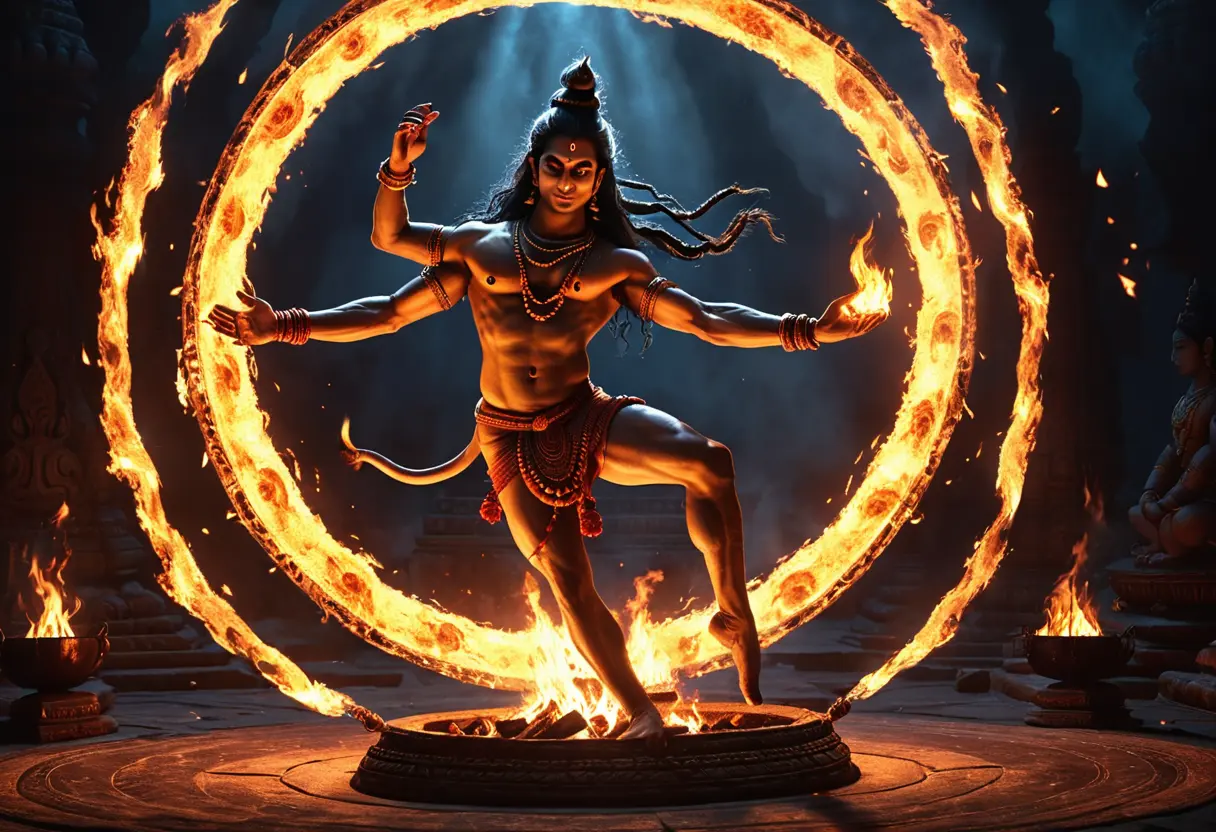
Shiva: The Destroyer as the Ultimate Liberator Shiva is the Mahadeva—the Great God of Absolute Destruction. To the Western eye, “Destroyer” often sounds villainous, but in the Indian worldview, Shiva is one of the most beloved and compassionate gods.
His destruction is not an act of malice, but an act of Pralaya (Dissolution) —a necessary pruning of a decayed universe to make room for a fresh cycle of creation. As the Nataraja (Lord of the Dance) , Shiva performs the Tandava, a rhythmic dance that vibrates through the atoms of the cosmos. Every star that dies and every cell that perishes is a step in Shiva’s dance. He reminds us that without the end of the old, there can be no beginning for the new.
The Infinite Loop of Samsara
The Trimurti operates on a scale of time called Kalpas —billion-year cycles where the universe is breathed out by Brahma, guarded by Vishnu, and inhaled back by Shiva. This grand rhythm teaches that our individual lives are part of a massive, beautiful, and mathematical harmony. To understand the Trimurti is to accept that change—even the change of death—is simply the Great Breath of the Cosmos continuing its work.