The Mahabharata: The Great Epic of Humanity and the Terrors of Ancient Weaponry
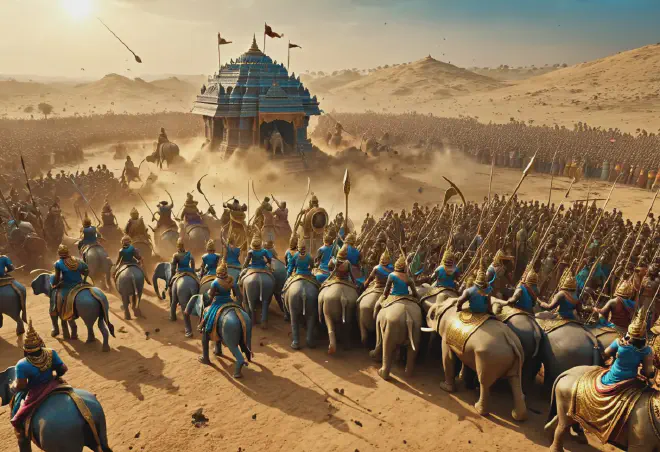
The Kurukshetra Gauntlet: Where Brotherhood Dies
At the heart of the epic is the Kurukshetra War , an 18-day conflict that wiped out almost every royal lineage in India. Unlike wars against external “others,” this was a war against one’s own teachers, grandfathers, and cousins.
The epic refuses to paint a Disney-esque picture of good versus evil. The “good” Pandavas frequently resort to deceit and dishonorable tactics to win, while the “evil” Kauravas possess warriors of immense integrity and nobility. It teaches us that in the “Kali Yuga” (the current age of darkness), even righteousness must get its hands bloody to survive.
The Bhagavad Gita: The Philosophy of the Kill
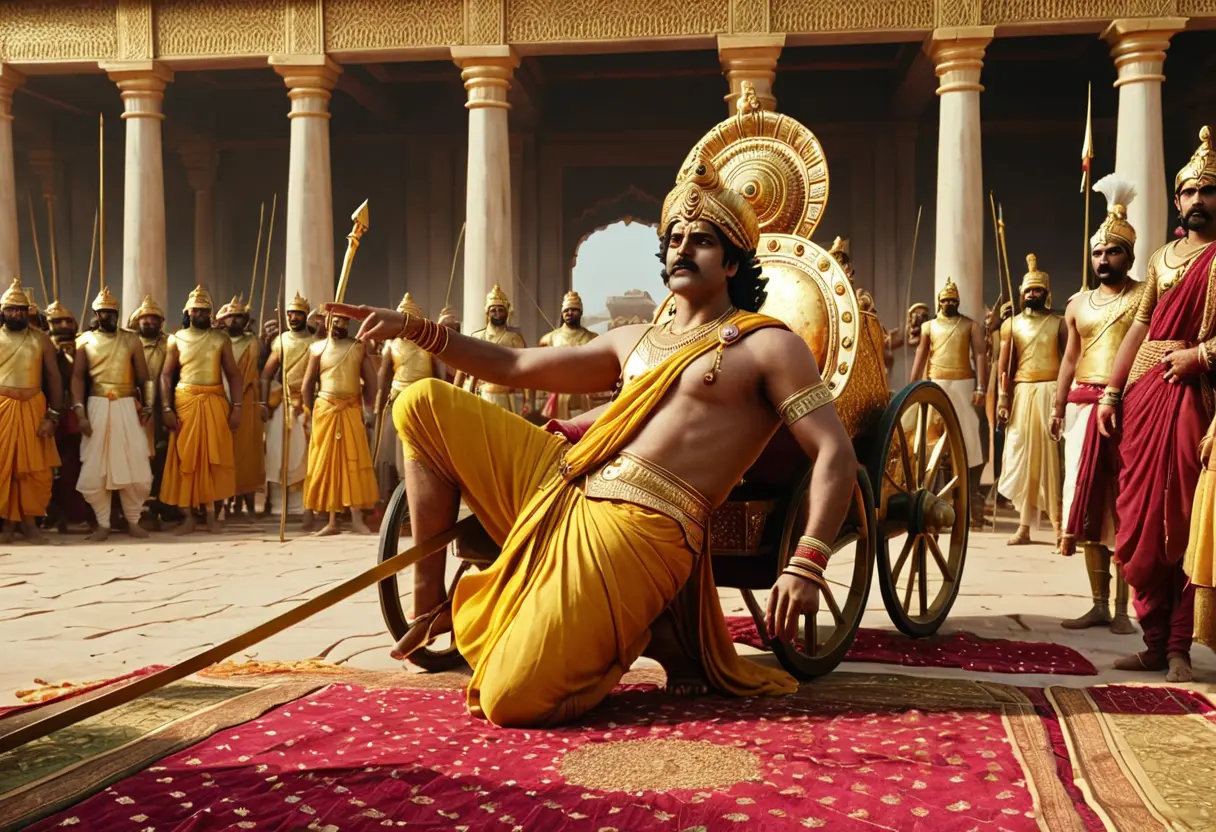
Just before the first arrow is fired, the hero Arjuna collapses in grief. He sees his relatives in the enemy lines and asks: “What is the point of a kingdom built on the corpses of those I love?”
His charioteer, the god-incarnate Krishna , responds with the Bhagavad Gita (The Song of God). Krishna’s message is chillingly stoic: The soul is immortal; it cannot be killed. Therefore, Arjuna must perform his Dharma as a warrior without regard for the outcome. To refuse to fight out of sentiment is a higher sin than to kill out of duty. This philosophical core transforms a war story into a meditation on the heavy burden of existence.
The Brahmastra: Echoes of a Forbidden Technology?
One of the most unsettling aspects of the Mahabharata is its description of the “Astra”—divine weapons that bear a terrifying resemblance to modern mass-destruction technology.
Chief among these is the Brahmastra . The text describes it as:
“A single projectile charged with all the power of the universe.”
“A column of incandescent smoke and flame, bright as ten thousand suns, rose in its all its splendor.”
“It was an unknown weapon, an iron thunderbolt, a gigantic messenger of death, which reduced to ashes the entire race of the Vrishnis and the Andhakas.”
The aftermath is even more specific: The hair and nails of survivors fall out, pottery cracks without cause, birds turn white, and the food becomes poisoned for generations. These descriptions are so similar to the effects of nuclear fallout and thermal radiation that J. Robert Oppenheimer, the father of the atomic bomb, famously quoted the Gita upon看到 testing the first nuke: “Now I am become Death, the destroyer of worlds.”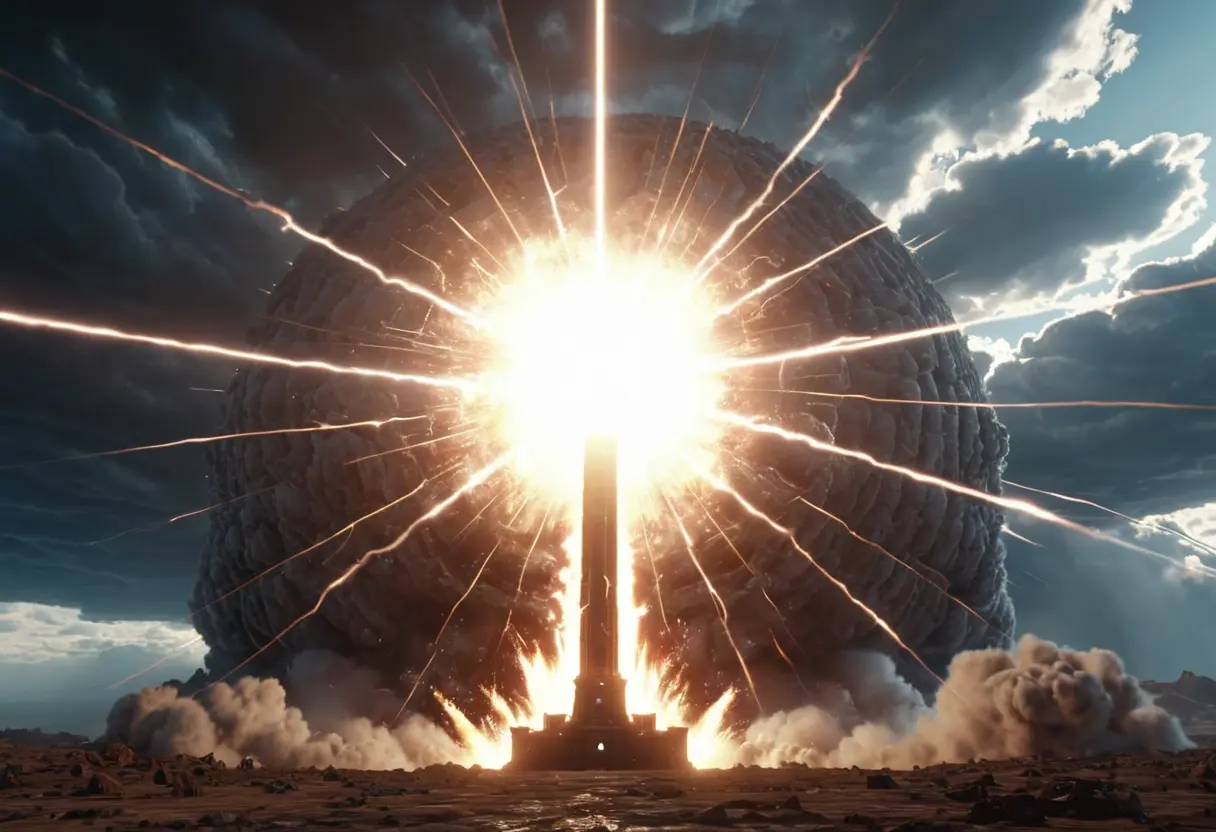
The Sunset of Heroes
The Mahabharata ends not with a celebration, but with a funeral march. The surviving heroes eventually realize the hollowness of their victory and depart for the Himalayas, only to die one by one on the slopes. The epic ultimately asks:In a world where dharma is complex and weapons can erase cities, what remains of a man? The answer lies in the journey, for in the cycle of the universe, even the greatest slaughters are but ripples in the ocean of time.