Pandora’s Pithos: Is Hope the Final Mercy or the Ultimate Trap?
The Masterpiece of Malice: The Creation of Pandora
Pandora was not born; she was engineered. After Prometheus stole fire from Olympus to give to mankind, Zeus did not just punish the thief—he targeted the beneficiaries. He ordered the gods to create a weapon in the shape of a woman: *Hephaestus : Molded her from earth into a “virginal shape.” *Athena : Clothed her in silver and taught her the arts of the domestic sphere. *Aphrodite : Poured “heart-breaking desire” and “wearying anxiety” into her spirit. *Hermes : Infused her with a “shameless mind” and “deceitful nature.”
Her name, Pandora , means “The All-Gifted” (or “All-Giver”). She was the culmination of every divine skill, a perfect vessel for a hidden poison. She was sent to Epimetheus (“Hindsight”), the brother of Prometheus (“Foresight”), as a bride he was too mesmerized to refuse.
The Pithos: A Millennium of Mistranslation
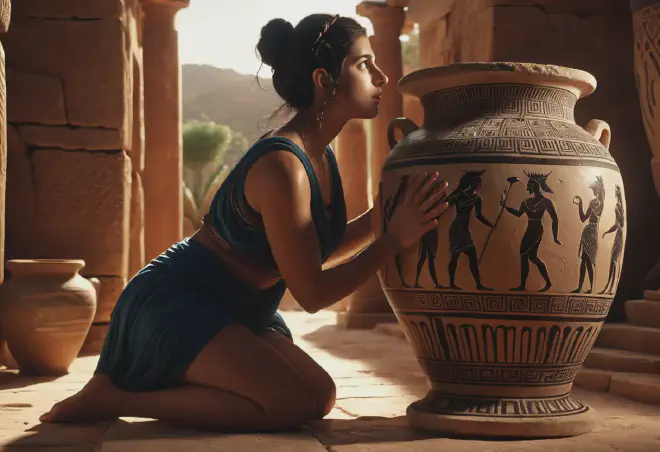
While we call it a “box,” the original text of Hesiod refers to a Pithos —a massive terracotta storage jar often used for wine, oil, or even grain. The change to “box” occurred in the 16th century when the scholar Erasmus of Rotterdam mistranslated the Greek pithosinto the Latinpyxis (a small box).
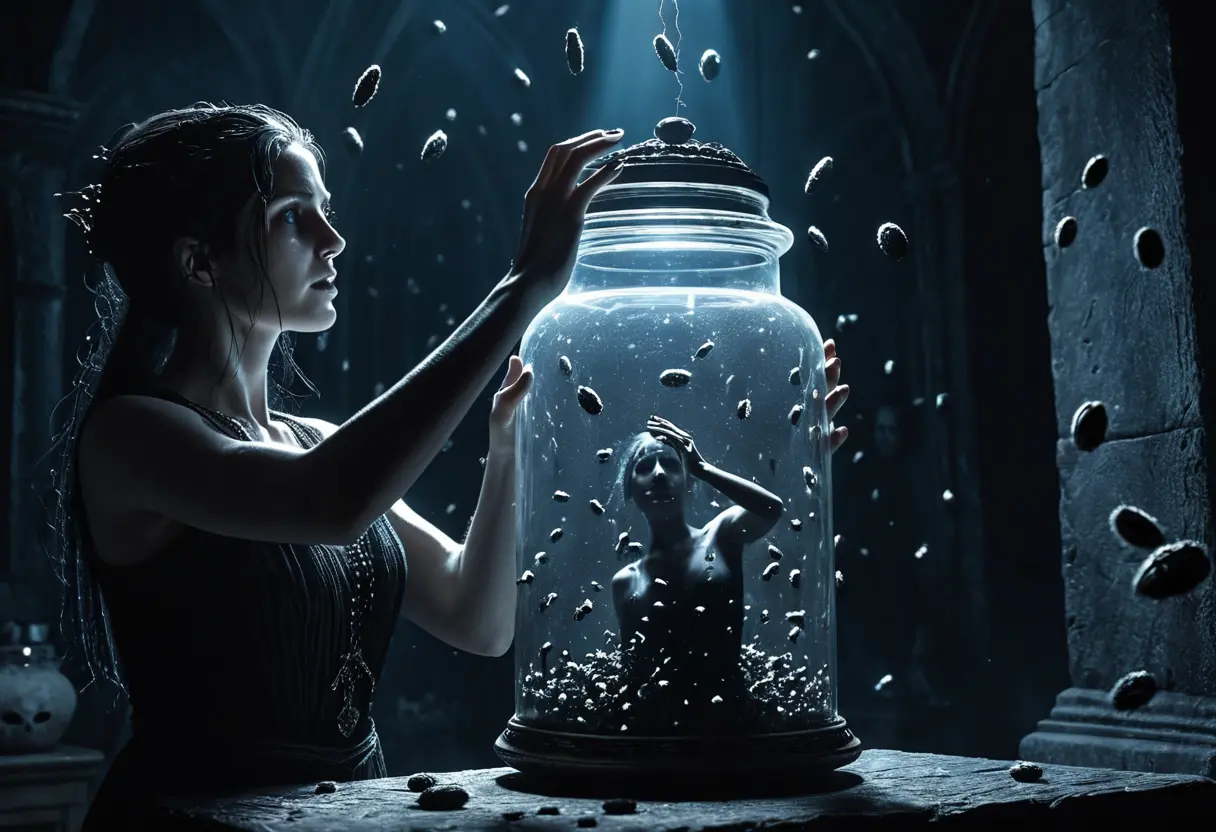
When Pandora, driven by the intense curiosity programmed into her by the gods, unsealed the jar, the “Golden Age” of humanity ended instantly. Out flew Labor, Disease, Insanity, Grief, and Death . Before this moment, humans lived like gods—free from toil and illness. The opening of the jar was the moment of “Mortalization,” ensuring that mankind would forever be weakened and dependent on the gods for mercy.
The Final Dweller: Is Elpis (Hope) a Cure or a Curse?
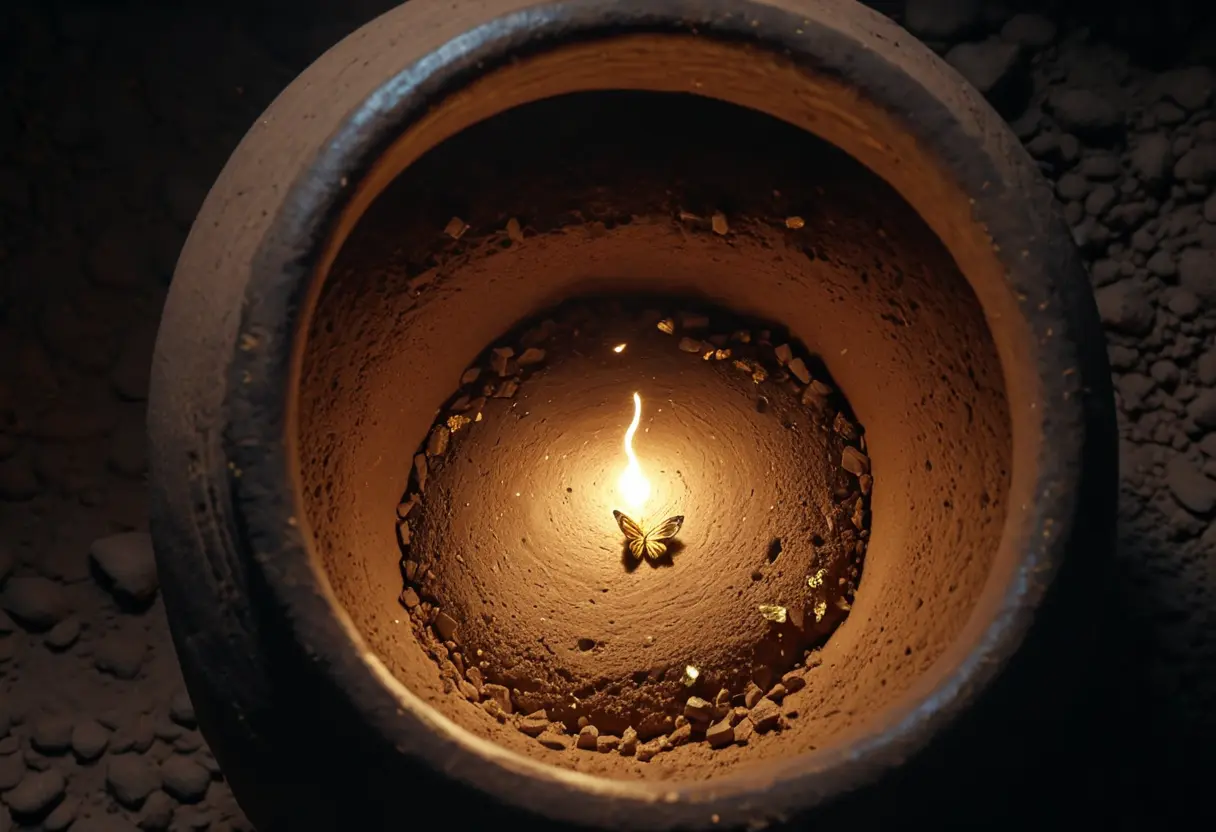
As the shadows escaped, Pandora slammed the lid shut. Only one thing remained caught under the rim: Elpis (Hope) .
For centuries, this has been interpreted as a shred of mercy: “Even in a world of misery, we still have Hope.” But many philosophers, including Nietzsche, have proposed a much darker, “Odinic” interpretation. If the jar was designed by Zeus to contain only evil, why would Hope be inside?
In this darker view, Hope is the deadliest of all the plagues . If humans were to simply face their misery, they might find a way to end it. Instead, Hope (or “False Expectation”) keeps them laboring through their suffering, preventing them from seeking the release of death. It is the “engine of the trap,” ensuring that humanity continues to exist merely to feed the cycle of pain.
The Legacy of the Threshold
Pandora’s story is the myth of the “End of Childhood.” It tells us that knowledge and civilization come at the price of original peace. We live in the world of the open jar—a reality of struggle and shadow. And yet, we still clutch that final spark in the darkness, unable to decide if it is our guide or our jailer.