Hades: The Invisible Manager of the Silent Realm

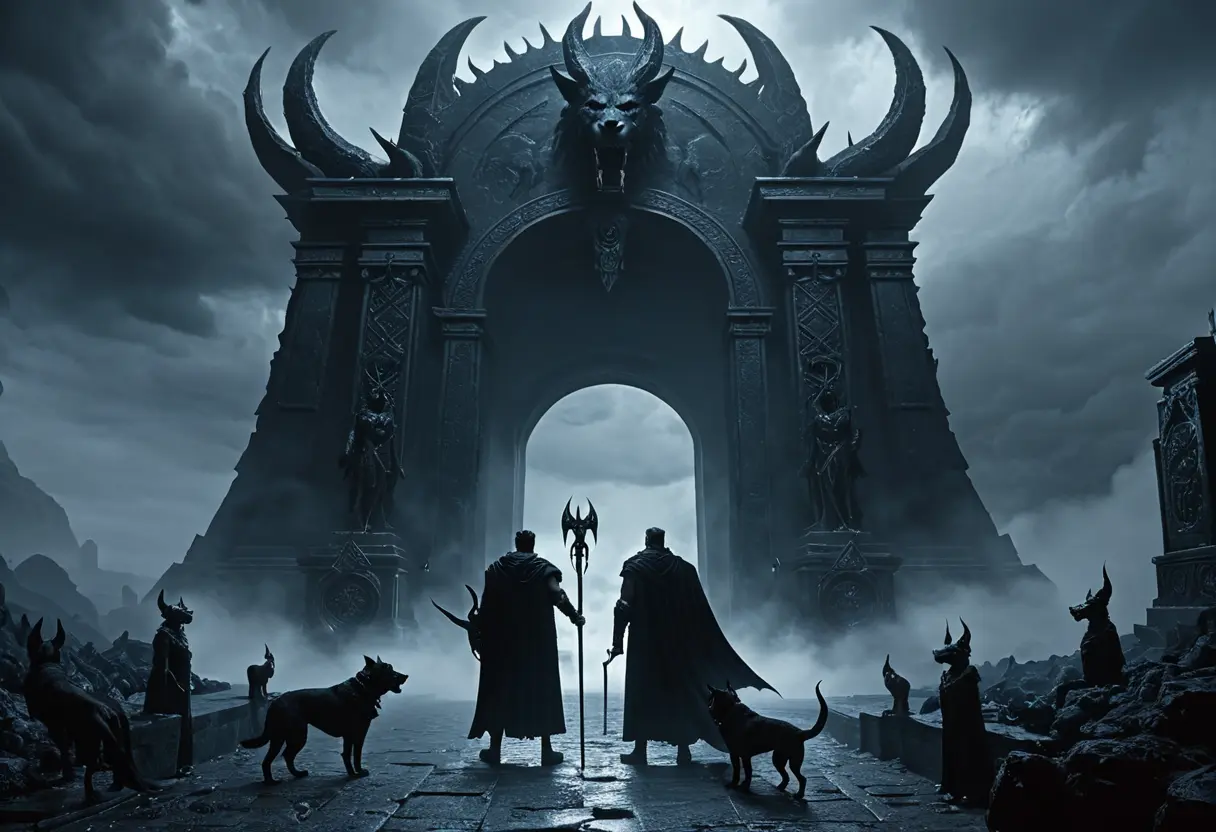
The Bureaucrat of Shadows: A Lot Drawn in Silence
Following the Titanomachy —the great war against the old gods—the three brothers (Zeus, Poseidon, and Hades) drew lots to divide the spheres of the universe. Zeus won the sky, Poseidon the sea, and Hades was left with the underworld.
While Zeus spent his eternity in the drama of Olympus and its countless affairs, Hades descended into the lightless earth and stayed there. He was the ultimate “Invisible Manager.” Unlike his brothers, Hades was neither philandering nor capricious. He was a god of rules. He did not seek to “kill” or “cause suffering”; his job was simply to ensure that once a soul entered his domain, it stayed there—preserving the fundamental boundary between the living and the dead.
He was so dedicated to his post that he rarely ever left the underworld, making him a stranger even to his own kin.
Pluto: The Lord of Subterranean Wealth
The name Hades was so feared by the Greeks that they often avoided speaking it, preferring the title Plouton (from which the Roman Pluto is derived), meaning “The Wealthy One.”
This reflects a profound duality in the Greek worldview: the earth is the place of the grave, but it is also the source of all wealth. All precious metals, jewels, and the fertile potential of seeds emerge from the dark soil that Hades governs. To the ancients, Hades was not just the lord of death, but the custodian of the Earth’s hidden treasures. To die was to be “returned to the source of all wealth.”
The Persephone Incident: The Seasonal Contract
The only major “scandal” in Hades’s quiet reign was the abduction of Persephone, the daughter of Demeter. While often portrayed as a violent kidnapping, ancient sources suggest a “contractual” arrangement: Zeus, Persephone’s father, had secretly given his consent to the marriage.
When Hades brought her to the underworld, it triggered a cosmic crisis. Demeter, in her grief, caused the earth to wither and die. The resolution of this crisis became the foundation of the Greek seasons:
Because Persephone had eaten the seeds of a pomegranate in the underworld, she was bound to it for one-third of the year. When she descends to her husband, her mother Grieves and the world faces “Winter.” When she returns, the world blooms into “Spring.” Through this marriage, the cold manager of death became an accidental architect of the world’s most beautiful cycles.

The Finality of the Gate
Hades possesses a unique weapon: the Helm of Darkness , which makes the wearer completely invisible. It is a terrifying metaphor for death—it is the thing that is always there, moving among us, yet never seen until the moment it claims you.
He is not a god to be loved, but he is a god to be respected. In the roiling, chaotic world of Greek myth, Hades represents the only thing that is truly permanent: the heavy, silent, and dignified peace of the end.