The Book of the Dead: A Survival Guide for the Souls of Duat
Negative Confession: The Legal Defense of the Spirit
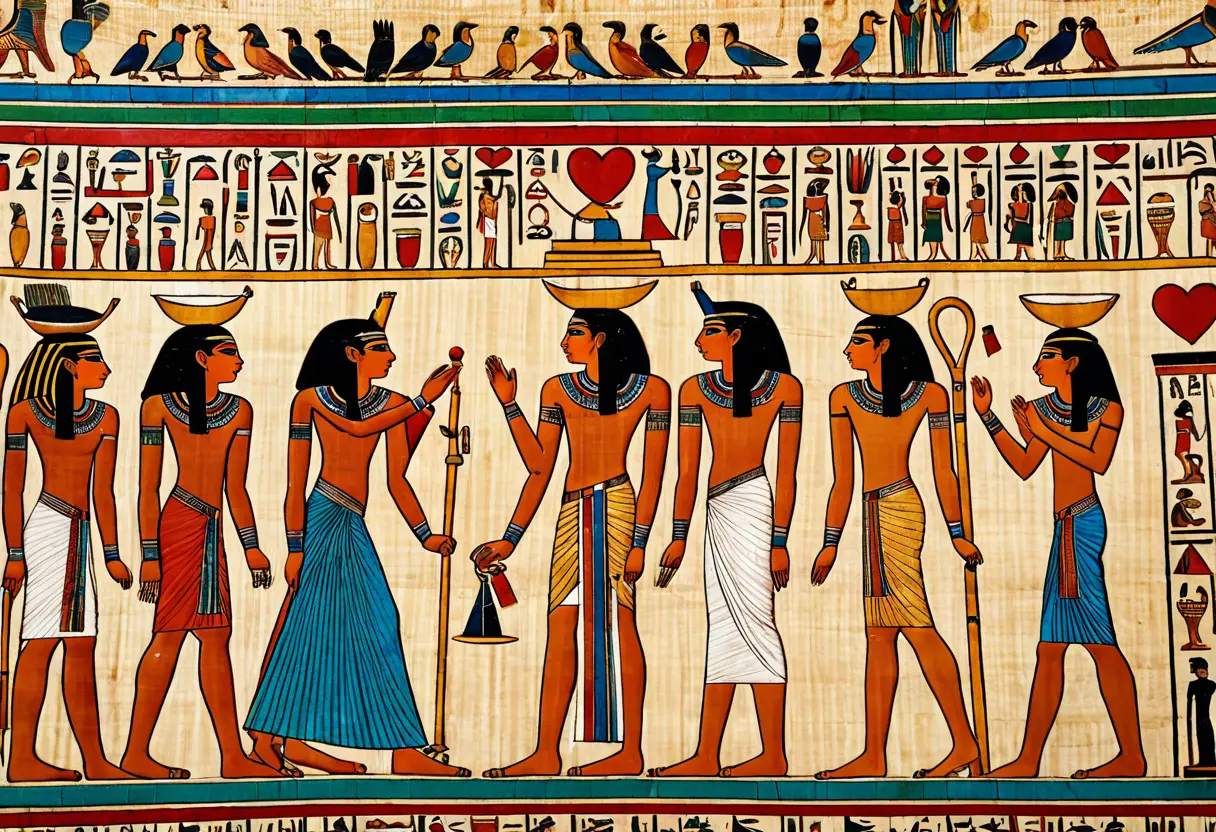
The center-piece of the Book of the Dead is Chapter 125, which details the “Negative Confession.” In the afterlife, a soul must stand before 42 divine judges and declare their innocence of specific crimes.
This was not a humble confession; it was a magical defense . The Egyptians believed in the power of the Maa Kheru (True of Voice)—that declaring a fact with enough ritual intent could make it spiritually true. To help the soul even further, many were buried with a Heart Scarab , a stone amulet carved with a specific spell from the book: “O my heart… do not stand up against me as a witness in the presence of the Keeper of the Balance.” Essentially, the book provided the soul with a divine “lawyer” and a “mute button” for their own guilty conscience.
The Geography of the Duat: Surviving the Gauntlet
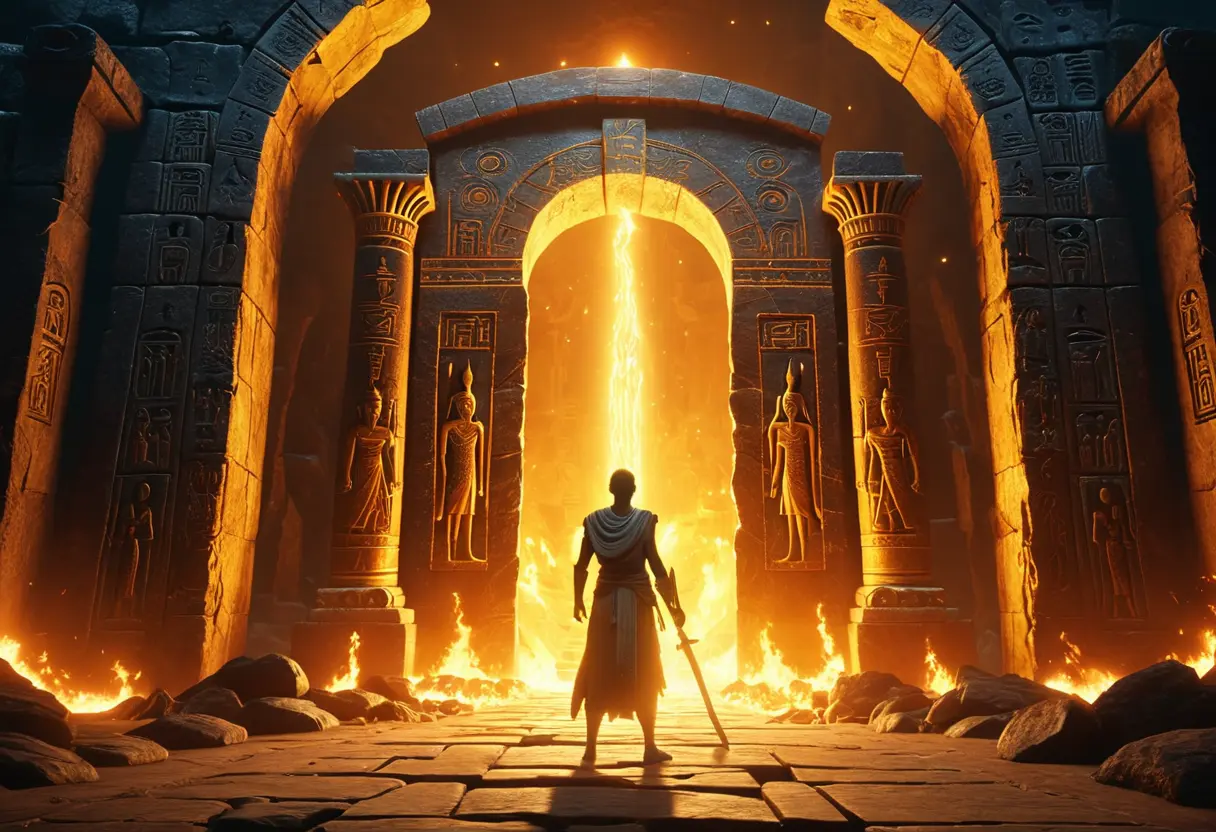
The afterlife was visualized as a dangerous landscape—the Duat —filled with lake-fires, monstrous gatekeepers, and entities that sought to take the soul’s name or head. The Book of the Dead provided the specific “True Names” of these monsters. By knowing a spirit’s name, the traveler gained absolute dominion over it, forcing the gates to open and the monsters to bow.
Other chapters included spells for: *Transformation : Turning oneself into a golden hawk, a lotus flower, or a divine serpent to bypass physical obstacles. *Preventing Decay : Ensuring the soul would always have access to its lungs for breath and its mouth for eating in the next life. *The Ferryman’s Quiz : Providing the secret names of the parts of the boat to convince the underworld ferryman to allow passage across the celestial river.
A Bespoke Journey: The Papyri of the Elite
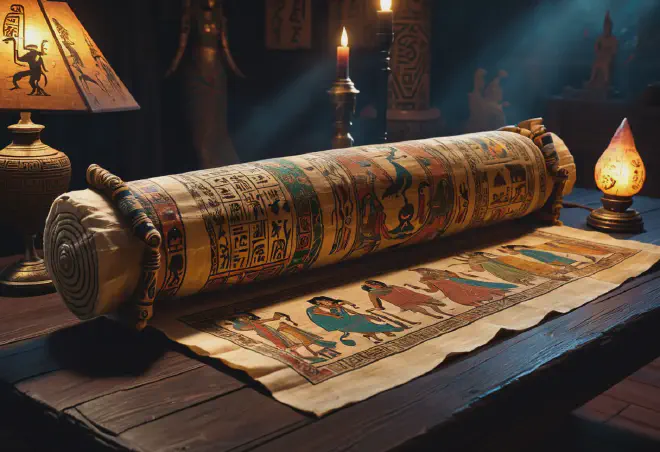
There was no single, authoritative “Bible” of the Dead. Instead, the book was a series of interchangeable modules. Wealthy Egyptians would commission beautiful, tailor-made papyrus scrolls from temple scribes, filled with vibrant illustrations and specifically choosing the spells they felt most relevant to their life and fears. These scrolls were then tucked into the mummy’s coffin or inside a hollowed-out statue of the god Ptah-Sokar-Osiris. It was the ultimate “insurance policy” for the ego.
The Legacy of the Spells
The Book of the Dead reminds us that for the Egyptians, the afterlife was not a matter of pure luck or even pure virtue. It was a matter of Knowledge . It reflects a culture that believed the universe followed strict rules, and that even the finality of death could be negotiated if one only knew the right words to say in the dark.