Quetzalcoatl: The Feathered Serpent and the Tragedy of the White God
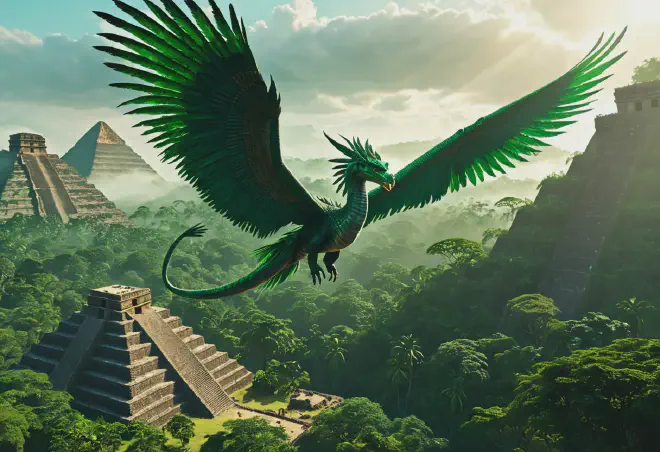
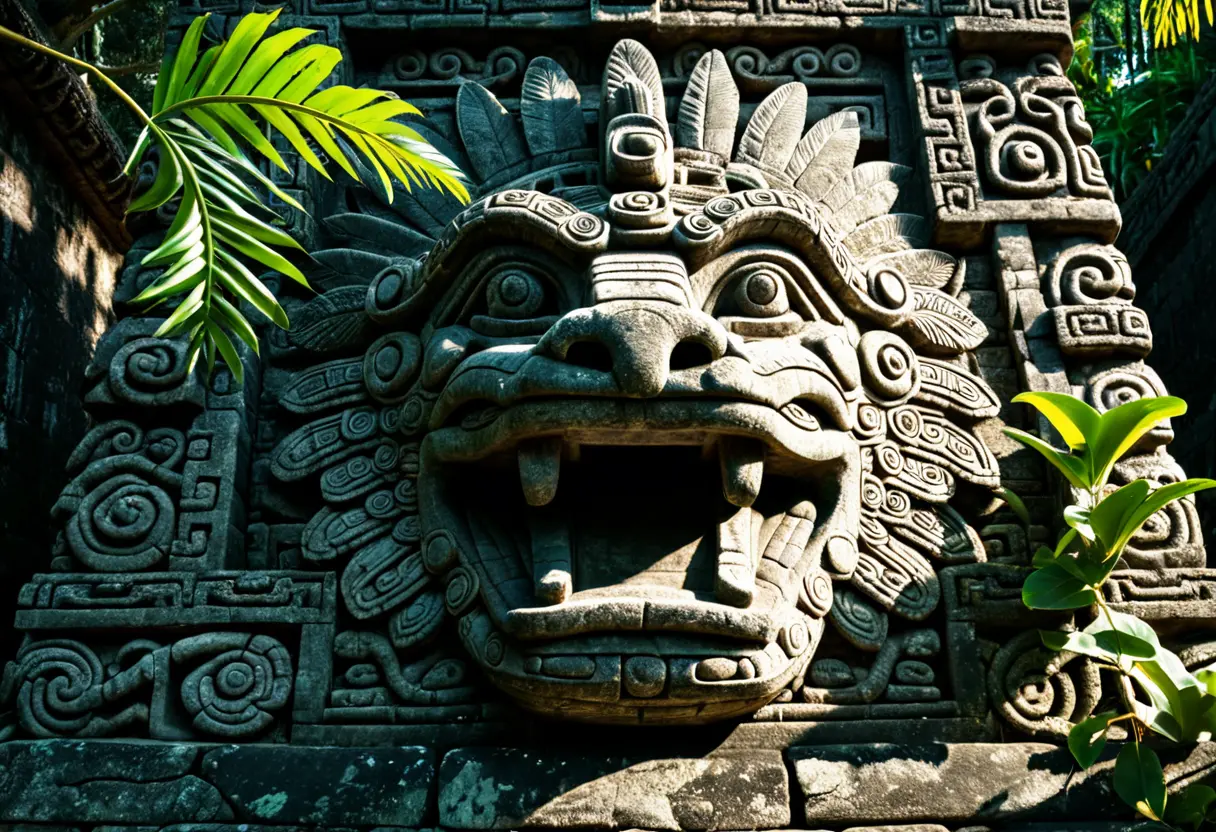
The Pacifist Sovereign: A God Who Refused Blood
Quetzalcoatl was a culture hero—the god of wind, Venus, agriculture, and the arts. While other Aztec deities demanded the constant “nourishment” of human hearts and blood (human sacrifice), Quetzalcoatl was an anomaly.
Legend tells of a time when he ruled the mythical city of Tula as the priest-king Topiltzin Quetzalcoatl. Under his reign, it was said that cotton grew naturally in multiple colors and ears of corn were as large as men. Most significantly, he prohibited human sacrifice, teaching his people to offer only flowers, butterflies, and incense. This Golden Age represented a high point of Mesoamerican civilization—a vision of a world ruled by intellect and compassion rather than terror.
The Fall: The Trap of the Smoking Mirror
Peace, however, was a fragile state in the Aztec cosmos. His eternal rival, Tezcatlipoca (God of Night and Destruction), sought to corrupt the saintly king.
Using a “Smoking Mirror” made of obsidian, Tezcatlipoca showed Quetzalcoatl his own reflection. For the first time, the god saw his own aging and “ugliness,” driving him into a spiral of despair. Under the influence of a magical intoxicant (Pulque), Quetzalcoatl committed a grave sin, breaking his vows of celibacy with his own sister.
Crushed by shame, he departed his kingdom. Some say he cast himself into a funeral pyre to become the morning star (Venus); others say he sailed away on a raft made of serpents toward the East. Before vanishing over the horizon, he left a chillingly precise prophecy: He would return to reclaim his throne in the year “One Reed” (Ce Acatl) .
The Fatal Coincidence: The Arrival of Cortes
This ancient prophecy turned from myth to a weapon of mass destruction in 1519. In the Aztec calendar, this was the Year One Reed .
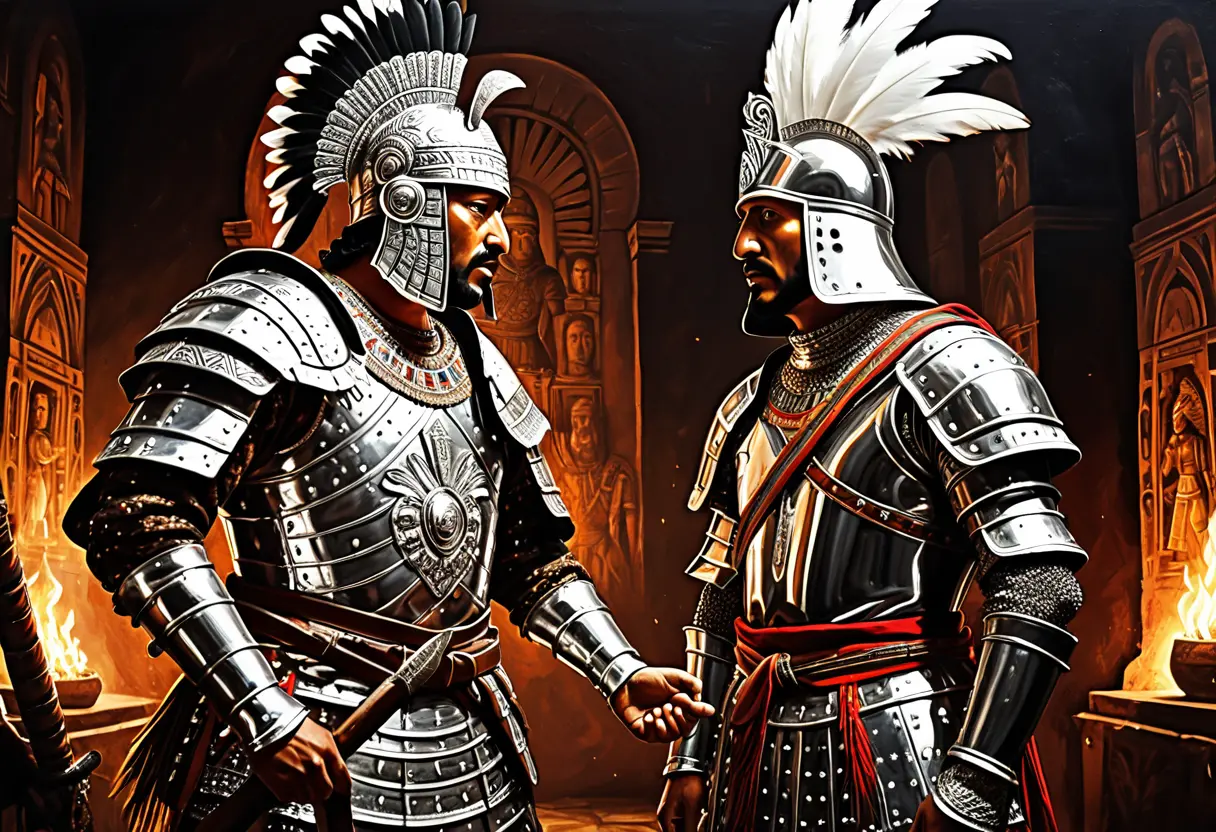
When the Spanish conquistador Hernán Cortés landed on the coast of Mexico, the coincidences were devastatingly perfect: *The Appearance : Cortés possessed white skin and a thick beard—features that matched the legendary description of the exiled god. *The Direction : He arrived from the East, exactly as the prophecy foretold. *The Timing : He landed in the exact year predicted for the god’s return.
The Emperor Moctezuma II , paralyzed by the fear that he was opposing a returning god, welcomed the invaders with gold and hospitality instead of spears. This theological hesitation allowed a few hundred Spaniards to dismantle an empire of millions. The very nobility of Quetzalcoatl’s myth became the Trojan Horse that led to the total collapse of Aztec civilization.
The Eternal Winged Serpent
Today, Quetzalcoatl remains the soul of Mexico—a symbol of indigenous pride and ancient wisdom. While his prophecy inadvertently destroyed an empire, his legend ensures that the memory of a civilization that dreamed of “peace without blood” survives the passage of centuries. He is the reminder that in history, even the most beautiful stories can cast the darkest shadows.