The Man Under the Bed: Breach of the Private Sanctuary
1. The Anatomy of a Breach: Two Protocols of Terror
The Japanese iterations of this legend typically follow one of two distinct “scripts,” each targeting a different layer of human fear.
Protocol A: The Silent Warning (The “Don’t Look” Logic)
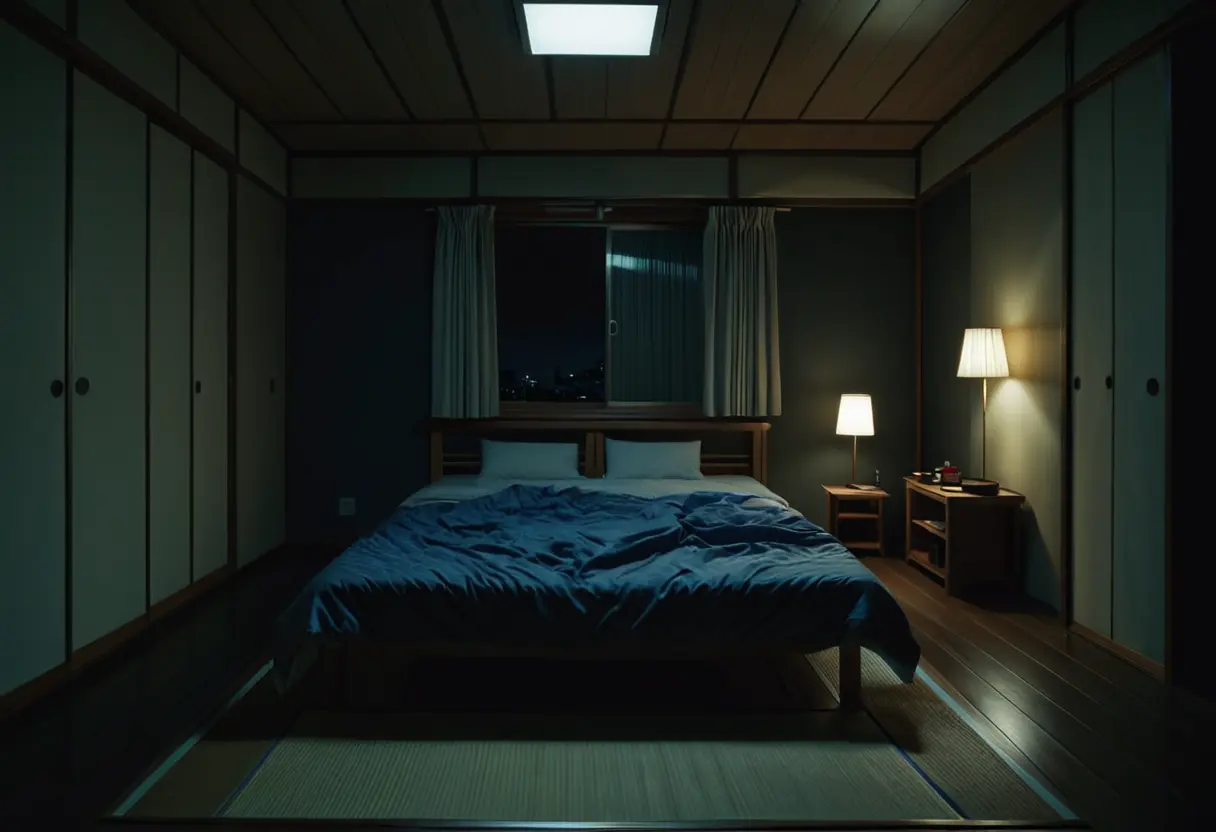
A friend visits for an overnight stay. Suddenly, with an eerie persistence, they insist on leaving the apartment immediately to go to a convenience store. Only once they are outside, in the “public sector,” do they reveal the truth:
“There was a man with a knife under your bed. I knew if I reacted, we’d both be dead.”
The horror here lies in the Extreme Proxy Tension . It is the terror of existing within a killer’s line of sight while maintaining the “UI of normalcy” to engineer an escape.
Protocol B: The Retrospective Chill (The “Co-existence” Logic)
A person returns home briefly, forgets to turn on the light, and finishes their task in the dark before leaving again. Later, they discover a crime has occurred or find a message left behind: “You’re lucky you didn’t turn on the light.” This is Retrospective Horror . It forces the victim to re-process several minutes of “safety” as a period of active co-existence with a murderer. The survival wasn’t a choice; it was a glitch in the killer’s execution chain.
2. Cross-Cultural Vulnerability: The Backseat vs. The Bed
This legend shares a structural DNA with the Western classic **“The Killer in the Backseat.”***Mapping the Blind Spot : In the car-centric West, the “Backseat” is the primary blind spot. In Japan’s dense urban housing, the “Space Under the Bed” (or the closet) is the chosen vector of intrusion. *The Warning Vector : Western versions often involve an external observer (a gas station attendant or high beams), whereas Japanese versions favor the “Friend” or “Family Member”—an intrusion into the inner circle of trust.
Both versions tap into the same root anxiety: the realization that your personal “Sanctuary” has been compromised by a foreign entity. ## 3. The Runtime Error: When Fiction Becomes Documentation
Why does “The Man Under the Bed” remain so persistent? Because it isn’t an “impossible” occurrence; it is a documented risk. From stalkers hiding in closets for weeks to “roof-dwellers” living in attics unnoticed, real-life incidents act as a constant “patch update” for this urban legend. It transforms the story from a ghost tale into a Survival Protocol .
Conclusion: Checking the Blind Spots
The impulse to check under the bed or behind the closet door before sleep is a primal “Security Scan.” In our modern, high-tech society, where we protect our digital data with encrypted layers, we are still haunted by the most analog threat of all: the physical presence of another human in our private darkness.
When you look under the bed tonight, are you looking for dust bunnies, or are you making sure there are no “unregistered users” in your sanctuary?
*Mary-san’s Phone : The erosion of the final defensive line. *The Anatomy of a Stalker : Why humans attempt to overwrite the sanctuaries of others. *Digital Privacy vs. Physical Sanctuary : The vulnerability of the modern individual.