Kokkuri-san: The Fox Oracle - The Dangerous Gateway to the Beyond

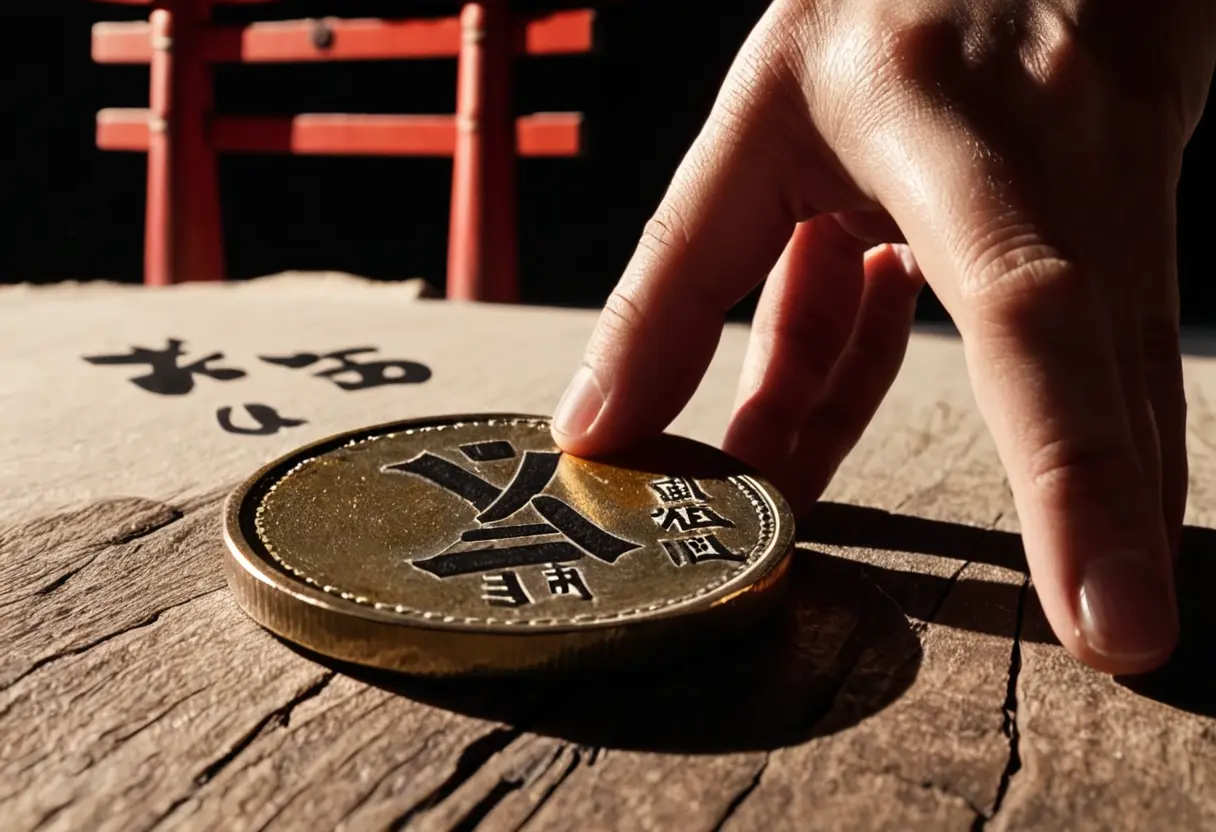
In the landscape of Japanese school lore, no “game” is as pervasive or as genuinely disruptive as Kokkuri-san . In the silence of an after-school classroom, several students place their fingers on a single 10-yen coin, which then begins to slide across a paper as if possessed by a will of its own. It is a biological user interface designed to bridge the gap between human subconsciousness and the unseen “Other.”
1. Origins: The “Table Turning” that Drifted Ashore
While the name “Kokkuri” evokes images of ancient Japanese tradition, the ritual actually has its roots in Western Spiritualism—specifically “Table Turning.” In 1884 (Meiji 17), American sailors who drifted ashore at Shimoda in Izu are said to have introduced the practice to locals. Initially, it involved balancing a pot on a tripod of bamboo sticks and interpreting its “tilts.” Over time, this evolved into the modern, simplified “paper and coin” style. The name “Kokkuri” was eventually written with characters for Fox (Kitsune), Dog (Dogu), and Raccoon Dog (Tanuki)—low-level animal spirits believed to be the ones actually answering the call.
2. Forbidden Protocols: Why You Must “Never Let Go”
The primary reason Kokkuri-san is feared is the belief that it summons “Low-level Animal Spirits.” These entities are said to be fickle, spiteful, and prone to possessing the practitioners, leading to mental breakdowns. Consequently, the ritual is governed by strict taboos:
The Rule of Contact : Once the ritual begins, you must never lift your finger from the coin. To do so is to “release the spirit and offer your own body as its vessel.”
The Prayer for Return : You must always ask the spirit to leave (O-kaeri kudasai) at the end. The ritual cannot conclude until the coin moves to “Yes” (or the Torii gate). If the spirit refuses, that is when the true horror begins.
The Protocol of Cleansing : The paper used must be torn into small pieces within a few days or burnt at a shrine. The 10-yen coin must be spent immediately to “distance the curse” from oneself.
3. Science vs. The Subconscious: The Ideomotor Effect
Scientifically, the phenomenon of the moving coin is explained by the “Ideomotor Effect.” When participants hold a strong expectation or intense fear that the coin should move, their brains trigger microscopic muscle contractions without their conscious awareness. When multiple people’s fingers overlap, these tiny vectors of force combine and amplify, generating enough physical energy to drive the coin across the paper. It is a Collective Debugging of the Mind , where shared fear manifests as physical motion.
However, just because the phenomenon is scientifically explicable does not mean the “terror” it induces is anything but real.
4. The Panic of 1974: Why Schools “Banned” It
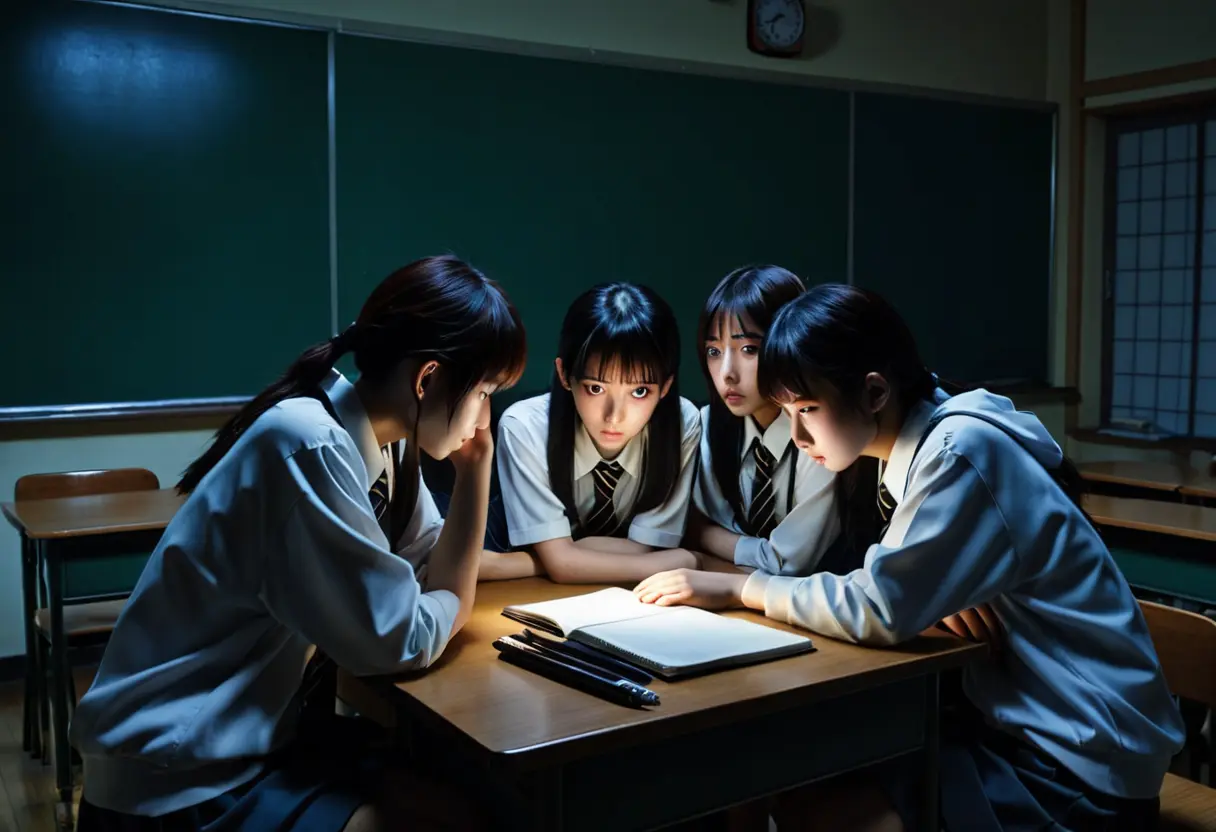
In the 1970s, coinciding with a massive occult boom in Japanese media, Kokkuri-san became an epidemic in elementary and junior high schools.
In 1974, reports of mass hysteria surfaced across the country: students who performed the ritual were fainting, suffering from convulsions, or even “barking like foxes.” The Ministry of Education and various school boards issued unprecedented “Kokkuri-san Bans.” To this day, the name survives in many school rulebooks as a forbidden practice, a remnant of a decade when the lines between the classroom and the void became dangerously thin.
Reflection: The Fox in the Machine
Kokkuri-san exploits our deepest fears of the “unaccountable” and the “collective unconscious.”
Is the 10-yen coin beneath your fingertip moving solely through physical laws? Or is the “Fox” nesting in your subconscious using the cold metal to hijack your will? In the silence after school, only the warmth of your fingertips remains at the border between our reality and the “Beyond.”
Hitori Kakurenbo (One-Man Hide and Seek) : A more aggressive, solitary form of modern invocation.
Charlie Charlie Challenge : The viral, global “modern version” of Kokkuri-san using pencils.
Mary-san’s Phone: The Stalking Past : When connection itself becomes a conduit for a curse.