The Anatomy of Urban Legends: Modern Myths in a Digital Age

What comes to mind when you hear the term “Urban Legend”?
Perhaps it is the Mouth-Split Woman , the whispers of the Hanako in the school toilet, or grand conspiracies involving global corporations. Dictionary definitions might call it “uncorroborated stories circulating in an urban environment.” But an urban legend is far more than a simple lie or a hoax. It is a highly resilient “Modern Myth” that has sprouted in the cracks of our systematized society.
Why are we so drawn to these stories of uncertain origin? Let’s dissect the architecture of these legends and the deep-seated human psychology that keeps them alive.
1. The Magic of FOAF: The Authority of the “Friend of a Friend”
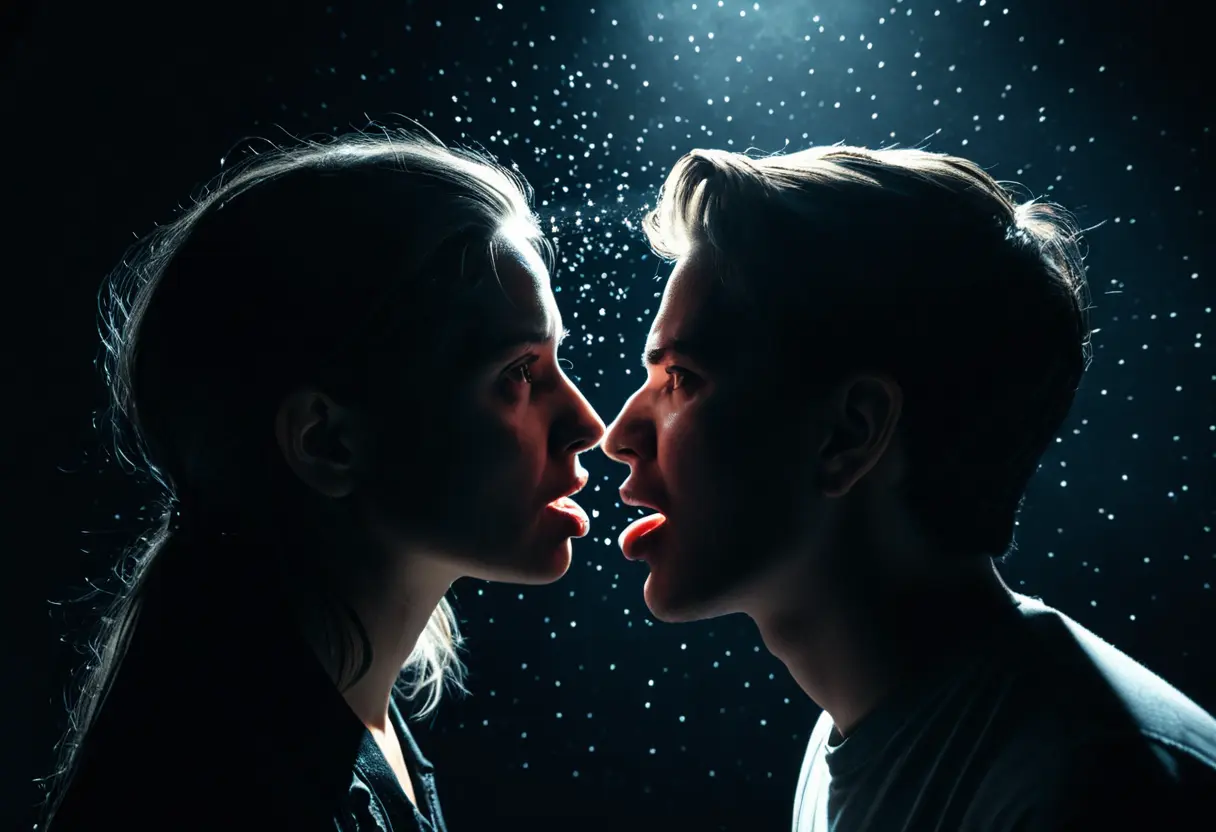
An urban legend differs fundamentally from a “fairytale” because of its delivery mechanism. It almost always begins with the phrase: “I heard this from a friend of a friend…” In sociology, this concept is known as FOAF . This specific distance—not a direct acquaintance, but someone just one degree removed—serves a dual purpose:
Responsibility Shield : The teller is not responsible for the accuracy of the information, as they are merely a messenger.
Micro-Authority : Because it happened to someone “real” in the teller’s social extended network, it gains a layer of authenticity that a newspaper report lacks. It transforms a story into a “shared experience,” bypassing the logical filters of the brain.
2. Infrastructure as the New Forest: Where Monsters Dwell
In traditional folklore, spirits and monsters resided in the “Deep Mountains” or “Isolated Rivers.” In the modern era, they have migrated to the “Blind Spots of Progress” : behind vending machines, within subway tunnels, and behind the blue light of our smartphone screens.
Legends often anchor themselves to specific, concrete pillars of modern life. Whether it’s the secret facilities beneath a famous theme park or the “Sony Timer” hidden in electronic goods, these stories use familiarity as bait. By placing the supernatural within our daily infrastructure, the legend “implement” itself onto our reality. In a world where science has supposedly banished the dark, we have reconstructed the “Otherworld” within the very systems that were meant to protect us.
3. Psychological Truth: Fear as a Data Compression Format
Why do certain stories survive for decades while others dissolve instantly? It is because urban legends prioritize “Psychological Truth” over factual accuracy.
Consider the famous legend of the person who tried to dry their wet cat in a microwave. While the actual legal records are elusive, the story persists because it perfectly captures our collective anxiety about “Adapting to New Technology” and the “Irrationality of Litigious Societies.” An urban legend is like a ZIP file of human emotion.
“It couldhappen.” “That corporationwoulddo that.”
When a story resonates with our hidden fears, desires, or prejudices, it is saved into our long-term memory. We tell it not because it is true, but because itfeels meaningful.
4. Conclusion: Survival through Storytelling
To decode an urban legend is to read the “Subconscious Logs” of modern society.
We need these stories because the modern world is too complex for any one individual to fully control. Mythology provides a “user interface” for the chaos—a way to assign meaning to errors in the system. Beyond the digital binary of “True or False” lies the gray zone where our imagination survives.
The urban legend is a flickering torch. It reminds us of the depth of the darkness that science has yet to illuminate.
Rumors vs. Legends : How transient gossip mutates into immortal myth.
The Mystery Hub : The archive of documented glitches in our world.
Net Lore Hub : When the spirits migrate into the machine.