When Fiction Overrides Reality: Stories that Became Fact

In the world of urban legends, a story is usually defined as “unsubstantiated rumor.” However, within the ocean of information, there exists a rare phenomenon: the “Reverse Implementation.” This happens when the collective belief and intense demand of the masses move the internal will of corporations or governments. A story that was originally “False” is promoted into the “Official Specification” of our reality. It is akin to a software bug that, through sheer user popularity, is eventually adopted as a formal feature.
1. The Pull-Tab Crusade: A Misunderstanding of Mercy
For decades in Japan, a powerful legend circulated in schools and local communities: “Collect enough pull-tabs (tabs from soda cans), and you can exchange them for a wheelchair for the disabled.” This story was a classic example of “Information Packet Loss.” - The Original Protocol : Recycle aluminum cans, sell the material, and donate the proceeds to purchase wheelchairs. A rational, efficient system.
- The Glitch : During transmission, the “monetization” step was removed. The masses began to believe the pull-tabs themselves were a specialized currency with an exchange rate for medical equipment.
Initially, recycling industries and charities rejected this as an “inefficient bug.” Detaching the tab makes the can harder to sort. However, the collective belief was so strong that mountains of tabs were sent to headquarters. Eventually, several organizations decided they could not ignore the massive gravity of this human goodwill. Today, several charities officially accept pull-tabs as a “fact,” effectively implementing the “false” exchange rate into their operations.
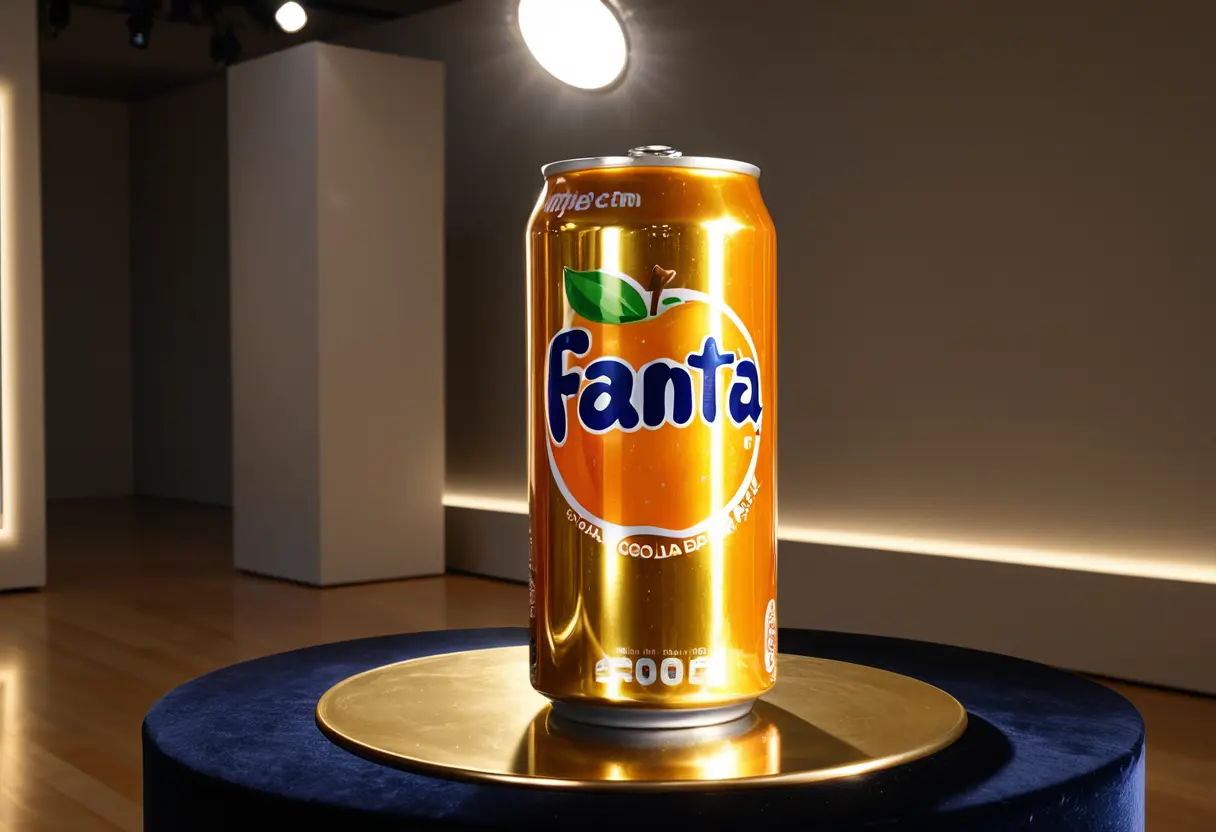
2. Fanta Golden Apple: Compiling Memory into Product
In the early 2000s, a specialized debate erupted on Japanese internet boards:
“I remember drinking ‘Fanta Golden Apple’ as a kid. It was the best flavor.”
“No, it never existed. You’re suffering from a memory error—you mean ‘Golden Grape’.”
Coca-Cola’s official databases had no record of such a product. Yet, thousands claimed this “Mandela Effect” memory was real. The sheer volume of this “Non-existent Product Demand Data” reached the corporate marketing department.
In 2002, Coca-Cola Japan finally released “Fanta Golden Apple” as a “New Product.” The brain-bug of the masses had successfully mounted its ghost data onto the physical layer of the grocery shelf. The memory became fact because the collective refused to let it stay a lie.
3. The Orange Juice Faucet: Prototyping a Joke
There is a long-standing joke in Japan: “In Ehime Prefecture, if you turn on the kitchen tap, orange juice (Pon Juice) comes out instead of water.” Originally, this was pure fiction—a playful stereotype about Ehime’s massive citrus industry. However, the persistent “request data” from tourists who wanted it to be true led the local government and juice brands to make it a Reality. Today, specialized “Juice Faucets” are installed at Matsuyama Airport and various events, serving as a core part of the region’s official identity. A conceptual joke was deployed into the physical server of reality.

Reflection: Reality is a Mutable State
The phenomenon of “Fiction Becoming Fact” forces us to confront an uncomfortable truth: our reality is mutable. When enough people believe a lie, the pressure distorts the consistency of the world. Urban legends, rumors, and hoaxes are not just error logs—they are “Pending Patches” waiting for enough support to overwrite the current version of reality.
The next time you hear a rumor that seems impossible, consider this: your reaction might be the final click needed to finalize the installation.
The Mandela Effect: Reality Glitches : When our collective memories diverge from history.
Anatomy of a Legend : Decoding the core mechanics of modern myth-making.
Beliefs Hub: Logic of Fear : How faith constructs the physical world.