Iino UFO Town: The Sacred Peak of Senganmori - Japan’s Roswell

Located in the southeastern part of Fukushima City, Japan, lies the quiet district of Iino Town .
At first glance, it appears to be a peaceful rural landscape. However, among enthusiasts of Unidentified Flying Objects (UFOs), it is revered as Japan’s premier “UFO Sanctuary,” comparable to Roswell or Area 51 in the United States.
In Iino, the mystery isn’t just a rumor; the local administration officially declared it a “UFO Village,” working to revitalize the town through a shared coexistence with extraterrestrial lore. From ancient pyramid theories to the establishment of an international research laboratory, Iino Town is a place where layers of mystery thrive.
1. Senganmori: A Pyramid or an Alien Mother Ship?
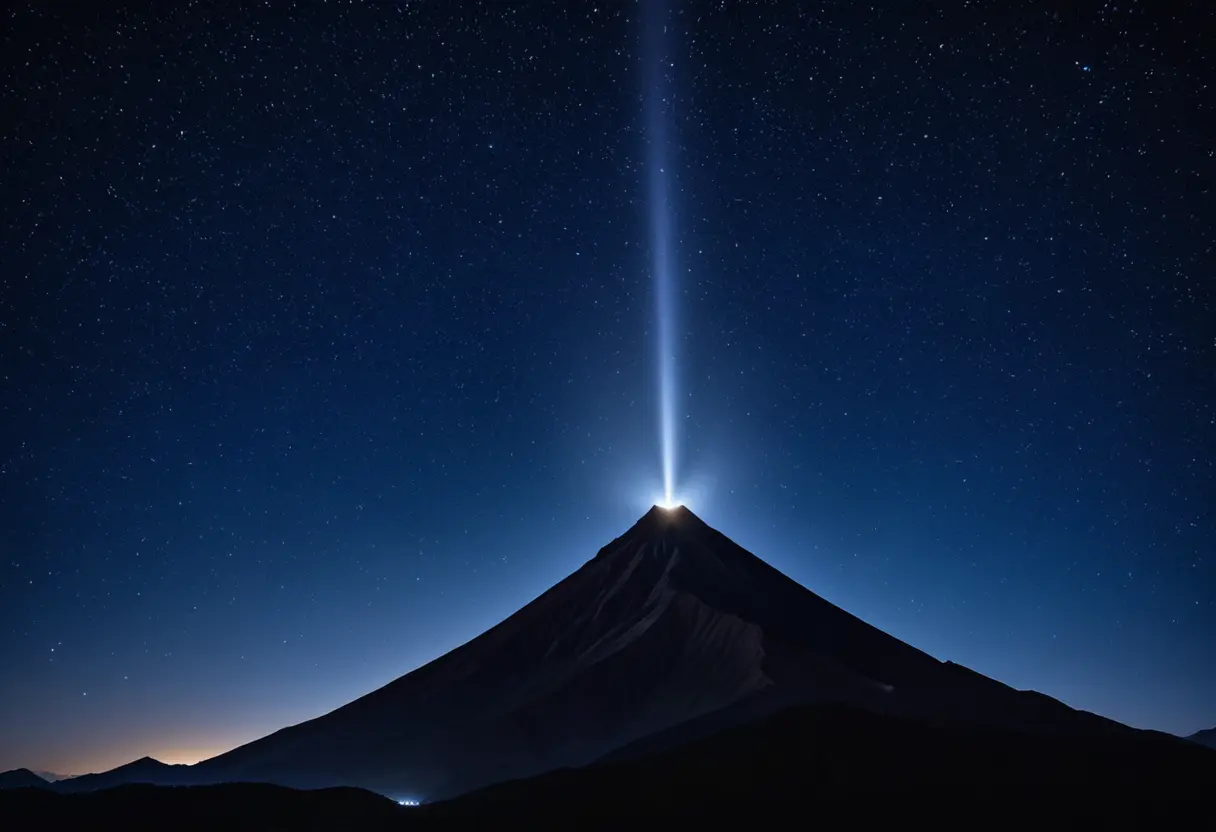
The centerpiece of the legends in Iino is Mt. Senganmori , a 462.5-meter-high conical mountain.
Its perfectly balanced triangular silhouette is so striking that it has long been called the “Iino Pyramid.” Several strange phenomena that defy modern science have been reported around this peak:
Magnetic Anomalies : There are spots around the mountain where compass needles spin wildly or become useless. A popular theory suggests this powerful magnetic field attracts UFOs or even interferes with their propulsion systems.
The Hollow Earth Hypothesis : Near the summit, there are places where stomping hard on the ground produces a muffled, hollow echo, as if a vast cavern lies beneath. Locals whisper that this might be the entrance to an underground UFO base.
Ancient Megaliths : Large boulders like the “Pinte-ishi” are stacked on the slopes; some suggest these were part of an ancient navigation beacon system for celestial travelers.
2. A Serious Approach: The UFO Interactive Hall
In 1992, the town opened the UFO Interactive Hall (UFO Fureaikan). While the name might sound like a kitschy tourist trap, the reality is surprisingly earnest.
The hall houses more than 3,000 items related to UFOs collected from around the world, including replicas of declassified CIA documents and a history of “Alien Parades.” In 2021, the facility became home to Japan’s first International UFO Laboratory .
Headed by Takeharu Mikami, the editor-in-chief of the mystery magazine Mu, the lab uses AI and scientific methods to analyze sightings from around the globe. Today, approximately 20,000 fans visit this site annually, searching for the “truth” in the heart of rural Japan.
3. Living with Aliens: From Ramen to Street Lights
Walking through Iino Town, you realize it is far more than a tourist destination. The town has woven extraterrestrial motifs into its very fabric:
UFO Infrastructure : Streetlights are shaped like flying saucers, and local bus stops and school emblems feature alien-themed designs.
UFO Gastronomy : Local eateries serve “UFO Ramen” and “UFO Gyoza,” while the souvenir shop sells sake brewed with yeast that has traveled to space.
Personal Encounters : Perhaps most shocking is the gravity with which residents speak of their experiences. Many locals can describe seeing “a massive orange orb hovering over Senganmori” or encountering “a silent metallic object in the hills” as if they were describing yesterday’s weather.
In Iino, UFOs are not just entertainment on a screen. they are a local “Yokai” (mystical entity), a part of the landscape that exists as an extension of daily life.
Reflection: The Signal from the Peak
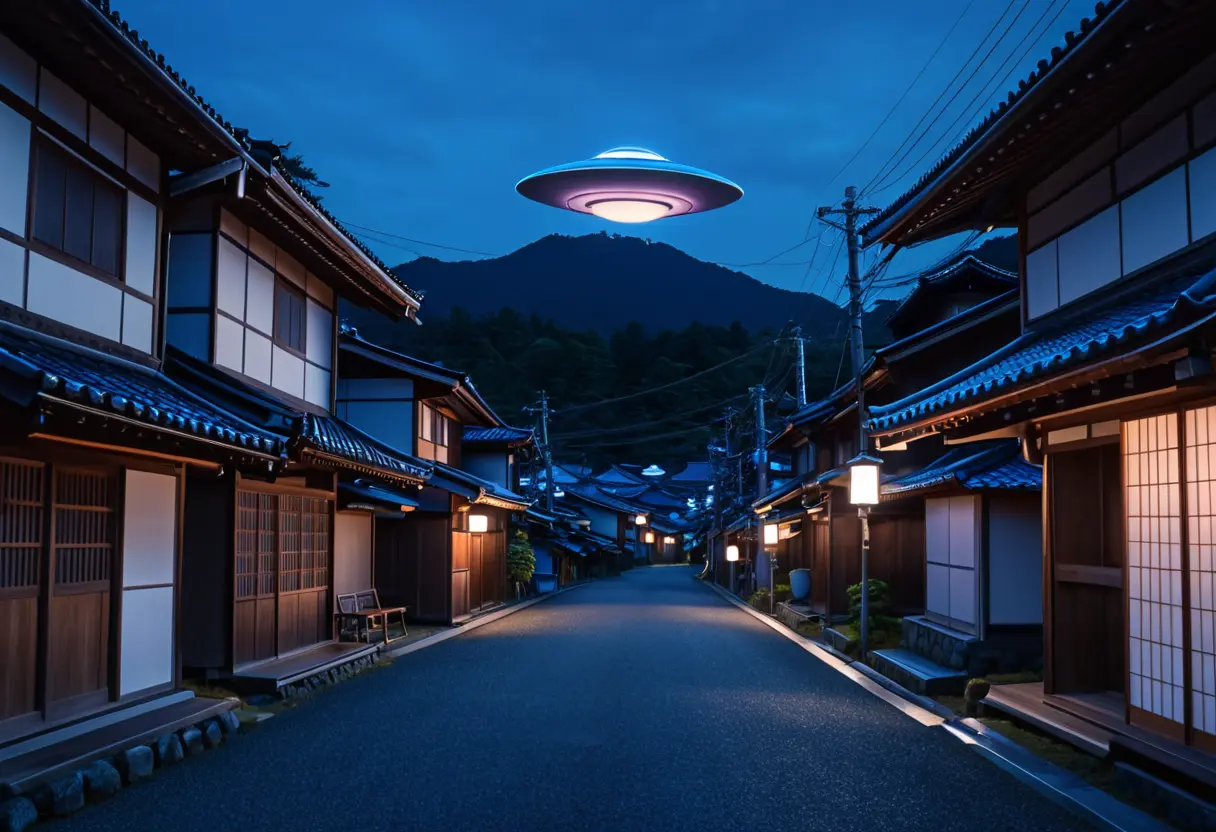
From the observatory atop Mt. Senganmori, you can overlook the Fukushima landscape from the same angle ancient people once looked up at the stars. With the strong magnetic fields beneath your feet and the silent air above, you might find yourself slipping into a delusion: “What if I, too, am a visitor from a distant star?”
If you ever tire of modern rationalism and wish to confirm that “the unknown” still exists in this world, head for Iino. Mt. Senganmori may still be broadcasting localized “homing” signals to silver visitors on a frequency humans have yet to discover.
The Kofu Incident: Japan’s Closest Encounter : A 1975 incident where two schoolboys met an extraterrestrial entity.
The Roswell Incident: The Origin of UFO Mythos : The conspiracy surrounding the 1947 crash in New Mexico.
Area 51: The American Taboo : The base erased from maps and its alleged alien technology.