Hanako-san of the Toilet: The Resident of the Third Stall and the Echoes of Post-War Japan

A girl with a bob haircut, a white blouse, and a red pleated skirt.
From her emergence in the 1950s to the digital age of the 2020s, one figure has remained the undisputed center of the Japanese school hierarchy: Hanako-san of the Toilet .
She is more than a simple scary story; she is a Legacy Protocol embedded in the educational system. While other entities like the Slit-Mouthed Woman or the Turbo Granny act as temporary social viruses, Hanako-san remains a constant—an invisible “Admin” of the school’s most private spaces. Why does she haunt the collective consciousness so persistently? The answer lies in the architecture of the Japanese school, the specialized “User Experience” of the restroom, and the primal need for a “Backdoor” to the beyond.
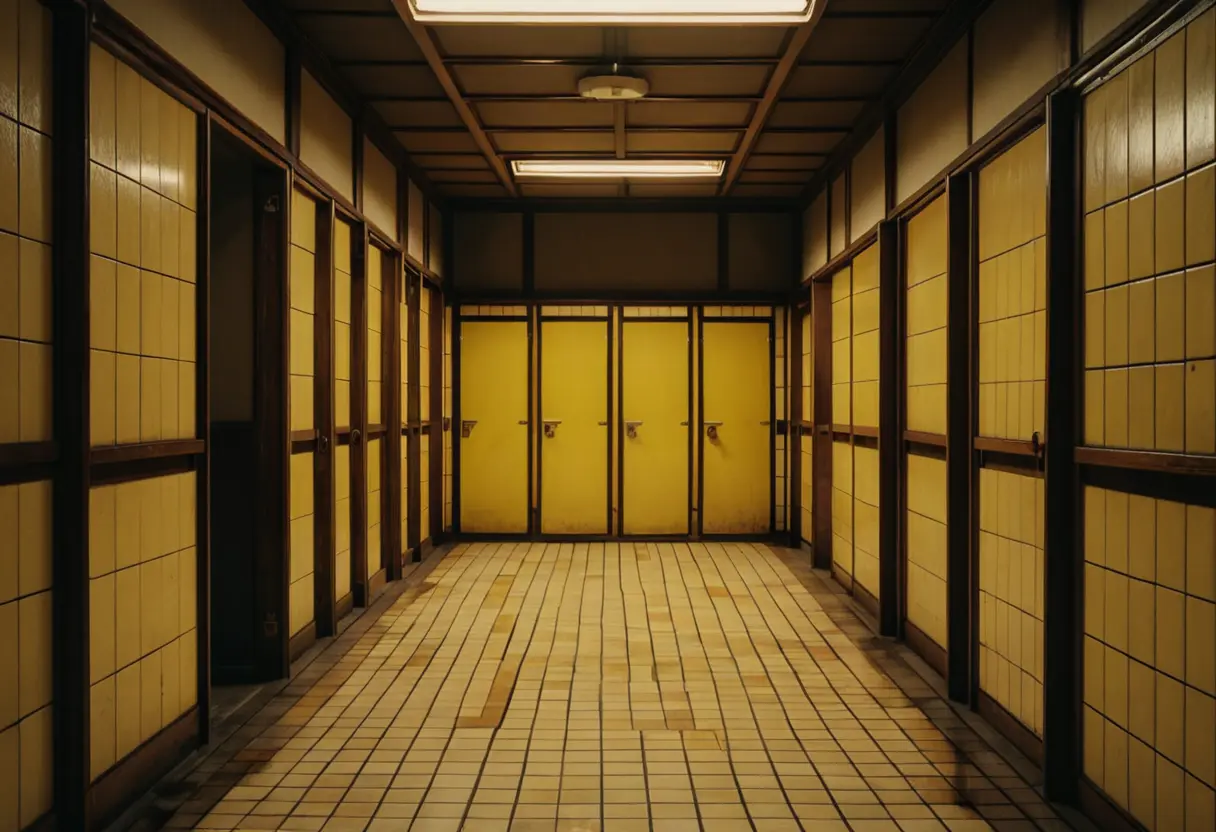
1. The Tapestry of Origins: From “White Hands” to War Orphans
The earliest written records of a “Hanako-san” date back to around 1948 in Iwate Prefecture. Back then, she was known simply as “Hanako of the Third Stall.” The legend was primitive: call out to her, and a ghostly white hand would emerge from the toilet—a classic trope of the boundary between the living and the dead.
Since then, her origin story has branched into several dominant narratives, each reflecting a different layer of Japanese societal trauma:
The Tragic War Orphan : Perhaps the most poignant theory. It is said she was a young girl who sought refuge in a school restroom during an air raid during World War II, only to perish in the flames. Her crimson skirt is seen as a symbol of the fire that consumed her life and her generation’s innocence. This narrative mirrors the collective grief of a nation that lost its children to the gears of total war.
The Victim of Violence : A grittier, modern interpretation claims she was a student cornered by an intruder or a victim of a fatal accident within the facility. This version taps into the very real fear of the “stranger in the sanctuary”—the realization that the school, meant to be a safe haven, can become a cold crime scene.
The Transformation of the Latrine Deity : In ancient Japanese folklore, toilets were often considered sacred spaces guarded by specific deities like Kawaya-gami. Much like the specialized spiritual guardians found in Okinawa’s Yuta tradition , Hanako-san may be a modern, secularized manifestation of these ancient spirits, re-imagined to fit the rigid framework of the modern education system.
What distinguishes Hanako-san from mindless predators is her interactive nature. She is a Summoned Interface . Her presence is invited through a specific, quasi-magical Access Protocol that has been shared across generations.
The Location : The third floor of the school building.
The Position : The third stall from the back of the restroom.
The Procedure : Knock three times on the door and ask, “Hanako-san, are you there?”
The number “3” is a recurring motif in global mythology, often representing “completion” or a “bridge to the beyond.” By following this protocol, students are performing a ritualistic intrusion into the “Other Side.” much like the scientific versus spiritual clash explored in the Aokigahara Compass mystery , the ritual provides a way to interact with a force that defies rational explanation.
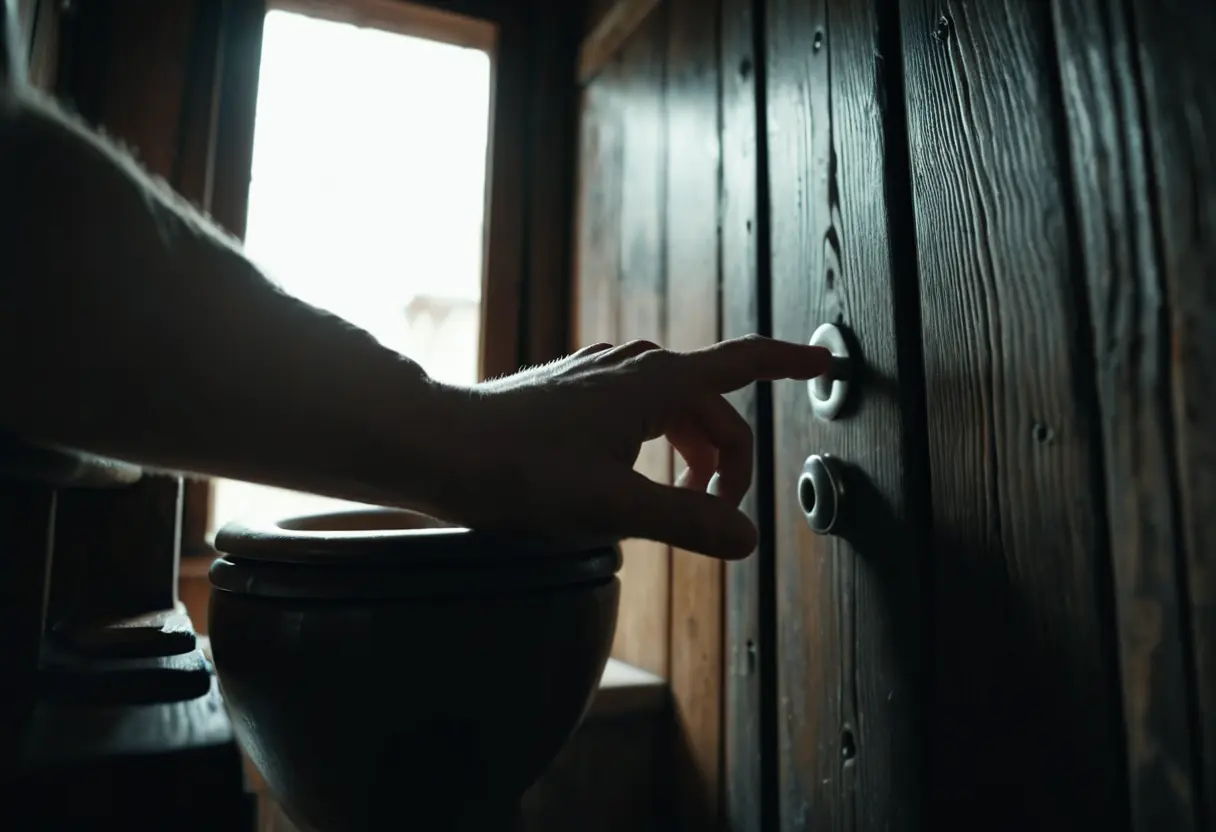
3. The Psychology of Space: The Liminal Sanctuary
Why the toilet?
The Japanese school is a place of absolute management. Every minute is regulated by bells; every action is governed by rules. The restroom is the only place where a student can escape the gaze of authority and peers—the only truly private space left.
Yet, this liberation comes with a price. The restroom, with its echoing pipes and dim corners, is a Liminal Space —a threshold between the “clean” world of the classroom and the “unclean” world of waste and death. Hanako-san serves as the gatekeeper of this boundary. She is a “secret accomplice” for children, allowing them to share a forbidden experience and form a bond of solidarity against the rigid order of the institution.
4. Evolution: From Pure Dread to Aesthetic Icon
Hanako-san has always been a mirror of the times.
The Showa Era : A symbol of pure dread. Summoning her was a dangerous gamble; seeing her meant a brush with death.
The Heisei Era : Media saturation transformed her into a “neighborly” phantom. Series like School Ghost Stories re-imagined her as a tragic, sometimes even helpful, presence.
The Reiwa Era : The “Refined” Haunting. As seen in global hits like Toilet-Bound Hanako-kun, she has transcended the role of a simple ghost, becoming a symbol of a new era of spiritual storytelling that blends horror with deep, human emotion.
Closing: The Echo in the Porcelain
“I’m here…”
A faint, childish voice answers from behind the door.
If you were to visit an old school building today and knock on that stall as a joke, what would you hear? Would it be the nostalgic voice of a childhood friend, or the chilling echo of a Japan left behind? Hanako-san remains the silent alumni who never graduates, a personification of the “invisible order” that continues to haunt the hallways of our memories.
Aka Manto: The Crimson Executioner : The violent counterpart sharing the restroom’s dark corners.
Kokkuri-san: The Poisoned Pen : The dangerous summoning ritual that terrified the Showa classroom.
The Aokigahara Compass: Reality vs Myth : Another case where earthly physics and spiritual dread collide.
Beliefs Hub: The Survival Strategy of the Heart : Analyzing why we need these “invisible orders” in our lives.