Yuta of Okinawa: The Island Guardians - Mystical Oracles of Subtropical Japan

“You’ve dropped your Mabui (soul). You need to go put it back in soon.”
In the daily life of Okinawa (the Ryukyu Islands), this phrase is not uttered with the eerie tone of an occultist. Whether it is after a fall that caused a shock or a period of unexplained fatigue, the people of Okinawa still commonly suspect a “loss of soul” and visit a Yuta to resolve it.
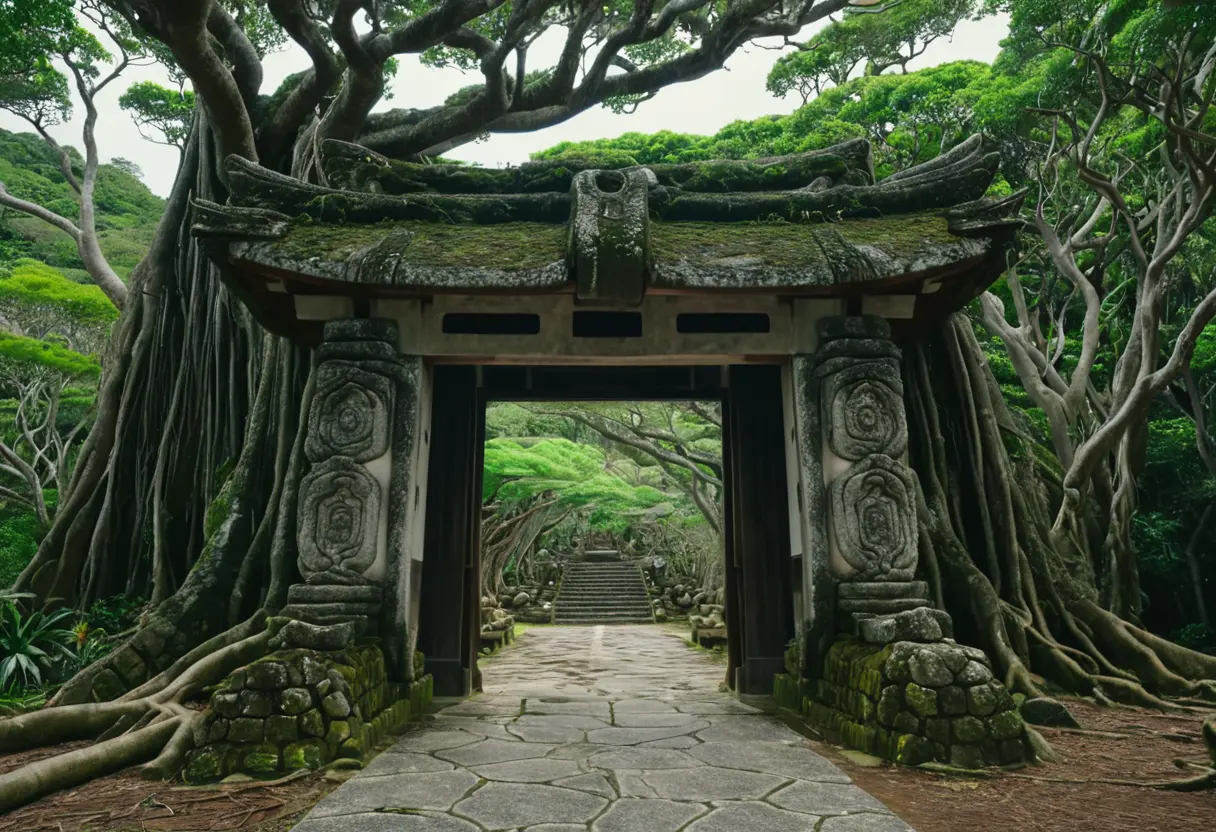
Behind the brilliant blue skies of “OKINAWA” the resort, there is a deep spiritual world flowing like an underground stream—one that protects the Utaki (sacred sites) and maintains a constant dialogue with ancestral spirits. The Yuta are the “denizens of the boundary” who adjust the balance between this otherworld and our current existence.
Is the Yuta merely a fortune-teller, or a powerful medium hidden in the shadows of the modern world? We approach their identity through the lenses of folklore and psychology.
1. “Half Doctor, Half Yuta”: A Coexistence of Two Healings
There is an old Okinawan proverb: “Half Doctor, Half Yuta.” It means that “physical illnesses are cured by doctors, but illnesses of the heart (or deep-seated issues of fate) are resolved by the Yuta.” This is not a denial of modern medicine. Rather, it is a practical wisdom where the traditional system of the Yuta complements the “understanding” and “salvation” that modern healthcare cannot provide.
The rituals (Uguwan) performed by the Yuta are diverse:
Hanji (The Judge) : Spiritually determining if the cause of a problem lies with a specific ancestor or a sacred site.
Mabui-gumi : Putting the soul (Mabui) that has been lost due to shock back into the person’s body.
Miisaa : Consining the soul of a newly deceased person and guiding them to the afterlife.
While they may do this for a fee, they are essentially the spiritual counselors of the community, serving the role of reconnecting isolated individuals to the community or the ancestral lineage.
2. Kami-daari: The “Hell” of Being Chosen by God
Becoming a Yuta is never a choice made out of personal desire.
One day, a person is suddenly struck by inexplicable hallucinations, auditory visions, high fever, or mental disorientation. This is the “shamanic sickness” found in shamanism around the world—known in Okinawa as Kami-daari (divine Possession).
Those afflicted with Kami-daari are often diagnosed by modern hospitals as having mental disorders like schizophrenia. However, it is said that medication cannot heal this suffering. They receive advice from senior Yuta who have overcome the same experience, accept that they are “chosen by the divine,” and complete their training (visiting sacred sites). Only then are they freed from their symptoms and their spiritual abilities awaken.
This is a brutal metamorphosis—a destruction and reconstruction of the self. Many Yuta say, “I didn’t want to become this. I ran away until I nearly died, and only accepted it because I had no choice.”
3. A History of Darkness: The Suppression of “Superstition”
The history of the Yuta is also a history of suppression.
During the era of the Ryukyu Kingdom, while the “Noro” (priestesses) who handled official rituals were institutionalized, the Yuta rooted in the common people were often targets of control for “disturbing public order.”
After Okinawa became part of Japan following the Meiji era, the wave of modernization saw the Yuta attacked as mere “superstitions.”
Yuta Suppression (Yuta-gari) : Forced arrests by the police and bans on their activities.
Social Scorn : Criticism within the education system.
Despite this, the Yuta survived to the present day because they have literally staked their lives on staying close to the “individual pain” that the massive system of the state could not save.
Reflection: Visible Truths and Invisible Bonds
Even in modern Okinawa, the existence of the Yuta remains controversial. Some criticize them for lacking scientific basis, and problems exist with fraudulent “fake Yuta” who demand high fees.
However, when you see a Yuta offer a silent prayer at an Utaki in the middle of the night, you are reminded that humans cannot live on material wealth alone. Conscious of the chain of life connected to our ancestors and maintaining a healthy fear of the invisible otherworld, the Yuta—as a “spiritual breakwater”—will continue to stand on the boundary of these islands as long as our hearts seek the peace that comes from “understanding.”
The silence of pre-modern prayer in the Ryukyu Isles is something that travelers from the mainland should not step into lightly. It is another truth of this country that the Yuta have protected with their lives.
Tatsuki Ryo’s 2025 Prophecy: The Waters of the South : A modern prophecy where the Okinawan sea is also a stage.
The Itako of Osorezan: The Mediums of the North : Another shamanic tradition remaining at the northern tip of Japan.
Cursed Objects: Vessels of the Soul : The belief in objects where the Mabui is contained.