The Tuna Boat Trap: Debt, the Ocean, and the Myth of Forced Labor

“You’ll pay with your body, then…”
In Japanese fiction set in the Shōwa-era underworld, this was the final sentence delivered to a hopeless debtor: “You’re going to a tuna boat.” It meant being sent away for six months or a year, forced into life-threatening labor amidst violent storms, with no way to return to land until the debt was cleared.
How much of this terrifying image is true, and how much is urban legend? In the modern era of the 21st century, does the “Tuna Boat” still serve as a symbol of “social death” in Japan?
Let us open the rusted door of this legend set in the ultimate locked room: the open sea.
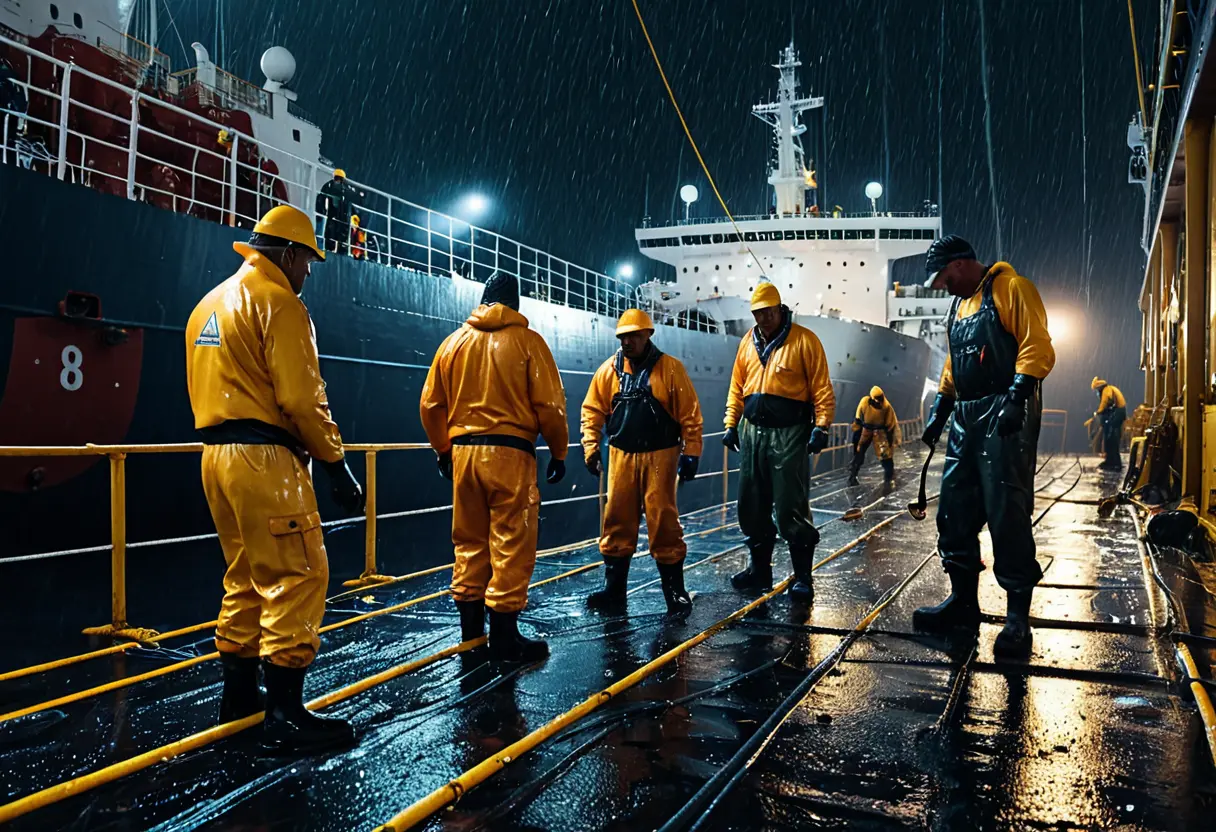
1. Ghosts of the Past: The Shadow of Forced Labor
To be honest, there was once a reality that mirrored this “legend.”
From the 1950s through the 1970s, Japan’s deep-sea fishing industry was both a place to realize dreams of sudden wealth and an “isolation facility” cut off from society.
Bonded Labor : There was a reality where individuals burdened with large debts were semi-forcibly contracted through “advance loans,” and were not allowed to disembark until the debt was fully repaid.
Zones of Lawlessness : Fishing boats on the high seas were physically and legally detached from oversight. Historical records and testimonies, such as those echoed in Takiji Kobayashi’s proletarian novel The Crab Cannery Ship, speak of violent control and brutal working conditions.
The phrase “being sent to a tuna boat” was not just a threat; it was a “vivid warning” based on a serious human-trafficking structure that existed in Japanese society at the time.
2. The Modern Sea: A Sanctuary for Specialists
In today’s Japanese deep-sea fishing industry, however, there is zero benefit for the management to forcibly recruit an unskilled debtor.
High-Tech Operations : Modern tuna boats are clusters of high-tech equipment. Operating ships worth millions of dollars and managing complex fishing gear and refrigeration systems requires advanced licenses and specialized skills.
Eliminating Risks : The job is a high-stakes environment where crews trust each other with their lives. Throwing an unmotivated, unskilled “amateur debtor” into the mix would put everyone else at risk. To a modern fisherman, a debtor is nothing but a liability.
Strict Legal Regulation : With the Seamen’s Act, Labor Standards Act, and international human rights monitoring, any forced boarding would immediately be a serious crime (kidnapping/confinement) and would result in the loss of the company’s license.
Today, tuna boats have transformed into stoic, professional workplaces that attract young talent with the promise of high salaries (sometimes exceeding $100,000 USD per year) and a sense of purpose.
3. The Evolution of Despair: From Tuna Boats to “Dark Jobs”
Has the disappearance of the tuna boat as a place of isolation saved those who are cornered?
Sadly, the abyss of society has merely changed its form into something more “invisible.”
The role that the tuna boat once played has been replaced in the modern era by “Yami-baito” (Dark Jobs) recruited on social media—tasks like being a “mule” for a scam or a “runner” for a robbery.
From Physical Isolation to Psychological Solitude : Instead of being taken to the sea, individuals receive anonymous instructions from the digital darkness and are treated as disposable pawns until they are caught by the police.
From Labor to Sacrifice : At least on a fishing boat, there was a path to rehabilitation through hard work and earning money. But in “Dark Jobs,” there is only a future of hurting others and being consumed as a pawn for crime.
The era when “Tuna Boat” functioned as a joke or a spice for a story may have been the last era when society still had a “vessel” for redemption through labor.

Reflection: The Lingering Scent of the Waves
If someone threatens to “send you to a tuna boat” today, you can take it as an outdated bluff. The modern sea is a clean, harsh place that only accepts chosen professionals.
Yet, the reason this legend still makes our hearts skip a beat is that we have not forgotten our primal fear of human society’s inherent violence—the fear that “the moment you step out of the social framework, you will be vanished somewhere far away.”
The “Prison on the Waves” called the tuna boat is gone. But in the back alleys of our megacities and behind our smartphone screens, a new kind of “deep sea” is quietly waiting for someone to lose their footing.
Predicting the Sea: Tatsuki Ryo’s 2025 Vision : A modern warning related to the ocean.
The 300 Million Yen Robbery: Shōwa’s Abyss : A intellectual battle between police and a phantom criminal.
Dead Internet Theory: The Digital Deep Sea : A darkness deeper than any physical ocean.