The Interrogation Katsudon: The Flavor of Confession - Japan’s Famous Police Myth

In Japanese police dramas—especially those with the gritty, nostalgic feel of the Showa era—there is no climax more iconic than this:
The suspect remains stubbornly silent. An veteran detective gently places a steaming bowl of Katsudon (pork cutlet over rice) before them. “Your mother back in the countryside is crying for you,” he says. As the aroma of soy sauce and dashi tickles the suspect’s nose, they pick up the chopsticks, take a bite, and burst into tears, confessing the truth…
This “Sacred Truth Serum” is deeply etched into the collective consciousness of the Japanese people. Yet, those who know the reality of modern investigations can only smirk. In the actual world of the Japanese police, this ritual is the “Ultimate Taboo” that could destroy a case from its foundation.
Why did the “Katsudon” myth emerge, and why did it vanish from reality? The answer lies in the conflict between Japanese legal consciousness and the sentiment of “Ninjo” (human feeling).

1. The Reality: The Trap of “Illegal Inducement”
To put it bluntly: in modern Japan, it is 100% impossible for a detective to treat a suspect to Katsudon.
If an actual detective did this and it came to light, they would be severely disciplined, and the confession obtained would lose its admissibility in court.
The reason is a legal concept known as the “Prohibition of Profitable Inducement.” A confession made under the promise of a reward—even a bowl of rice—is considered to have been made against the suspect’s free will. In other words, the court cannot rule out the possibility of a “False Confession” (where someone admits to a crime they didn’t commit just to get the meal).
To maintain a fair trial, detectives are strictly limited to providing only water or hot tea. A single cigarette or a cup of coffee can be viewed as “profit” used to induce a statement, providing a powerful weapon for the defense to strike down the evidence. This is the cold, legal reality of today.
2. The Origin: ‘The Police Diary’ and the Showa Era
Why did the “Katsudon” myth become so firmly established? Its roots are often traced back to the 1955 film *** Keisatsu Nikki* (The Police Diary) **. This film emphasized “Police Compassion,” showing a scene where an officer provides a warm meal to a parent and child who committed a crime out of poverty.
In the Japan of that era, Katsudon—a hearty bowl of fried pork cutlet simmered with eggs—was the ultimate luxury for the common person.
1.** The Wordplay of “Katsu” ** : The word katsu (cutlet) sounds like the Japanese word for “to win” (katsu). It was a lucky meal for “winning over oneself” or “winning the case.”
The “Last Supper” Vibe : It carried the emotional weight of being the “last delicious meal you’ll eat in the free world.”
Visual Appeal : The rising steam and golden eggs provided a vivid symbol of “life” in a stark, inorganic interrogation room.
Throughout the 1970s and 80s, dramas like Special Investigation FrontlineorTaiyo ni Hoero! turned this into a template, completing the national brainwashing.
3. The Truth of Modern “Interrogation Meals”
What do suspects actually eat during an interrogation today?
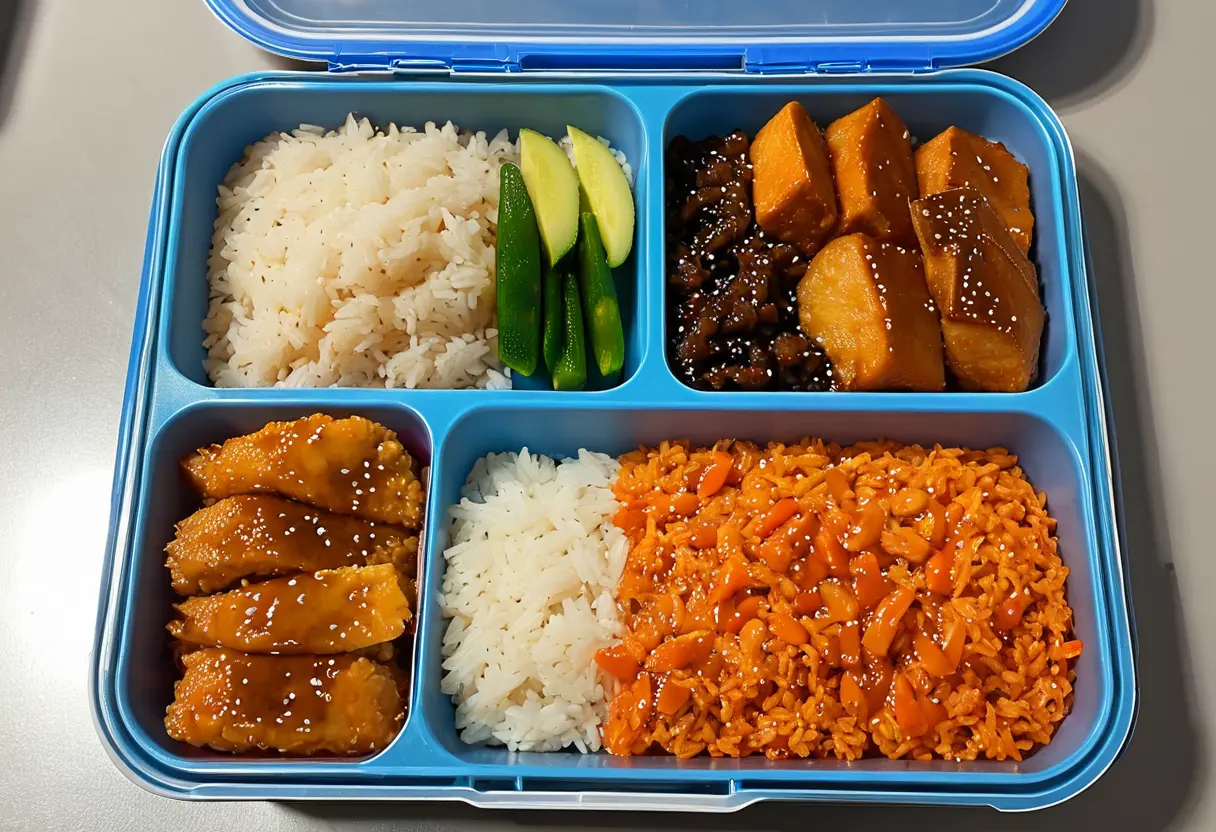
The answer is incredibly sterile. When it is time for a meal, the interrogation is suspended, and the suspect is returned to their holding cell. There, they are given a “Kan-ben” (official bento)—a cold, mass-produced lunch box.
Even if they order a meal with their own money, it is limited to bentos from authorized vendors. There is zero room for the “Seasoning of Compassion.” Eating inside the interrogation room is strictly prohibited for safety reasons as well, as an empty bowl or chopsticks could be used as weapons for escape or self-harm.
Reflection: Why We Long for the “Katsudon Miracle”
In an age where scientific investigation has advanced and interrogations are recorded and filmed (the so-called “visualization” of interrogations), Katsudon is an “Out-of-Place Artifact.”
Yet, the reason parodies and homages to this trope continue in modern dramas is because we long for the “human clash” behind the system. Rather than being cornered by logic, evidence, or security camera footage, the suspect’s heart is broken by sharing the same “meal” and facing the detective as one human to another.
It is a form of salvation—a vanishing “Naniwa-bushi” (sentimentalism)—that is being lost in our digitized society.
If you ever find yourself facing the judgment of the law, no steaming bowl of Katsudon will appear. There will only be a recording camera and a cold record of the investigation. The “Miracle of Katsudon” remains only as a lingering aroma in the distant otherworld called Showa.
The 300 Million Yen Robbery: Japan’s Unsolved Shadow : A Showa-era crime that even compassion could not solve.
The Last Supper of Death Row: The Ultimate Choice : A meal that goes beyond Katsudon—the true “final meal.”
Dead Internet Theory: The Vanishing Truth : A modern legend where reality and fiction become indistinguishable.