Beliefs & Superstitions: The Invisible Order of Daily Life

We live in an age of reason. Every phenomenon is presumably explainable by data and logic, and the realm of the “unknown” shrinks every day. Yet, within our daily conversations and deep-seated habits, “unfounded sayings” and “mysterious convictions” remain intertwined with our lives like the very air we breathe.

In Japan, stories like “Confessing after eating Katsudon in an interrogation room” or “Being sent to a tuna boat to pay off debts” are not merely errors or rumors. Some function as warnings to maintain social discipline. Others serve as cushions that wrap the harsh edges of reality in a narrative of “human connection.” Some even act as brakes, preventing us from venturing too far into sacred or dangerous territories.

In this archive, we look through a scientific lens while unraveling the “Mechanisms of the Heart”—exploring why these myths were born and why they have survived to this day.
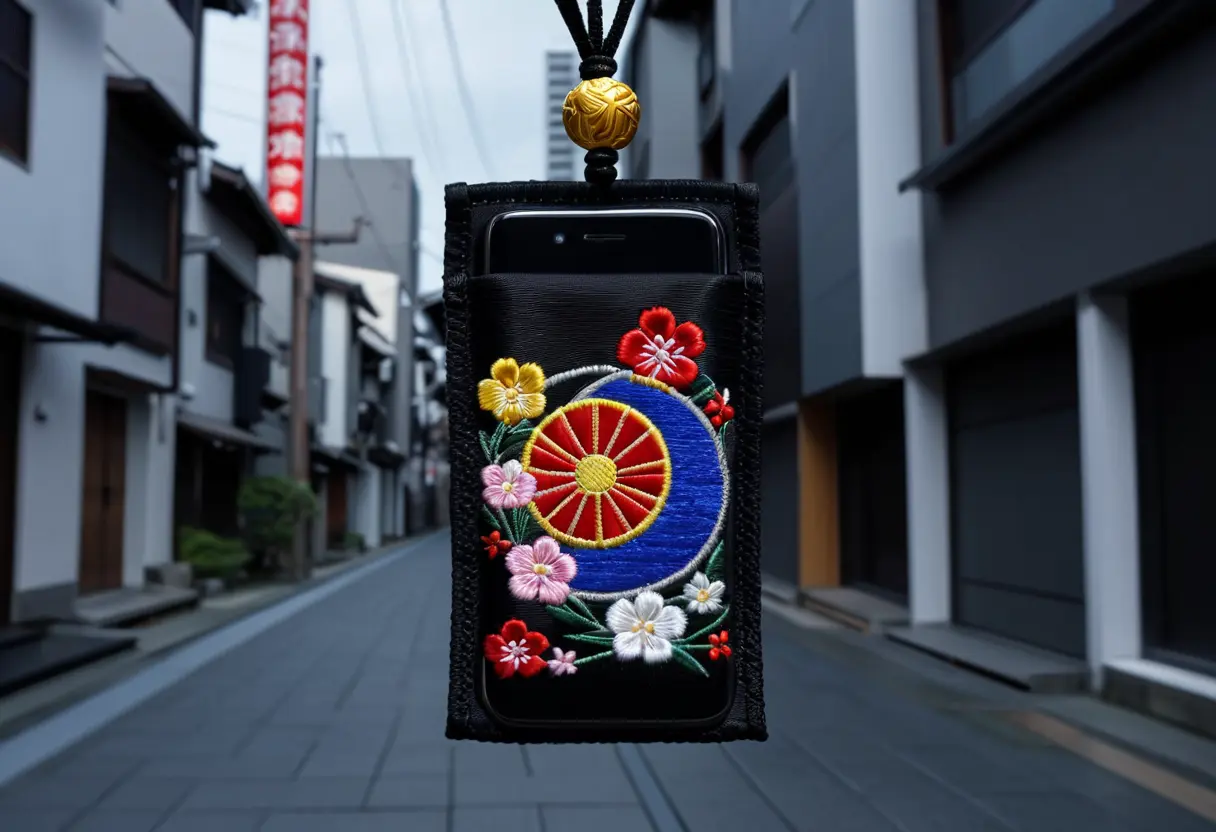
A traditional Japanese charm (Omamori) hanging on a modern smartphone.


1. Cultural Myths: The Lore of Society and Law

How do fictional stories become national common sense? We explore the myths that have defined Japanese television and social warnings for generations.

2. Biological & Environmental Lore: The Fear of the Body and Earth

Myths often arise where our understanding of our own biology or the vastness of nature meets its limit.

3. Sacred Guardians: The Keepers of the Unseen Bonds

In certain parts of Japan, the line between the physical and spiritual remains thin, guarded by those who walk the boundaries.


Superstition as a “Survival Strategy of the Heart”

It is easy to dismiss superstitions as mere “ignorance.” However, by creating rules for the unknown or for destinies beyond our control, we have long maintained our peace of mind.

Urban legends and beliefs sit quietly beside us in the realms where science cannot provide “satisfaction” or “healing.” By fearing a “mad compass,” we avoid accidentally stepping into the deep abyss of a sacred forest. By believing in a skin respiration myth, we re-recognize the precision and fragility of our own bodies.

A superstition may be a survival strategy—a way of rewriting a harsh, indifferent reality into a place that has “meaning” for the human spirit.

Every “good luck charm” or “jinx” you recall in a moment of stress hides a desperate and cherished wisdom of human survival that has continued for thousands of years.
A sunbeam through a forest onto a small stone statue.

Yuta of Okinawa: The Island Guardians - Mystical Oracles of Subtropical Japan

“You’ve dropped your Mabui (soul). You need to go put it back in soon.” In the daily life of Okinawa (the Ryukyu Islands), this phrase is not uttered with the eerie tone of an occultist. Whether it is after a fall that caused a shock or a period of unexplained fatigue, the people of Okinawa still commonly suspect a “loss of soul” and visit a Yuta to resolve it. Behind the brilliant blue skies of “OKINAWA” the resort, there is a deep spiritual world flowing like an underground stream—one that protects the Utaki (sacred sites) and maintains a constant dialogue with ancestral spirits.

The Tuna Boat Trap: Debt, the Ocean, and the Myth of Forced Labor

“You’ll pay with your body, then…” In Japanese fiction set in the Shōwa-era underworld, this was the final sentence delivered to a hopeless debtor: “You’re going to a tuna boat.” It meant being sent away for six months or a year, forced into life-threatening labor amidst violent storms, with no way to return to land until the debt was cleared. How much of this terrifying image is true, and how much is urban legend?

Skin Respiration: The Suffocation Myth - When Pores Became Lungs

“If you paint your whole body, you’ll suffocate because your skin can’t breathe.” This rumor spread like wildfire among children in Japan for decades, casting an eerie shadow over everything from “gold powder shows” to simple full-body suits. The legend was cemented by the 1964 film 007: Goldfinger. In the movie, a beautiful woman covered in gold paint dies of “skin suffocation.” Since then, people around the world have accepted the equation of “sealed skin = death” as an undisputed fact.

The Interrogation Katsudon: The Flavor of Confession - Japan’s Famous Police Myth

In Japanese police dramas—especially those with the gritty, nostalgic feel of the Showa era—there is no climax more iconic than this: The suspect remains stubbornly silent. An veteran detective gently places a steaming bowl of Katsudon (pork cutlet over rice) before them. “Your mother back in the countryside is crying for you,” he says. As the aroma of soy sauce and dashi tickles the suspect’s nose, they pick up the chopsticks, take a bite, and burst into tears, confessing the truth…

The Aokigahara Compass: The Unforgiving Sea of Trees and the Trap of the Earth

In the lexicon of Japanese urban legends, one phrase stands out: “If you step into the Sea of Trees (Aokigahara), your compass will spin wildly, you will lose your way, and you will never return alive.” Aokigahara is a vast primeval forest spreading across the foothills of Mount Fuji. Built upon the lava flows from an eruption 1,200 years ago, this forest hides countless tales of death and mystery beneath its beautiful, mossy surface.