Nostradamus: The King of Terror and the Labyrinth of 1999


1. The Goto Effect: Paralyzing a Generation
Nostradamus achieved a near-divine status in Japan largely due to Ben Goto’s 1973 book, “The Great Prophecies of Nostradamus.” It sold millions of copies and became a cultural firestorm.
Japan at the time was facing the dark side of its rapid economic growth: pollution, the oil shock, and the constant fear of nuclear war during the Cold War. Goto linked Nostradamus’s ambiguous verses to these modern crises, concluding that humanity would definitely perish in 1999.
This “Gospel of Despair” had a profound impact on the psychology of children and teenagers. A sense of Nihilism—“the world will end before I even turn 20”—pervaded the youth culture. It created a fertile soil for radical ideologies like Aum Shinrikyo, which weaponized this apocalyptic anxiety for their own ends.
2. Deciphering the King: Terror or Transformation?
The most debated phrases in the quatrains were the “King of Terror” and the “King of Angolmois.” Countless interpreters have tried to identify these entities:
The Nuclear Missile : A natural association with fire and destruction falling from the sky.
The Asteroid : The 1994 collision of Comet Shoemaker-Levy 9 with Jupiter reinforced this theory.
Environmental Collapse : Harmful UV radiation pouring through a destroyed ozone layer.
The Mongol Connection : Reading “Angolmois” as an anagram for “Mongolias,” linking it to an “Invader from the East” (Yellow Peril).
However, local French scholars often point to a more positive reading. The end of the poem mentions a new ruler governing after a time of war (Mars), suggesting the prophecy was actually about a period of “Peace” or “New Governance” following destruction.
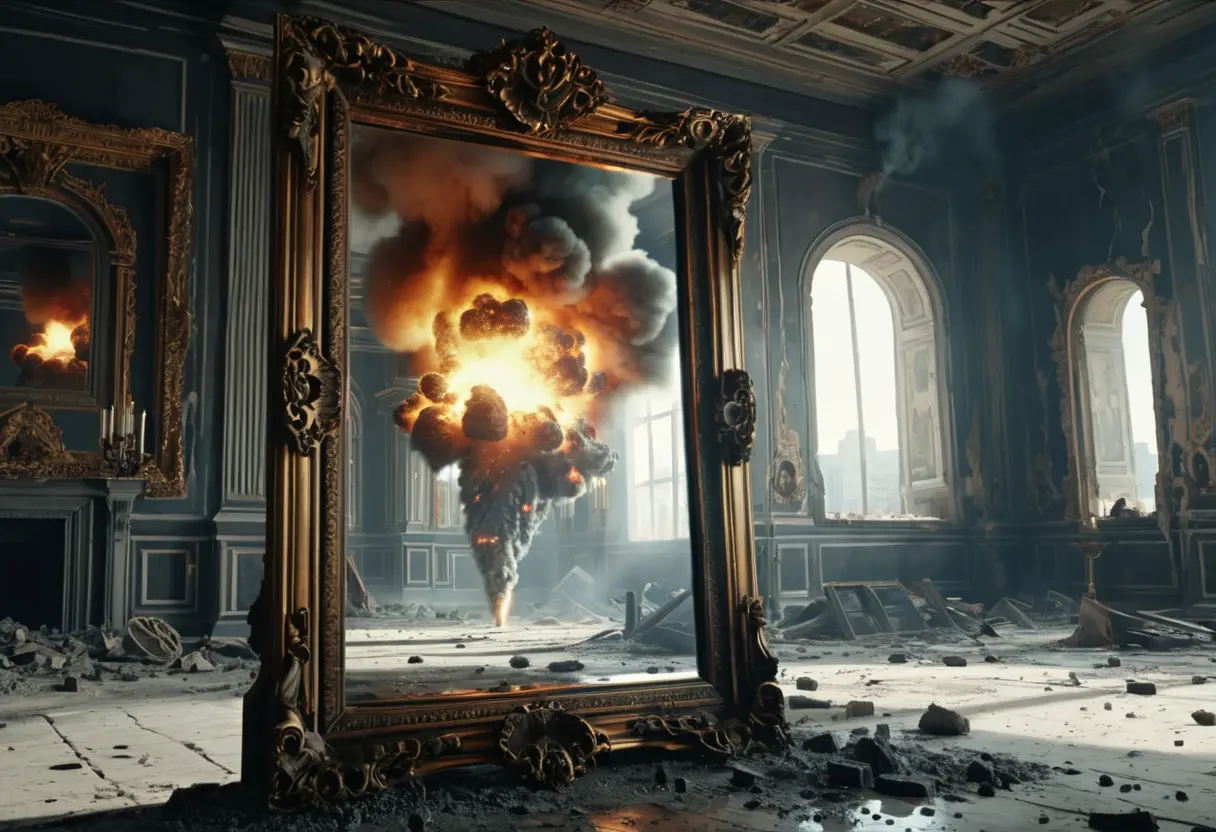
3. The Psychological Trick: The Power of Postdiction
Most cases where Nostradamus is said to have “hit” the mark can be explained by a psychological mechanism called Postdiction .
The quatrains are extremely ambiguous and filled with symbolic, multi-layered words. This allows clever interpreters to “fit” the poem to an event after it has already happened.
The rise of Hitler, the JFK assassination, and the 9/11 attacks—whenever a major tragedy occurs, voices cry out: “Nostradamus saw this!” This is less about prophetic ability and more a victory for the human cognitive bias that seeks “Meaning” in a chaotic reality.
4. Modern Resonance: Pandemics and AI
The demand for Nostradamus did not end with the turn of the millennium.
During the COVID-19 pandemic, videos and articles claiming the 17th-century doctor predicted the virus’s arrival went viral worldwide.
Now, with the rapid rise of Artificial Intelligence (AI), new interpretations identify the “King of Terror” as a “Digital Intelligence from the Sky.” Every time we stand at a turning point in civilization, we return to the words of a 500-year-old physician to find a “Map of the Future.” There is a persistent human desire to believe that “Truth” lies in an ancient poem rather than in cold, hard science.
Reflection: The Lesson of the Silence
The greatest legacy of the Nostradamus boom is the simple but vital realization: we must create our own future, rather than dance to the tune of a prophecy.
When July 1999 passed safely, many in Japan breathed a sigh of relief, but they were also forced to face a new reality: “My life is still going on.” It was the moment they reclaimed the future that the prophecy had stolen. Nostradamus’s verses are ultimately not a book of predictions, but an eternal mirror reflecting humanity’s endless cycle of “Fear” and “Hope.”
Tatsuki Ryo’s 2025 Vision : The “New King of Terror” for the post-Nostradamus generation.
The Maya 2012 Myth : The doomsday expected to fill the void left after 1999.
Planet Nibiru: The Invisible Invader : A physical re-interpretation of a celestial threat.