The Maya 2012 Prophecy: The Myth of the End and the True Renewal

December 21, 2012.
The global media was on high alert. The internet was a whirlpool of fear and curiosity, and Hollywood released a multi-million dollar spectacle of millions of people fleeing a crumbling world.
The fact that the grand calendar of the ancient Maya appeared to stop on this day led modern civilization to feel the looming “End of Time.”
Yet, the fateful day passed, and we continue to weave our history.
What was the 2012 Maya Prophecy? Was it merely a hoax, or was it a grand “riddle” left by ancient Mayan priests for the people of the future?
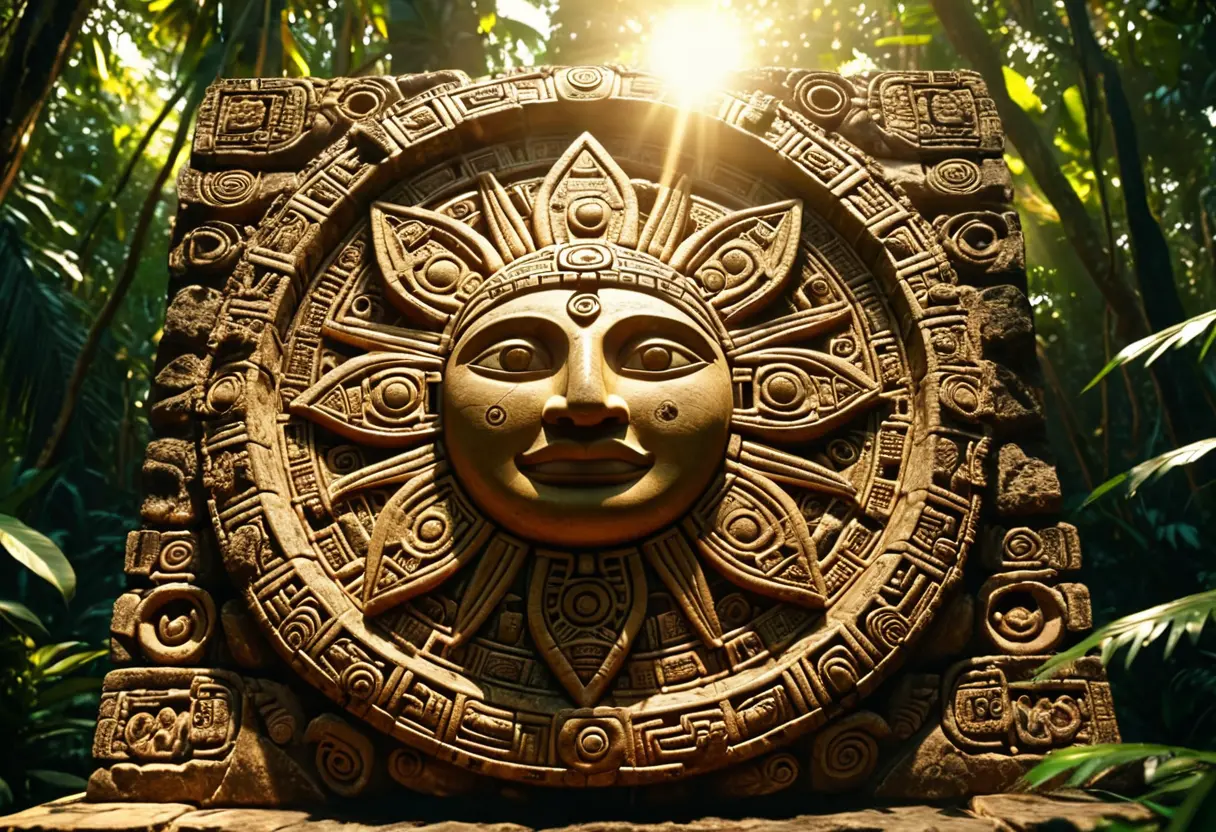
1. The Long Count: The Mystery of the Sacred “13”
The Maya civilization used several complex calendars, far more precise than our modern Gregorian calendar. The foundation of the 2012 theory was the “Long Count.” The Long Count is a linear tally of days starting from 3114 BCE, but it is organized into massive cycles:
- Baktun : A cycle of approximately 394 years (144,000 days).
In the Mayan cosmology, “13” is a sacred and complete number. The day the 13th Baktun concluded fell on December 21 (or 23), 2012.
Moderners interpreted “The calendar runs out” as “The world ends.” However, for the Maya, time was not a straight line toward a cliff, but a Cycle —a circle that turns forever.
2. Galactic Alignment: Toppings of Pseudoscience
What further fueled the 2012 frenzy were astronomical “omens.”
A popular theory at the time was the “Galactic Alignment” —the dramatic narrative that Earth, the Sun, and the center of the Milky Way would align perfectly, triggering gravity anomalies or solar radiation that would incinerate the Earth.
NASA and other scientific institutions flatly denied this. The alignment with the galactic center happens every winter solstice and has zero physical effect. Similarly, the feared collision with “Planet Nibiru” was nowhere to be found in any telescopic survey.
People believed these theories because, after the 1999 Nostradamus prophecy was averted, the world was unconsciously thirsting for the “Next Doomsday Drama.” ## 3. The Day of Renewal: What the Maya Truly Believed
How did the ancient Mayan priests actually view 2012?
According to inscriptions (such as Tortuguero Monument 6), 2012 was not a fearful end, but the day when the God Bolon Yokte’ would descend, and the world would become “new.”
In modern terms, this is the equivalent of December 31st being followed by January 1st—the “Great New Year.” It was a time of “Renewal,” where a grand cycle was fulfilled, and the myths of creation would repeat. To the Maya, 2012 was a year of celebration and hope.
Later discoveries (such as the murals at Xultun in Guatemala) showed calendars continuing for another 7,000 years into the future. This is definitive evidence that the ancient Maya were certain the world would keep pulsating long after 2012.
Reflection: The Commodity of Crisis
Uncertainty becomes a commodity when a “Deadline” is set. Tension, expectation, and fear are consumed as entertainment and business.
The greatest lesson of the 2012 Maya craze is a psychological truth: how vulnerable we are to the label of “Ancient Mystery,” and how much we long to outsource our destiny to external prophecies.
No matter how many cycles the calendar completes, time continues relentlessly and calmly. Rather than being terrified by ancient stone tablets, we should look at the realistic crises we are causing with our own hands—environmental destruction and resource depletion.
The Mayan journey through time did not end in 2012. Even at this moment, we are walking through the beginning of a new Baktun.
The Hopi Prophecy: The Day of Purification : Another indigenous perspective on the collapse of material civilization.
Nostradamus: The Social Phenomenon of the End : The truth behind the prophecy that shook the late 20th century.
The 2025 Prophecy: Why We Keep Searching for a Date : The psychological need for the next countdown.