Fuji Eruption: The Sleeping Giant’s Awakening - Between Mythology and Disaster

To the world, Mt. Fuji is the serene symbol of Japan—a sacred peak of unparalleled beauty.
However, beneath that perfect silhouette, a massive reservoir of energy has been accumulating for over 300 years. In geological time, this long silence is merely the “calm before the storm.” “The next eruption will not just be a natural disaster. It will be a ‘Civilization Reset’—a total shutdown of the Japanese national system.” Many experts warn that the “X-Day” of Mt. Fuji is no longer a matter of if, but when. This article explores the truth behind the Fuji eruption through the lenses of historical tragedy, modern science, and the prophecies etched into Japan’s collective psyche.
1. The Ghost of 1707: Memories of the Hoei Eruption
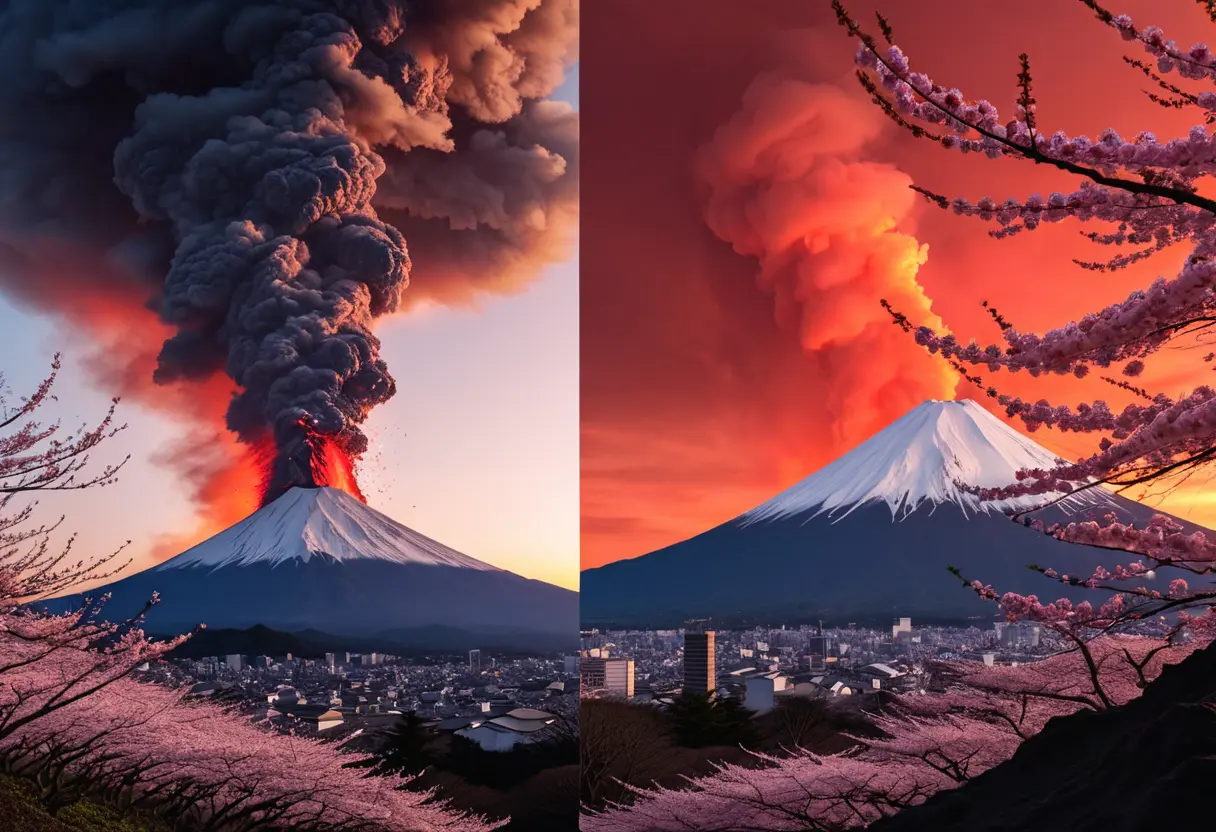
The last time Mt. Fuji breathed fire was in 1707 (Hoei 4), during the Edo period. This is known as the Hoei Great Eruption .
Its most terrifying feature was its trigger: just 49 days prior, the Hoei Earthquake (estimated M8.6)—a massive Nankai Trough event—shook the nation. The tectonic shifts stimulated the magma chamber beneath Fuji, inducing a “linked eruption.”
The eruption lasted 16 days. While there were no lava flows, volcanic ash rained down on Edo (modern-day Tokyo) in such volume that it turned day into night, forcing people to use lanterns at noon. This historical event serves as the blueprint for the “Double Punch” scenario: a mega-earthquake followed by a volcanic apocalypse.
2. The 2025 Prophecy: “The Future I Saw”
In recent years, a rumor has spread rapidly across the Japanese internet: a catastrophe will strike Japan in July 2025 .
The spark for this panic was a 1999 manga titled The Future I Saw by Ryo Tatsuki. The author, known for reportedly predicting the 2011 Great East Japan Earthquake, claimed to have seen a vision of a “Great Disaster” in July 2025. Many believe this vision points directly to the awakening of Mt. Fuji.
Scientifically, there is no direct evidence that Fuji will erupt in 2025. The Japan Meteorological Agency’s 24-hour monitoring hasn’t detected any immediate seismic anomalies. However, the 300-year gap since the last eruption far exceeds the statistical “average interval,” meaning the mountain has reached a “critical point” where its energy could be released at any moment.
3. The Ash: The Death of Electronic Civilization
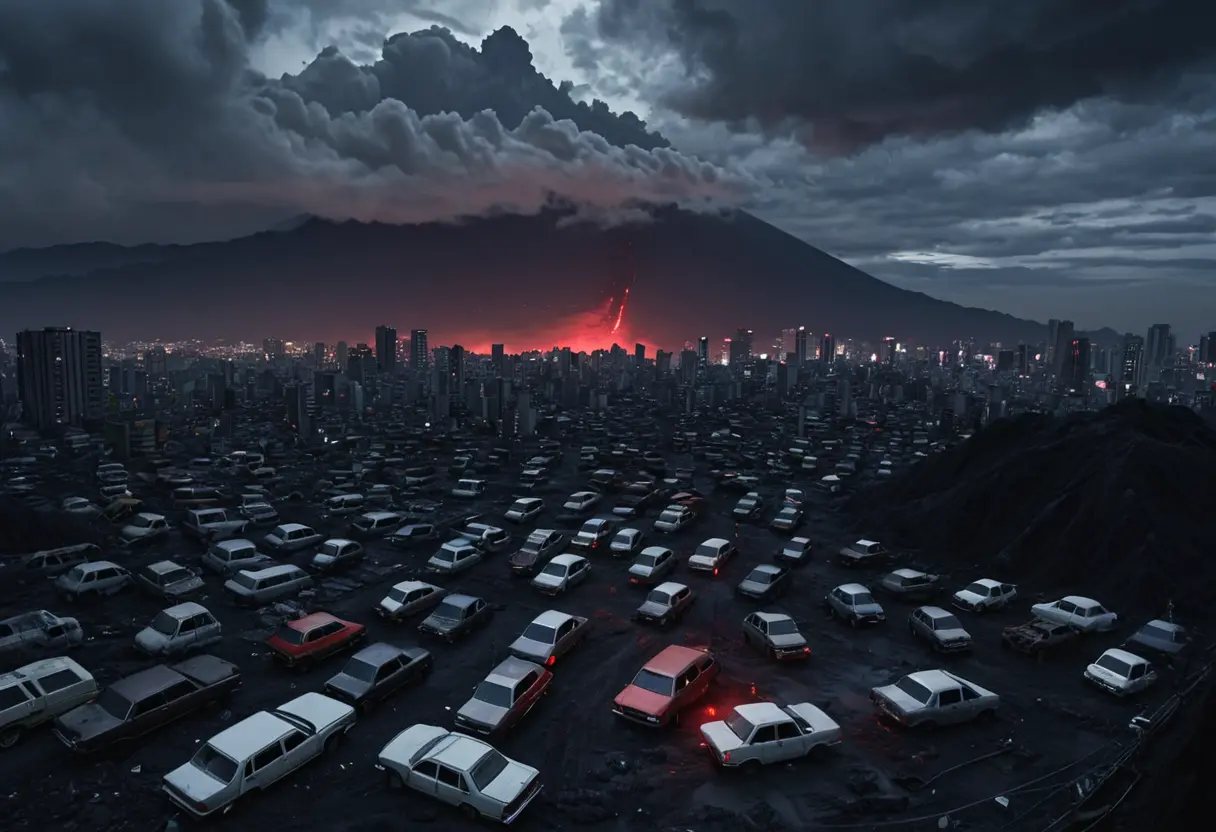
The true horror of a modern Fuji eruption is not the fire, but the Ash . While the people of Edo feared famine, modern Japan faces the collapse of its electronic lifeblood. - Grid Failure : Volcanic ash becomes conductive when damp. Tiny amounts on insulators can cause massive short circuits, plunging the Tokyo metropolitan area into a permanent blackout.
Logistics Paralysis : Just a few millimeters of ash make railways inoperable and roads impassable due to slipping. Floating ash also blinds drivers and clogs jet engines, cutting off the supply of food and medicine.
Hardware Destruction : Ash is the natural enemy of precision machinery. Microscopic particles entering cooling fans can physically destroy servers, downing the cloud and financial systems that run the country.
When Tokyo is buried in ash, the “Heart of Japan” stops beating. It is a crisis of national survival that transcends mere disaster relief.
4. The Blind Spot: Where will the Fire Bloom?
What makes preparation difficult is the unpredictability of the crater. Fuji has a history of “Flank Eruptions,” where the fire bursts not from the peak, but from anywhere on its slopes. Modern hazard maps have expanded the danger zones significantly, suggesting that residential areas at the foot of the mountain could be directly incinerated by lava flows.
Despite having the world’s best monitoring network, the “grace period” from when magma starts its final ascent to when it reaches the surface could be as short as a few hours.
Reflection: Re-evaluating the Sacred Terror
Mt. Fuji is not just a tourist destination or a backdrop for a postcard; it is a pulsating part of a living planet.
The mixed feelings of beauty and dread that Japanese people feel toward Fuji are perhaps an ancestral memory—a primal awe of the mountain once worshipped as a God of Fire (Asama-no-Okami). We have no power to stop the eruption. All we can do is understand the truth, prepare for the “Moment,” and acknowledge that we live at the mercy of the Sleeping Giant.
Tatsuki Ryo’s 2025 Prophecy : The origin of the internet’s most discussed countdown.
Predictors of the End: Nostradamus and Beyond : How humanity has interpreted the “End of the World.”
Artificial Disasters: HAARP and Conspiracy : Theories that suggest disasters are not always natural.