The Glico-Morinaga Case: 'The Monster with 21 Faces' and the 17-Month Frenzy When Candy Was Poisoned
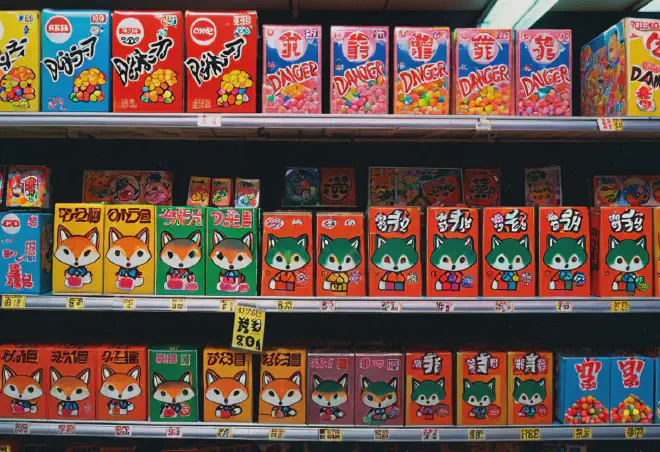
What they engineered was no terrorist act using guns or bombs. By turning the mass media into their stage and transforming 100 million consumers into their audience, it was the perfected form of a “theatrical crime” on a scale never before seen.
1. The “Abnormal Show” That Began with a CEO’s Kidnapping
The ominous prelude began on the night of March 18 of that year. Katsuhisa Ezaki, the president of Ezaki Glico, was abducted from his home while bathing by men who broke in. Although the president later managed to escape on his own, that was merely the gateway to hell.
The criminal group then systematically targeted prominent Japanese food manufacturers, including Morinaga & Company, House Foods, Fujiya, and Surugaya. They sent “letters of challenge” to the mass media mocking the incompetence of the police. Written in a distinct style—heavy on hiragana (Japanese phonetic characters) to appear child-like, yet suffused with a cold, calculating intellect—the letters graced the front pages of newspapers every single day. The public was plunged into an abnormal state, watching with a mixture of terror and a strange, frenzied anticipation for what this “faceless intellectual criminal” would do next.
2. Poisoned Candy: The “Erosion of the Everyday”
The most horrific aspect of The Monster with 21 Faces was that they took “safety,” rather than physical assets, hostage. “Danger: Poisoned. You will die if you eat this.” Confectioneries laced with potassium cyanide were actually placed on the shelves of supermarkets and convenience stores. The flagship products of major manufacturers were swiftly pulled from shelves nationwide, causing their stock prices to plummet. The moment the beloved sweets of children transformed into “lethal weapons” that could bring death at any time, parents across Japan fell into a state of panic.
This became the prototype for modern “economic terrorism” and “direct extortion targeting consumers.”
3. The “Fox-Eyed Man” Who Slipped Away
Another icon symbolizing this case is the composite sketch of the “Fox-Eyed Man,” drawn based on witness testimonies.
Investigators repeatedly spotted this man with highly distinct facial features on trains and at stations designated as cash drop-off points, and there were several chances to make contact. However, due to the detrimental effects of a compartmentalized police organization and hesitation on the front lines, they ultimately let him slip away.
The prestige of the police was shattered, and the chief of the Shiga Prefectural Police at the time, deeply feeling the responsibility for failing to corner the criminals, chose an overwhelmingly heavy end: committing suicide by self-immolation on the day of his mandatory retirement.
4. A Sudden Final Curtain and Leftover Mysteries
In August 1985, the criminal group suddenly sent a declaration of termination, as if “mourning” the death of the Shiga police chief. “We are tired of bullying food companies.” Since then, they never appeared again, and in 2000, all statutes of limitations for the incidents expired.
What was the perpetrators’ goal? There are theories that their objective was not the massive ransom cash itself, but the profits gained through stock price manipulation. Or perhaps it was a grudge against specific corporations, or even the involvement of foreign intelligence agencies.
The truth has completely melted into the darkness of the Showa era, beyond the cold gaze of the “Fox-Eyed Man.” The peace we have today, where we can casually pick up candy lined up on shelves, might only have been returned to us because the criminals simply “got bored” at the end of that 17-month-long madness.