The 300 Million Yen Robbery: The 'Perfect Theater' Behind Fuchu Prison and Showa's Unsolved Myth
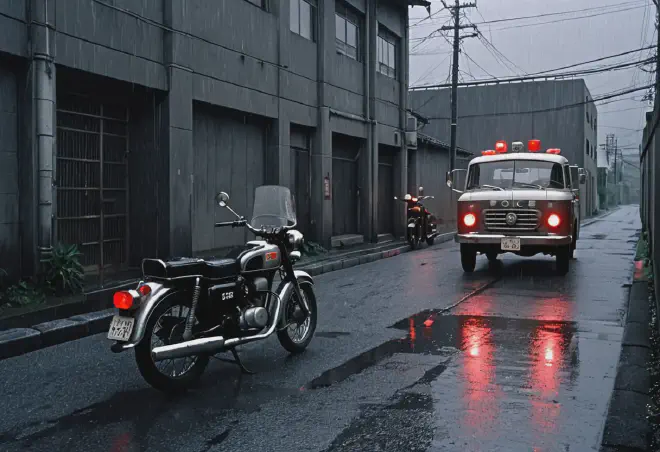
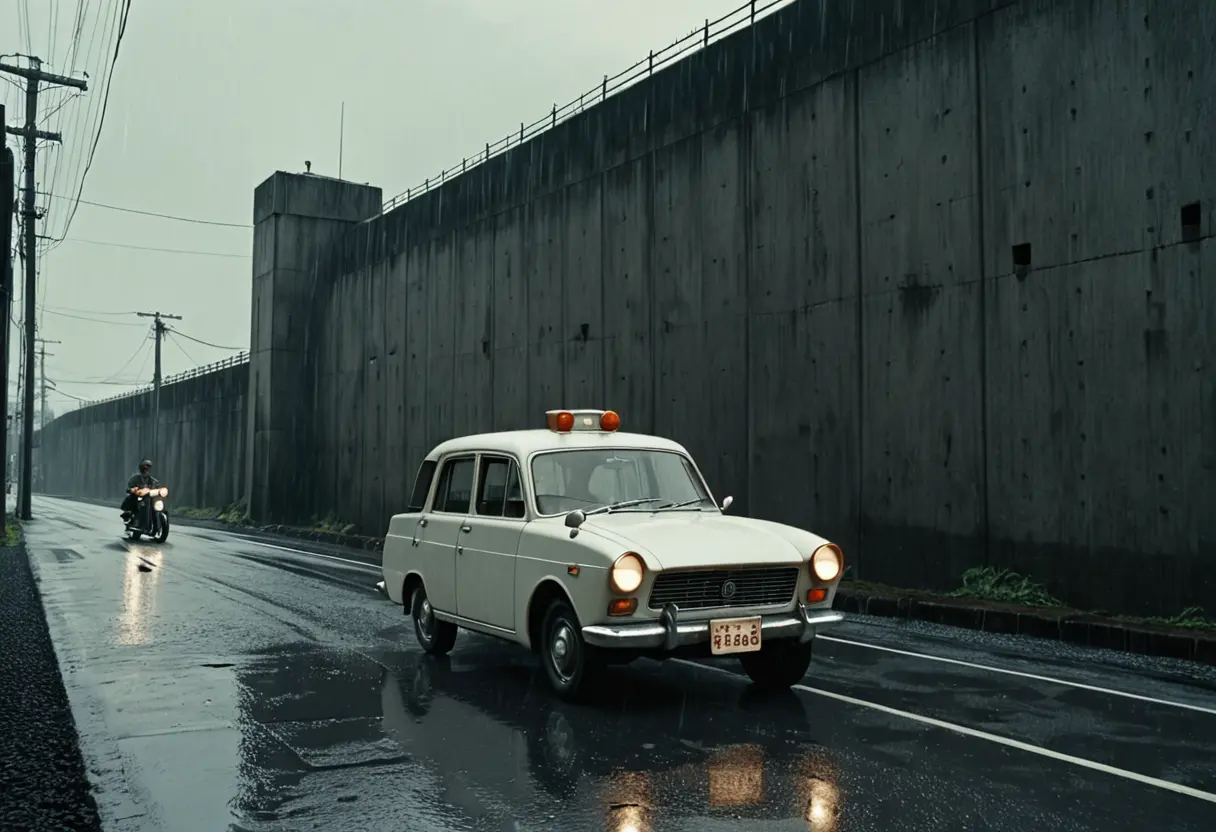
A motorcycle policeman enveloped in a white raincoat halted an armored car belonging to the Kokubunji branch of the Nippon Trust Bank. The events of the next mere 294 seconds resulted in the theft of roughly 300 million yen at the time (equivalent to about 2-3 billion yen today) without harming a single soul, with the culprit vanishing like smoke. It became an unsolved mystery almost too brilliant, too “beautiful.”
1. Exploiting the “Psychological Blind Spot” of Authority
The primary reason this case is hailed as the “greatest mystery of the post-war era” is that the culprit used zero violence, instead exploiting a loophole in mass psychology and the uniform of a police officer—an symbol of “absolute authority” in society at the time.
The culprit had sent fake threatening letters to the bank days prior, pushing the employees’ tension to the limit. Then appeared the “motorcycle cop.” The culprit ignited a smoke flare beneath the floor of the armored car and shouted, “It’s going to explode! Take cover!” In the brief moment the smoke-blinded employees fled the vehicle, the culprit calmly slipped into the driver’s seat and drove off with the car. All that remained was a fake police motorcycle, an empty watchtower, and the dumbfounded faces of the employees.
Ironically, this composition of “No one died, and those outsmarted were the authorities (the bank and the police)” created a strange sympathy and an idol of a “likable criminal” among citizens amidst the student movements and social unrest of the time.
2. The “Secondary Tragedy” Brought by a Composite Sketch
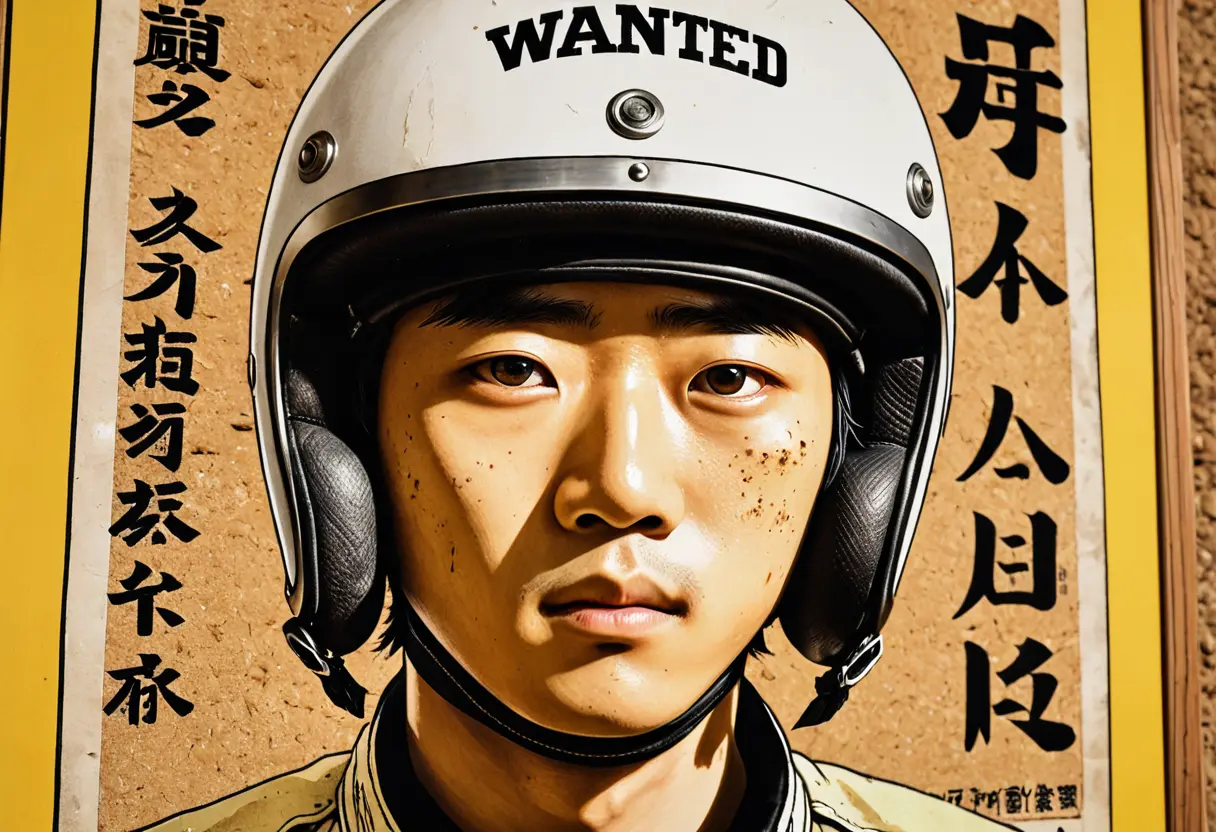
Indispensable to any telling of the 300 Million Yen Robbery is that composite sketch of a helmeted figure with piercing eyes. However, this photo was also one of the greatest blunders in investigative history.
In truth, this sketch was not drawn based on a single witness’s testimony. It was created by compositing a helmet onto the facial photograph of a seemingly unrelated boy who had already passed away at the time. The nationwide distribution of this “similar but different idol” threw the investigation into extreme disarray.
Simply for “looking like that photo,” a suspect list of 110,000 people was compiled, and many innocent youths were subjected to relentless interrogation, their lives derailed. Particularly tragic was “Boy S,” viewed as a prime suspect; despite having an alibi, he remained under intense suspicion and took his own life by drinking potassium cyanide mere days after the incident. An investigation meant to shed light instead birthed deeper darkness.
3. Showa’s Myth: Beyond the Wall of the Statute of Limitations
On December 10, 1975 (Showa 50), the pursuit—which cost the state over 900 million yen in investigative expenses, mobilized 170,000 officers, and staked the nation’s pride—was blocked by the cold wall of the statute of limitations, drawing the curtain.
The serial numbers of the stolen 300 million yen were recorded, but not a single bill ever appeared in the market afterward. Rumors swirl wildly: “He fled overseas and is living lavishly,” “It was an inside job by the police,” “It wasn’t a lone wolf, but a massive organization.”
Having become a legend without the truth ever being unravelled, this incident has become the subject of numerous novels, movies, and dramas, enveloped in a “nostalgia for the Showa era” that transcends actual criminal records. The owner of that white raincoat who vanished along the high walls of Fuchu Prison may still be somewhere in the world today, chillingly watching the illusions we continue to harbor.