Tabby’s Star: The Unnatural Megastructure
1. The Anomalous Blink: Defying the Models
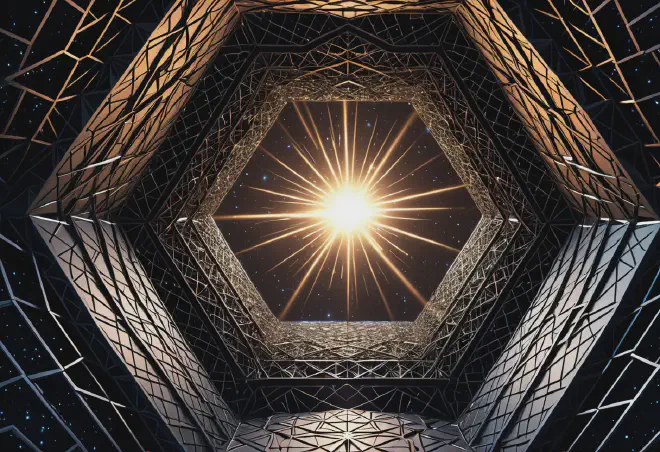
Normally, stars dim when planets or other stars pass in front of them (transits). Tabby’s Star, however, was different: *Non-Periodic Dimming : Instead of dimming at regular intervals like a planet, it dims at random times and for unpredictable durations—anywhere from hours to days. *The Scale of a Giant : A 22% drop in brightness would require an object roughly half the size of the star itself. Even Jupiter, the largest planet in our system, would only cause a 1% dip. This ruled out any single natural “object” as a likely culprit.
2. The Dyson Sphere Hypothesis
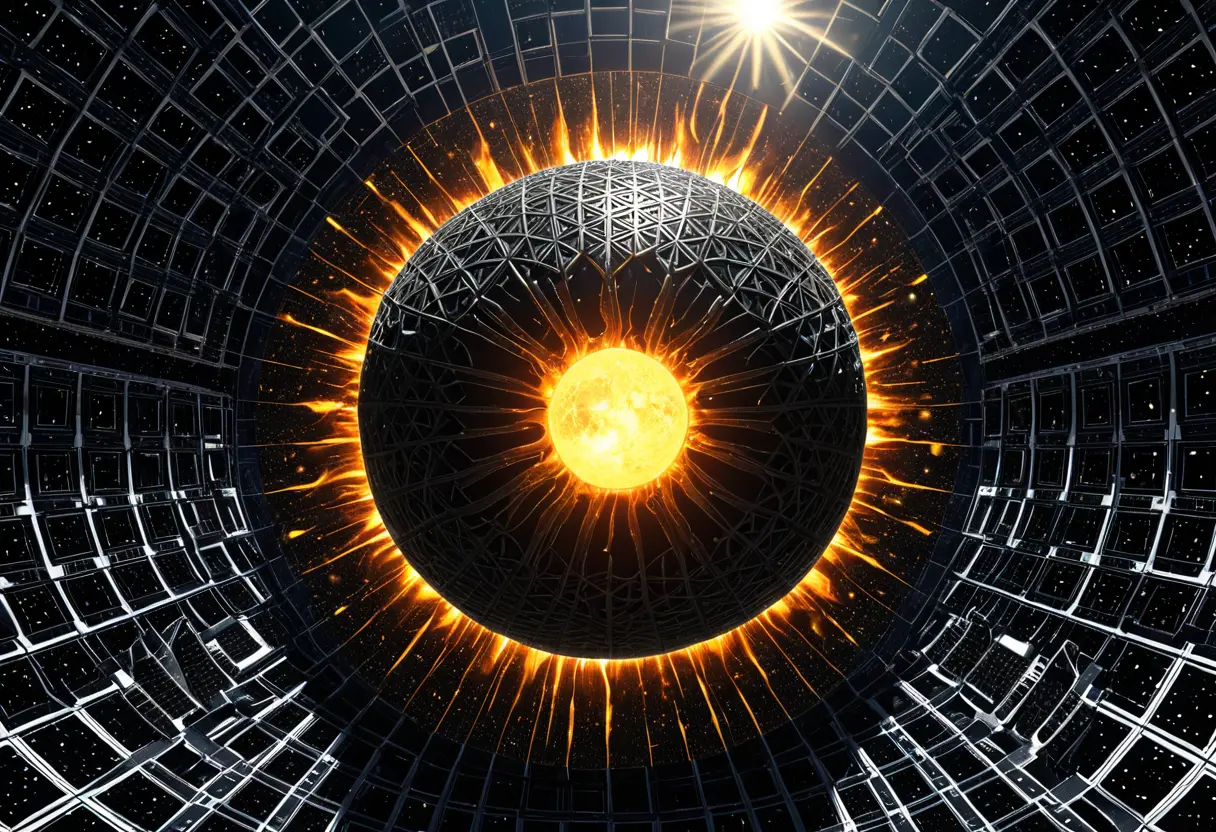
Professor Jason Wright of Penn State University proposed that the dip might be caused by a Dyson Sphere (or Dyson Swarm)—a hypothetical shell of solar collectors built by a highly advanced civilization to harvest 100% of their star’s energy. *Kardashev Scale Type II : A civilization reaching this level of development would theoretically surround their home star to power their vast technology. *A “Work in Progress” : The irregular dimming suggests the structure isn’t a solid shell but a swarm of panels still under construction, with gaps allowing light to leak through. It looked like we were witnessing “Interstellar Engineering” in real-time.
3. The Dust Curtain: The Leading Scientific Theory
Follow-up observations revealed that blue light was being blocked more than red light. *The Cloud of Debris : The current scientific consensus points toward a massive cloud of dust (perhaps from a swarm of comets or a pulverized planet) orbiting the star. Fine dust particles block blue light more effectively, which aligns with the data. *The Century-Long Dimming : However, the dust theory doesn’t explain why the star has been gradually getting dimmer for over 100 years. The complexity of the mechanism suggests that even the “dust” explanation might be hiding something more unique.
4. The Unsolved Frontier
Tabby’s Star reminded us that the universe still holds “Somethings” that defy our current physics. Even if it is “only” a cloud of dust, the scale of destruction required to create such a cloud is a mystery in itself.
And if it is the work of neighbors who are tens of thousands of years ahead of us, then we are catching the “pulse” of their civilization through the void. Each time the star blinks, it asks us: Are we ready to meet the builders of the stars?