Urban Exploration: The Hauntology of the Disconnected
Urban exploration (Urbex) is the act of manually accessing these offline sectors, crossing the physical “Firewall” of fences and “No Trespassing” signs to see what remains in the silence.
1. The Reality of the Firewall: Legal and Physical Risks
Urbex is often romanticized as an adventure, but from a “System Maintenance” perspective, it is a high-risk gamble with low rewards. *Property Protocols : In Japan, every inch of land has a “Root Admin” (Owner). Entering without authorization is a direct violation of Criminal Code Article 130 (Trespass). There is no such thing as “Truly Abandoned” land. *Structural Corruption : Abandoned buildings are riddled with Hardware Failures . Rotted floorboards, collapsing ceilings, and toxic environments (asbestos, mold, chemical leaks) are the physical “Bugs” that can lead to a terminal user error. *The Artifact Trap : Removing an object—even a worthless piece of junk—is classified as Larceny . Breaking a window to enter is Property Damage . The Urbex motto is a moral code, not a legal one.
2. The Pull of Hauntology: Nostalgia for a Lost Future
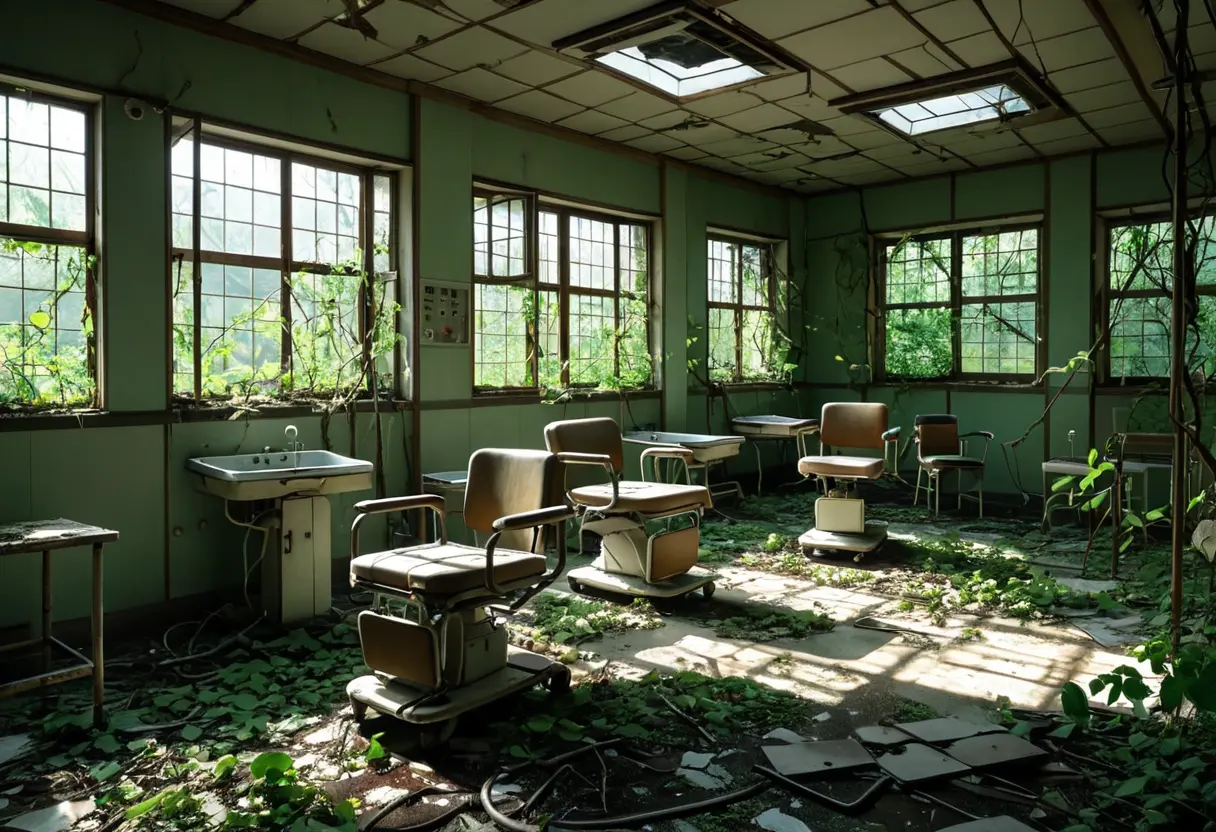
Why are we drawn to these “Crashed Sectors”? The answer lies in Hauntology (The Study of Haunting) .
A hauntological space is one that is haunted by the “Future that Never Happened.” When you stand in an abandoned classroom or a silent amusement park, you are seeing the ghosts of the dreams and routines that once animated the space. It is a form of Temporal Dissonance —the feeling that the past is still trying to “Render” itself in a present that has moved on.
We visit ruins to preview our own inevitable “Deletion.” They serve as a sandbox for contemplating the fragility of our civilization and the persistent memory of the earth.
3. Genius Loci: When the Environment Becomes Hostile
In Japanese folklore, the Genius Loci (Spirit of the Place) is never truly gone.
Many urban legends choose ruins as their stage because these spaces are “Information Sinks.” Years of human emotion, trauma, and routine are absorbed into the walls. When an explorer (a “Foreign Data Point”) enters, the environment reacts.
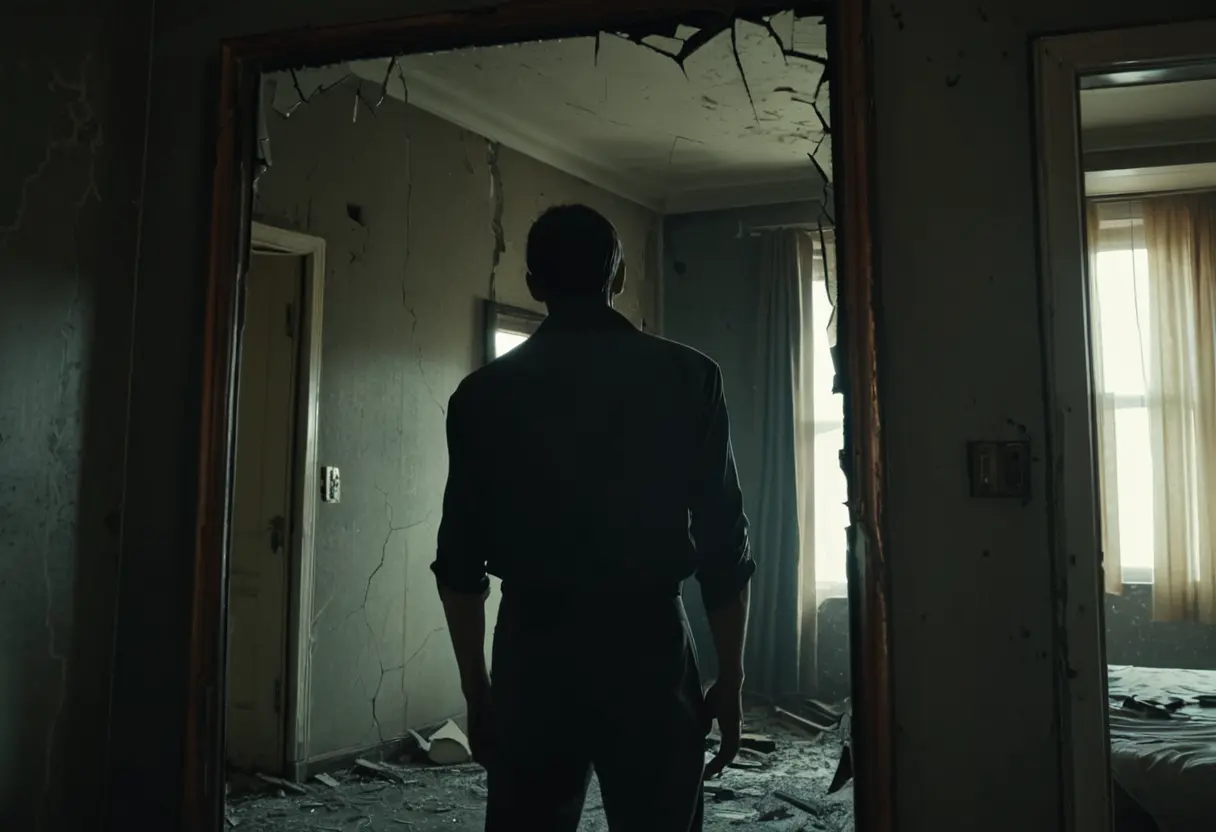
The silence of a ruin is not empty; it is a “Muted Channel” waiting for a signal. If you cross the boundary, you are not just seeing history—you are engaging with a Residual Consciousness that might not want to be observed.
Conclusion: The Safest Interface
The most stable way to access a ruin is through the Visual Archive —photographs and videos.
Physical ruins eventually collapse and return to the earth, but the “Image of the Ruin” is a persistent virus that can haunt your mind long after you’ve closed the tab. If you must go, remember: some doors are locked for the system’s protection, and some are locked to keep the “System Errors” inside.
*Sugisawa Village: The Ghost Town : The archetype of the deleted community. *Inunaki Tunnel: The Geographic Taboo : A physical portal to a lawless sector. *Haunted House Psychology : Why our brains “Simulate” presence in empty spaces.