The Red Room: The Malware of the Broken Soul
1. The Glitch in the Interface: An Inescapable UI
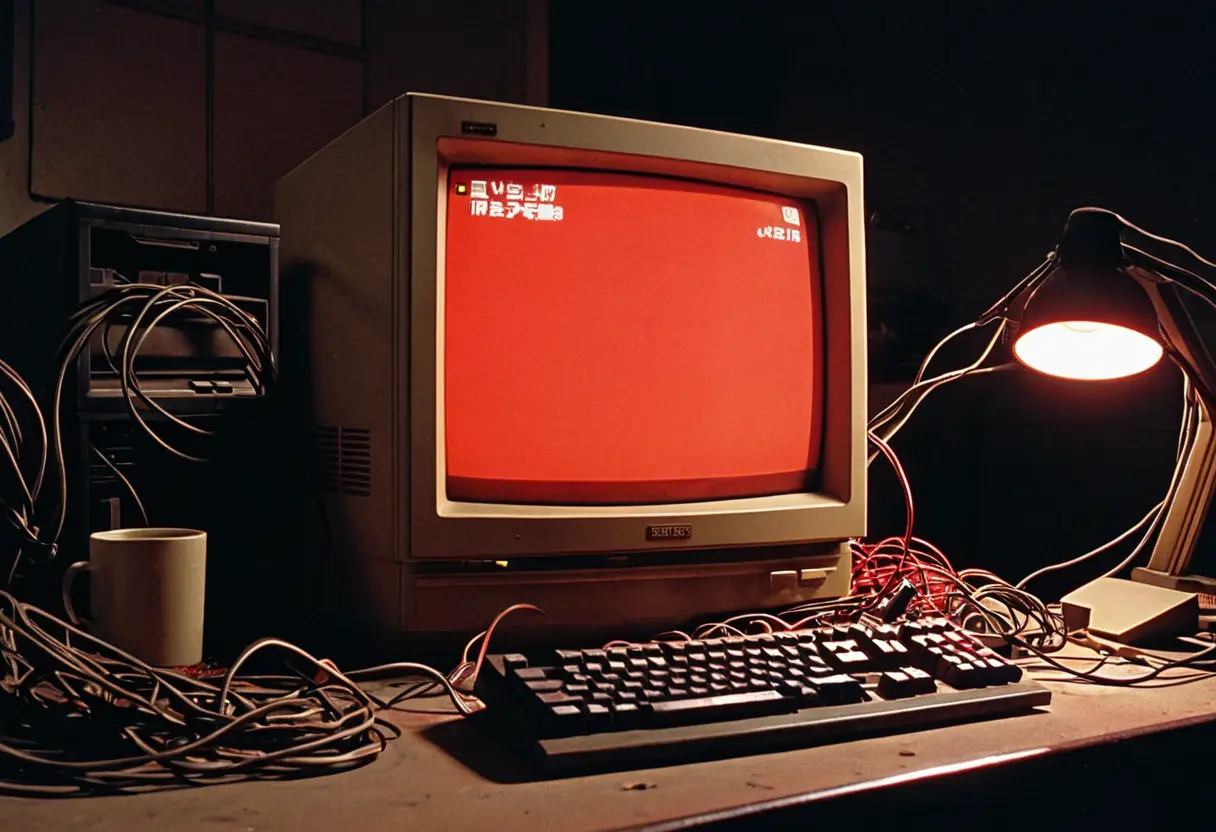
The legend begins with an urban rumor about a cursed website. Once you find it, a small, primitive window pops up with the text: “Do you like…?” (あなたは好きですか?)
To most users, this looks like common adware or a “Browser Crasher.” Naturally, you click the “X” to close it. This is the First Fatal Error .
In the world of the Red Room, the “Close” button is not a command for dismissal; it is the Initialization Script . Every click causes the window to reappear, and with each iteration, the message evolves:
“Do you like…?” “Do you like red…?”
- “Do you like the Red Room ?”
By the time the full question is revealed, the system sound is replaced by a distorted girl’s whisper, over and over. Finally, a list of names appears on the screen—and at the very bottom, you see your own name , or the name associated with your PC’s local registry.
2. Technical Anatomy: The Loss of Control
The true horror of the Red Room was its utilization of Browser Vulnerabilities (specifically in Internet Explorer 4.0-6.0).
It used an infinite window.open loop and hijacked the onbeforeunload event to ensure the user could not escape the page without a hard reboot. In technical terms, it turned the User’s Rejection into the Narrative Trigger . The more you fight the interface, the faster the “Curse” progresses.
This is a profound subversion of UI/UX principles. Usually, an interface serves the user; in the Red Room, the interface is a predatory entity that feeds on your input.
3. The Collapse of the Fourth Wall
The final act of the legend represents the total breach of the Fourth Wall .
The appearance of the user’s name is the ultimate “Recognition Hazard.” It signifies that the “Grip” of the internet has reached through the screen and physically identified the person in the chair.
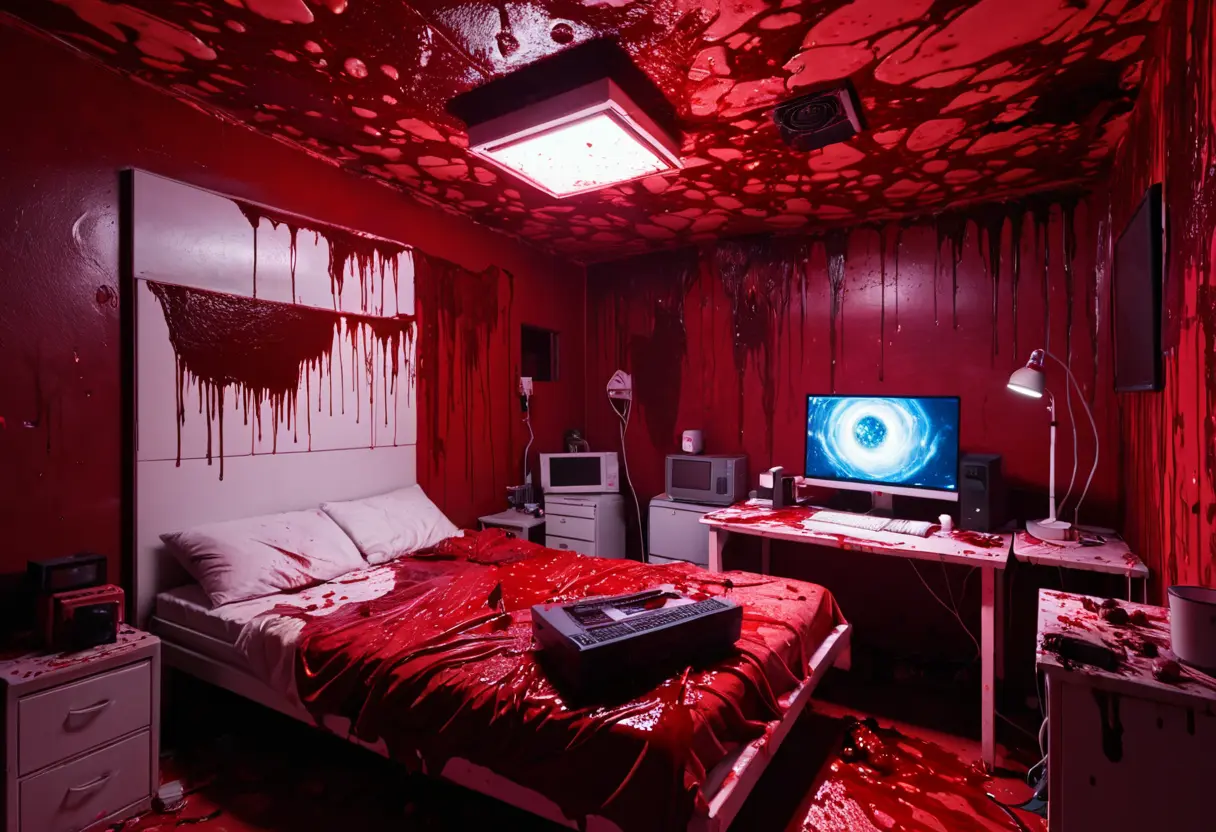
According to the legend, those who reach the end are found the next day in rooms where the walls have been painted red with their own blood. The virtual “Red Room” becomes a physical reality through the Physical Hack of the user’s environment.
Conclusion: The Persistence of the Pop-up
Today, Flash is dead and browsers are sandboxed. The specific script of the “Red Room” no longer functions in modern environments. However, the paradigm of “Information Intrusion” has only evolved.
From malware-laden ads to “Search hazards,” the Red Room reminds us that our screens are not shields. They are windows—and sometimes, when you stare into the web, something behind a pop-up window is staring back, waiting for you to click “Close.”
*Mary-san’s Phone : When the notification moves into physical space. *Kisaragi Station : The digital drift into a non-existent coordinate. *The History of Flash Horror : Why the 2000s web was a breeding ground for terror.