The Ouija Board: Seances Summoned by the Subconscious and the Truth Behind the Ideomotor Phenomenon
1. From Parlor Game to “Forbidden Artifact”: A Bizarre History
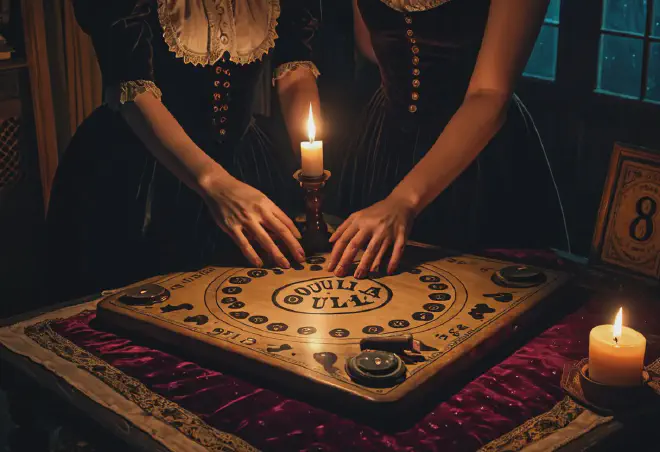
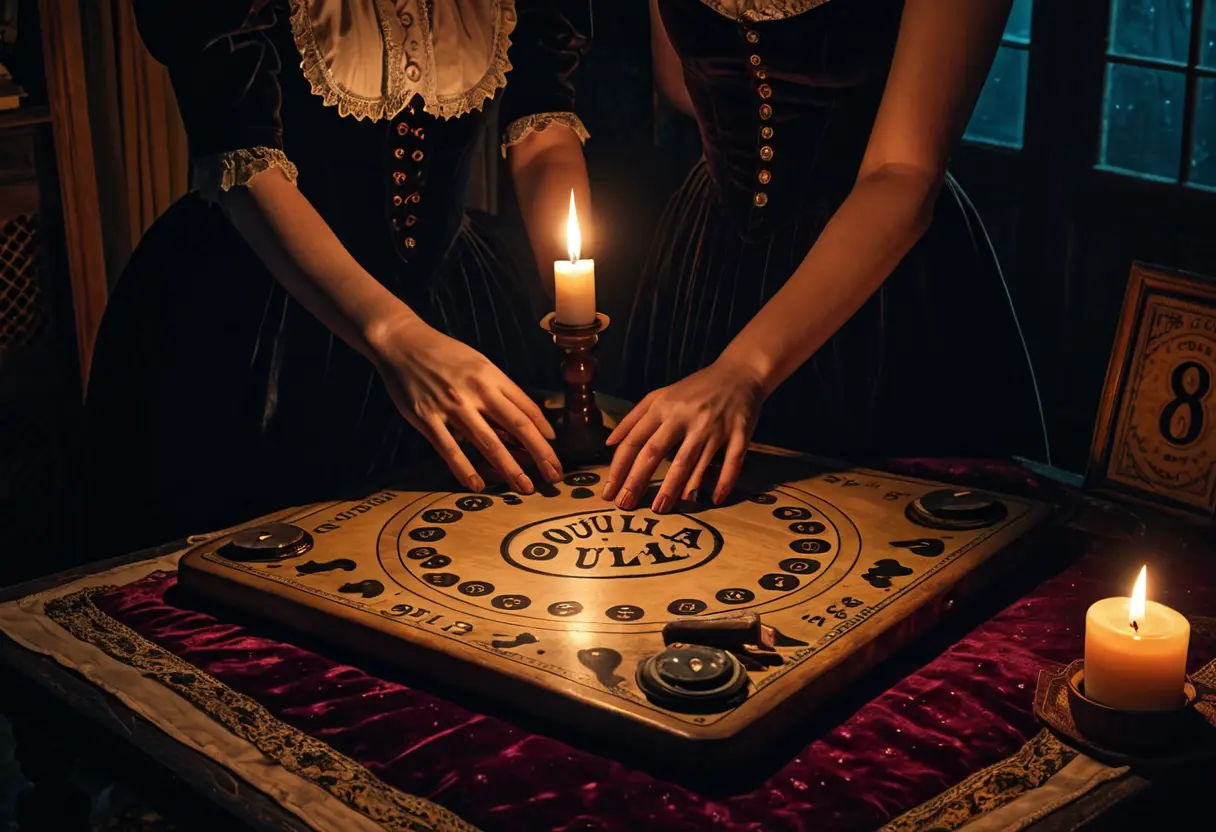
Surprisingly, the Ouija Board was not created as an occult tool from the start. In the late 19th century, amidst an unprecedented boom in Spiritualism in America, it was originally patented and marketed as an “amusing parlor game for the whole family” to be enjoyed simply as entertainment.
However, as the 20th century dawned, bringing with it the mass casualties of World War I and subsequent social anxieties, a surge of people desperately sought to communicate with their deceased loved ones. Gradually, it transcended the boundaries of a mere “game” and established its status as a serious spiritualistic tool. Later, largely due to the influence of horror films like The Exorcist, the image of it being a “dangerous tool that summons demons” was cemented, but its essence has always been rooted in the human desire for “contact with the unknown.”
2. Science’s Answer: Why Does it Move Against Our “Will”?
To the movements of the planchette—which psychics attribute to “spiritual energy”—scientists offer a clear, definitive answer: the “Ideomotor Phenomenon.” This is a reaction where “when a person strongly expects or anticipates a physical action, their muscles make minute, unconscious movements independent of their conscious will (voluntary movement).” 1. Expectation and Anticipation : Someone among the participants unconsciously thinks, “It will spell ‘YES’ next.”
Involuntary Movement : The brain translates that thought into physical motion, causing the muscles to twitch or apply pressure at a level below conscious awareness.
Synchronization and Amplification : Because multiple people have their fingers on the planchette, the slight movement of one person triggers the movements of others. As these minute forces combine, they cause the planchette to slide in large, deliberate sweeps across the board.
In short, the Ouija Board is not a device for summoning spirits, but rather a “mirror that visualizes the voices of our own subconscious.” 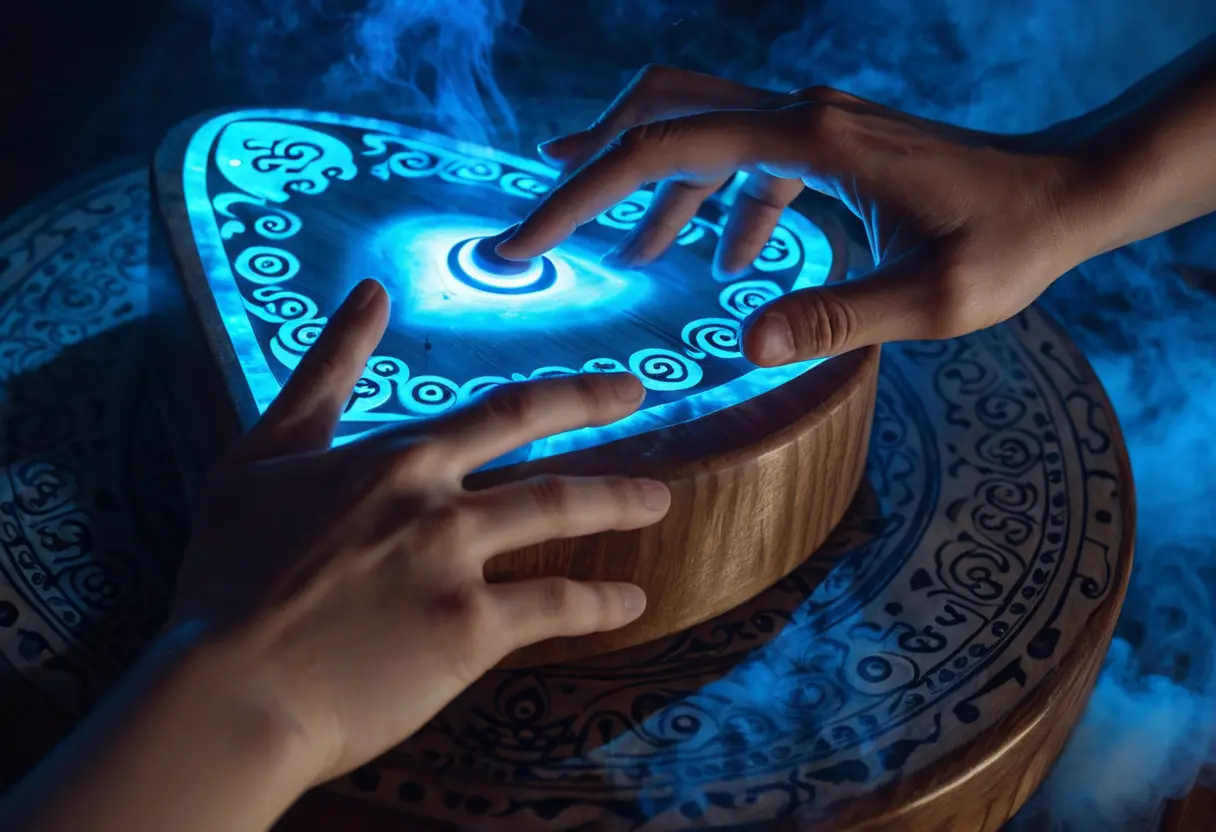
3. The True “Danger” Taught by Psychology
Reports frequently arise from Ouija Board users claiming they became “cursed” or “fell ill.” However, viewed through a psychological lens, the danger lies not in the spiritual realm, but in the “Nocebo Effect” (negative self-suggestion). When negative messages emerge from the board, such as “You are cursed” or “Something evil will happen on Friday,” these statements become deeply etched into the subconscious. Consequently, the individual begins to associate every trivial misfortune in their daily life with that message, triggering mental panic or even genuine autonomic nervous system disorders that lead to physical illness. It is precisely the embodiment of the proverb, “When you gaze long into an abyss, the abyss also gazes into you.”
4. Parallels in Japanese Occult Culture
In Japan, there is a very similar phenomenon known as “Kokkuri-san.” It is widely believed that Kokkuri-san is a localized variation of “table-turning” (a precursor to the Ouija board) imported from the West during the Meiji era. By associating the phenomenon with indigenous beliefs in animal spirits (foxes, dogs, and raccoons—which make up the characters for “Kokkuri”), it developed its own unique, distinctly Japanese eeriness.
Ultimately, the answers pointed out by the Ouija Board are nothing other than the “something” we ourselves are seeking deep within our hearts. It might be lingering regrets from the past, anxiety about the future, or perhaps our own true nature that we simply refuse to acknowledge.