Exorcism: The Truth Behind the 'Surgery of the Soul' Where Religion and Psychiatry Intersect
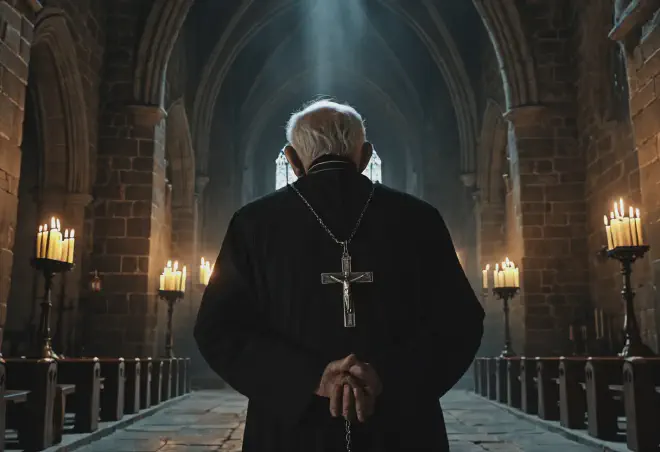
1. Terror as a True Story: “Robbie’s Case,” the Model for the Movie
The legendary 1973 horror film The Exorcist was based on a real-life model. It was the terrifying ordeal experienced in 1949 by a 13-year-old boy in Maryland, given the pseudonym “Robbie.”
Around the boy, beds shook violently, scratching sounds emanated from the walls, and vials of holy water floated in the air on their own. The boy spewed curses in Latin, and the word “HELL” appeared on his skin like raised, inflamed welts. After months of grueling exorcisms, the boy finally regained his peace, but the priests who witnessed the events maintained for the rest of their lives that “it was something psychology could never explain.”
2. Modern Psychiatry’s Answer: The True Identity of Possession
Conversely, modern psychiatry and neuroscience have redefined many phenomena previously deemed “demonic possession” with specific medical diagnoses. *Dissociative Identity Disorder (DID) : Commonly known as multiple personality disorder. An alter ego acts as the “demon,” hurling abuse or exhibiting abnormal physical strength while the core personality has no memory of the events. *Schizophrenia : Severe hallucinations and auditory delusions. A rigid persecutory delusion that an entity other than oneself has taken control. *Anti-NMDA Receptor Encephalitis : Inflammation of the brain that causes wild mood swings, severe convulsions, strange mouth movements (chewing motions), and the screaming of bizarre noises. It has been pointed out that historically, many patients suffering from this disease were likely subjected to inappropriate treatments as victims of “demonic possession.” *The Tragedy of Anneliese Michel : In 1970s Germany, a 23-year-old woman suffering from mental illness was misdiagnosed as possessed. Her medical treatment was halted in favor of relentless, grueling exorcism rites, ultimately leading to her death from starvation and exhaustion. This case continues to serve as a stark warning against “excessive religious intervention.”

3. The Psychological Mechanism of “Healing” in the Ritual
What is truly fascinating is the existence of documented cases where patients who showed absolutely no response to medical treatment recovered dramatically after undergoing an exorcism. Psychologists analyze this as a “placebo effect driven by powerful psychological drama.” For an individual who believes to the marrow of their bones that they “are controlled by a demon,” an exorcist bearing the ultimate authority of God may be able to access their deep subconscious far more effectively than a doctor in a white coat. Through the “drama” of the ritual, the patient’s self-suggestion (the demon) is officially “banished,” thereby executing a profound mental reset.
4. The Sacred Battle Continues
Under the Vatican’s modern guidelines, before an exorcism can be performed, the subject is strictly required to undergo a thorough evaluation by psychiatrists and medical specialists. The very process of discerning whether an event is a supernatural phenomenon or a medical disease has itself become part of the modern ritual.
Is a demon an entity existing in the outside world, or the projection of a “shadow” lurking deep within our own minds? That boundary continues to flicker, still unresolved, in the heavy silence of dark chapels.