In this sub-category, we move beyond the “vibe” of the occult to analyze the actual protocols used to bridge the gap between our world and the beyond. Why do rituals created centuries ago still possess the power to “heal” or “break” the modern mind?
1. Exorcism: The Sacred Surgery of the Mind
The act of Exorcism is often sensationalized in horror films, but its reality is a complex intersection of ancient faith and modern psychiatry.
We examine the “holy war” fought for the souls of those purportedly possessed—from the real-life model for The Exorcist (Robbie’s Case) to the modern Vatican protocols. Is a demon an external invader, or a projection of the “shadow” within? We also investigate how medicine redefines “possession” through the lens of Anti-NMDA Receptor Encephalitis and Dissociative Identity Disorder, while acknowledging the profound healing power of the ritual drama itself.
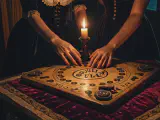
From the Ouija Board to the Japanese “Kokkuri-san,” these tools for “spirit communication” are among the most famous—and dangerous—pastimes in the occult world.
Science explains the movement of the planchette through the “Ideomotor Phenomenon” —the involuntary muscle movements driven by subconscious expectation. However, the true danger lies not in the spirits themselves, but in the “Nocebo Effect” (negative suggestion) that can physically sicken a believer. These boards are not telephones to the dead, but mirrors that visualize the whispers of our own hidden psychological depths.
Analysis: The Heavy Anchor in the Subconscious
A ritual is more than a series of formalized movements. It is a heavy anchor thrown into the vast, turbulent sea of the human subconscious. Sometimes, that anchor reels in something from the abyss that we cannot easily control—not because a ghost appeared, but because we have finally decoded the voices we usually suppress.
Exploration List of Rituals and Contracts *Exorcism: The Battle Against the Possessing Shadows : Investigating the official Vatican protocols and the psychiatric boundaries of demonic possession. *The Ouija Board: Mirrors of the Subconscious Mind : Decoding the ideomotor phenomenon and the psychological hazards of “casual summoning,” with parallels to Japan’s Kokkuri-san .
Are you prepared to follow the protocols? Use the knowledge here as your flashlight in the dark chapels of the mind.