Representative Works: Monumental Stones that Defined an Era

In the vast sea of the Isekai genre, stars of stories drift beyond count. Yet, among them, certain works shine as brightly and clearly as lighthouses guiding the way. They are more than just “hits”; they are “Irreversible Paradigm Shifts” that changed how we perceive the “Otherworld” before and after their release.


1. Invention and Consolidation of Concepts

Some works established the formal style of “Summoning,” others birthed the shared language of “Game-like Reality,” and still others depicted the spiritual salvation of a “Loser’s Rebirth.” The settings and emotional patterns presented by these works have become the “Grammar” of the genre, serving as the flesh and blood of all subsequent narratives. To trace these masterpieces is to decode the DNA of Isekai culture.


2. Explosion of Diversity: From Parody to Sociology

What once began as a longing for the “Strongest” hero in a classic tale has evolved into comedies that mock those very tropes, and even sociological attempts to discuss statehood and economics through the framework of another world. The Isekai structure has evolved into the “Ultimate Simulation Field” for any and all human imagination. These representative works are proof of that startling diversity and capacity for inclusion.


3. Analysis: The Will Left upon the Stones

At the core of each work lies a poignant question from the creators: “How should we live in this world?”

We admire Kirito’s dual blades, gasp at Subaru’s despair, and weep for Rudeus’s life. These are never merely events on the other side of a screen. These stories, carved as monuments (memorial stones) of our era, continue to gently stand alongside the unnameable solitude and hope of those of us living in this very moment.


Exploring the Masterpieces

The saga of a man’s redemption through a complete second life.

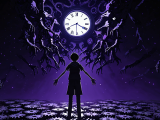
A psycho-horror loop fantasy exploring the weight of death and human will.

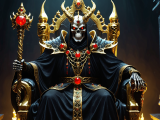
A dark fantasy focusing on organizational management and the solitude of power.

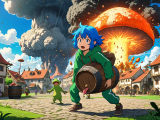
A brilliant comedy that mocks and parodies every trope of the genre.

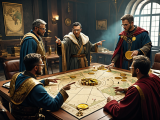
An intellectual survival story focusing on building a society within an MMO.

The pioneer that quantified life and defined the modern virtual hero.

The foundational work that sparked the fan-fiction explosion in Japan.

Mushoku Tensei: Restarting a 'Life' on the Canvas of another World

1. The Realism of Rebirth: Growth Fueled by Regret The protagonist is a 34-year-old unemployed shut-in, abandoned even by his family in modern Japan. He dies in an accidental collision (Truck-kun) and begins a brand-new life as the baby “Rudeus Greyrat” in another world. *A Saga of a Lifetime : What sets this work apart from other “over-powered” fantasies is that it depicts Rudeus’s “entire life”—from infancy and youth to adulthood, marriage, and old age—without omission.

Log Horizon: The Sociology for Surviving the 'Disaster' of another World

1. Swords, Magic, and a “Self-Government”: The Dynamics of Society Building Tens of thousands of players are cast as living beings into a world that was once a game (Elder Tale). *Establishment of the Round Table : Instead of violence, Shiroe uses “Information Control” and “Economic Incentives” to unify opposing organizations. Ownership of land, the value of currency, and diplomacy with the inhabitants (People of the Land/NPCs)—this is a pure Political Drama wearing the skin of fantasy.

Re:ZERO -Starting Life in Another World-: desafío de lo irreversible, desgaste del alma y salvación

This narrative by Tappei Nagatsuki confronts the Isekai genre with a cruel reality it had long forgotten: the “Weight of Death.” By depicting the “Death = Reset” template not as a convenient navigation tool, but as a form of cumulative mental torture , the work transcends fantasy to achieve the texture of raw psychological horror. 1. Shattered Self-Esteem: The Mirror Named Natsuki Subaru The protagonist, Natsuki Subaru, possesses no magic, no swordsmanship, and no exceptional intelligence.

KONOSUBA: God's Blessing on This Wonderful World! — A Loving Rebellion against Formal Aesthetics

This work by Natsume Akatsuki reigns as an exhilarating counter-culture to an Isekai reincarnation genre that had already begun to feel oversaturated. It is not merely a gag series; it is a masterpiece that transformed the “toxin of convenience” into the “medicine of laughter”—a true milestone for the genre. 1. Identity in Dysfunction: The Requiem of Degenerates In a typical story, companions support the protagonist and face powerful enemies together. Such common sense does not apply to Kazuma’s party.

Overlord: The Solitude of the Absolute Ruler and the Madness of 'Roleplay'

1. The Fictional King: A Salaryman inside the Skeleton The protagonist, Momonga (Satoru Suzuki), is transported to another world along with the “Great Tomb of Nazarick,” a remnant of a former golden age of gaming. *Perfect Roleplay : The NPCs under his command view him as an absolute “God.” However, his inner self remains that of a mediocre modern salaryman. The dynamic where he desperately continues to act as a “Dignified Overlord,” inadvertently leading to world conquest through a series of misunderstandings, is a hilarious comedy of errors—and at the same time, a prison of irreversible self-consciousness.

Sword Art Online: The Pioneer that Overwrote Virtual Worlds into 'Reality'

1. Quantification of Life: The Cruel Truth of the System The greatest achievement of SAO lies in its elevation of “Game-like Reality” to the level of literature. *HP Bars and Status : The terror of life being condensed into a single gauge. The cruelty of strength being dictated by numerical values. This shared language of a “Quantified World” laid the foundation for the concepts of “Levels” and “Skills” in later Narou-kei works.

The Familiar of Zero: The Legend that Became the 'Seedbed' for the Isekai Boom

1. The Grammar of Summoning: Encounter between Modern Weapons and Magic The protagonist, Saito Hiraga, is suddenly summoned from his ordinary daily life as a “familiar” by the otherworld mage Louise. *Origin of Modern Weapon Omnipotence : Rocket launchers and fighter jets (Zero Fighters) are brought into a magical world, wielding overwhelming firepower. The catharsis born from this “clash of cultures” became an immovable template in later genres. *The Heroine’s Magnetism : Louise’s “Tsundere” personality, brought to life by the voice of Rie Kugimiya, became an icon of an era.