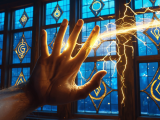
The Isekai genre isn’t supported only by surprising, novel ideas. Rather, it is the frequently repeated and refined “Tropes” (Standard Patterns) that serve as the strongest bridge between the author and the reader. This section analyzes these templates as a shared set of tools for playing in the vast sandbox of the Otherworld.
1. Templates as “Stabilizers”
What readers often seek in Isekai stories is a “low cost of entry.” Familiar introductions involving “Truck-kun” and the ubiquitous “Status Screen”—these are functional modules designed to minimize the mental burden of adapting to a new world, guiding the reader directly to catharsis.
2. Variations of Desire
Even with the same template, “Variations” (arrangements) are added depending on the era and the reader demographic. The “God-like Omnipotence” of the past has transformed into modern themes like “Slow Life” or “Quiet Revenge after being Banished.” Observing tropes is equivalent to looking at a spiritual thermometer to measure what kind of “Salvation” modern people are seeking at any given moment.
Tropes are often criticized as a “lack of originality.” However, much like Noh or Kabuki have their “Kata” (forms), the Isekai genre is establishing its own unique formal aesthetic. Because these established forms exist, highly sophisticated meta-pleasures—how to subvert the form or how to perform it beautifully—are born.
Exploring the Tropes
The psychological barriers and tools for rewriting the rules of reality.
The most ruthless and merciful teleportation device in modern mythology.
How the antagonists of Otome games break their ‘Doom Flags’ to achieve independence.