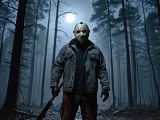
The slasher is perhaps the most “Physical” subgenre of horror cinema. It discards the formless terrors of curses and spiritual hauntings in favor of a tangible presence: a “Killer” who delivers physical destruction and absolute death.
These entities are either silent or mockery-driven, ignoring the rules of civilized morality as they advance toward their prey. In many ways, they serve as personifications of the “Inevitable End”—a reminder of mortality that modern society often attempts to suppress.
The setting is almost always a sanctuary of youth: a summer camp, a college dorm, or a quiet suburban street. These playgrounds are transformed into hunting grounds. *The Morality Play : There is a religious quality to the slasher; those who break the social codes of the era (often through vice or negligence) are the first to be harvested. This transforms the genre from mere gore into a strange, dark morality play. *The Final Girl : The survivor who overcomes her terror to confront the killer. She represents the resilience of the human spirit and the refusal to succumb to the “predatory void” represented by the masked man.
The Birth of the Icon: Terror as Entertainment
Jason Voorhees, Freddy Krueger, Leatherface, and Michael Myers.
Despite being brutal killers, these characters have ascended into the realm of pop-culture icons. This is due to their “Visual Sophistication” and “Stylized Brutality.” They are the messengers of a cruel festival—avatars of death that allow us, from the safety of the theater, to witness the razor-thin boundary between life and death. When the blade glints and the mask looms, we find a strange, visceral intoxication in the aesthetics of the slaughter.
Featured Archives
Exploring the foundation of the modern slasher and the tragic motherhood that birthed a monster.
Wes Craven’s surreal masterpiece that moved the massacre into the invincible territory of dreams.
Analyzing why the silent, hockey-masked juggernaut remains one of the most feared and beloved icons of horror.
The Gallery of the Machete *Freddy Krueger : The loquacious king of the boilers, who crafts nightmares into reality. *The Anatomy of the Mask : Why the concealment of the face triggers such primal dread. *Survival Rules: The Final Girl Archetype : Investigating the tropes that allow one to survive the night.