Bunyip: The Roar from the Billabong
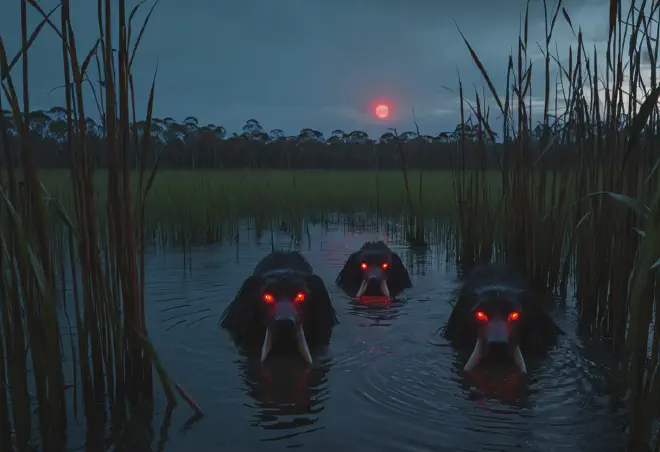
The Bunyip . Meaning “spirit” or “devil,” this creature has no single form. It is a shifter, seen as a dog-faced beast with a seal’s body, a walrus-tusked predator, or a horse-tailed monster. But in every account, one detail is consistent: it is the master of the depths, waiting to drag the unwary into the black mud.
1. Anatomy of an Outcast: The Shifting Shape
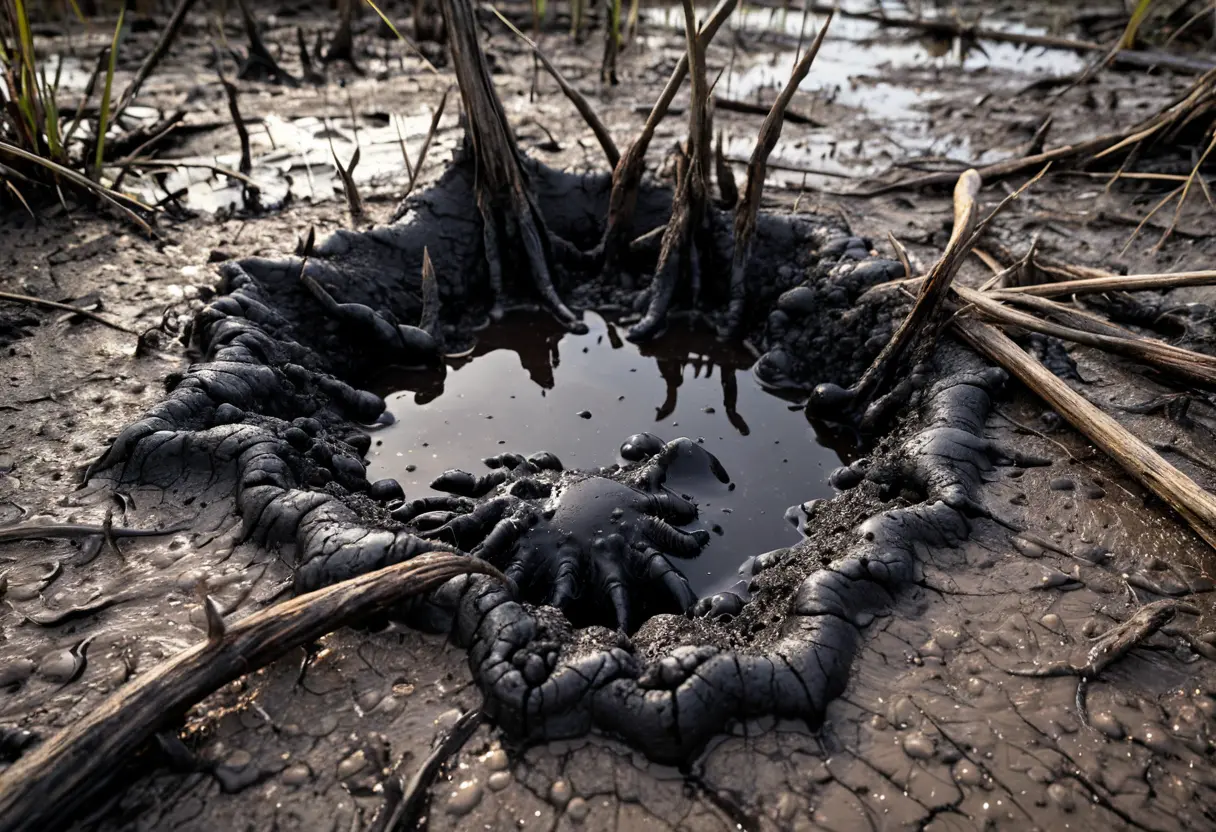
Witness accounts of the Bunyip are as varied as the landscape itself. *The Chimeric Beast : Commonly described with a smooth, seal-like body, a dog’s head, and sharp tusks or claws. Its hide is usually black or dark brown, making it nearly invisible in the murky swamp water. *The Death Call : The Bunyip’s presence is often announced by its voice—a low, booming roar that echoes through the silence of the night, or a high-pitched scream that sounds disturbingly like a human in distress.
2. The Ancient Memory: The Diprotodon Theory
Scientists have proposed a fascinating bridge between myth and reality regarding the Bunyip. *Memory of the Megafauna : Australia was once home to the Diprotodon —a giant, rhino-sized marsupial that resembled a massive wombat or hippopotamus. *Deep-Time Folklore : These giants preferred waterholes and became extinct roughly 40,000 to 50,000 years ago—the exact period when early Aboriginal people arrived. The Bunyip may be a “cultural fossil”—a memory of a real, massive predator passed down through thousands of generations of oral storytelling.
3. Colonial Panic: The 19th-Century Search
The Bunyip was not just an Aboriginal tale. In the 1800s, European settlers were also terrified of the “new monster” in their new country. *Newspaper Hysteria : The 1840s and 50s were filled with reports of “Bunyip sightings” and the discovery of unidentified bones. Even early scientists took the mystery seriously, debating whether the Bunyip was an undiscovered species of freshwater seal. *The Artifacts : For a time, museums in Australia displayed strange skulls claimed to be from the Bunyip. While many were later identified as deformed calves or foals, the desire to find a “water monster” in the Australian landscape remained a powerful force.
4. The Warning in the Water
The Bunyip is a manifestation of the danger hidden in the vital resource of water.
If you are standing by a quiet billabong at night and hear a sudden “plop” followed by a low, vibrating growl from the mud… do not wait to see what rises. It is the memory of 40,000 years telling you that the water is not yours—it belongs to the Devil of the Billabong.