Little Red Riding Hood: The Warning in Crimson
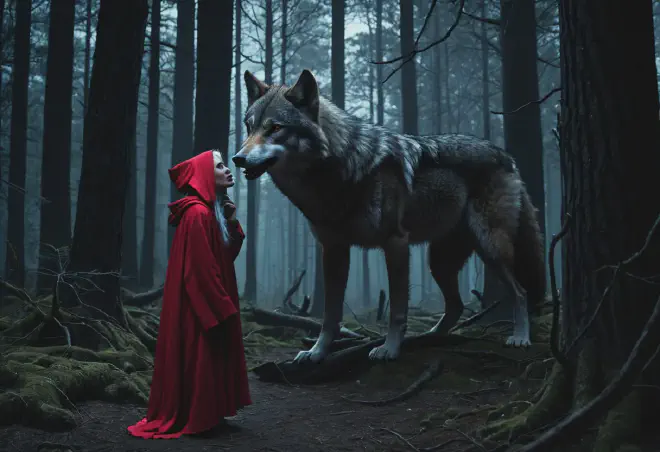
Little Red Riding Hood is not a story about staying on the path. It is a raw, biological warning about the “Wolf” that wears human clothing and hides in the polite societies of our world.
1. Perrault’s Despair: A Warning for the Courteous
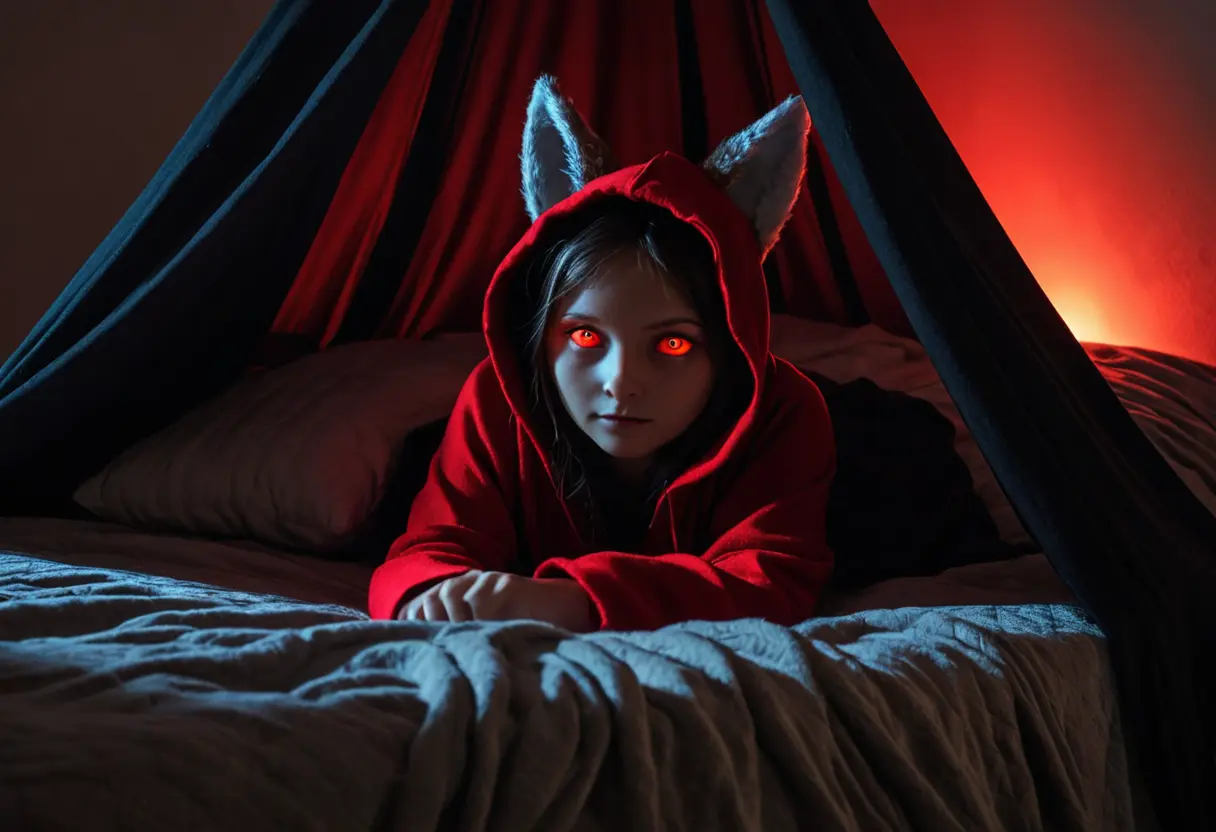
In Charles Perrault’s 1697 version, the story ends at the bed. *The Absolute End : The girl is tricked into stripping her clothes and climbing into bed with the wolf, where she is eaten. There is no rescue. *The Moral of the Wolf : Perrault explicitly stated that the “Wolf” represents the “charming men” of the French courts who follow young women home and offer sweet words. The story was a desperate warning against sexual predation and the loss of innocence in a world of predators.
2. The Taboo of the Flesh: Ancestral Cannibalism
In older, medieval oral versions, the story was even more gruesome, involving a horrific “Welcome Dinner.” *The Cannibalistic Rite : The wolf kills the grandmother, puts her meat on a plate, and her blood in a bottle. When the girl arrives, the wolf encourages her to eat and drink. By the time the girl realizes the truth, she has already consumed her own blood-kin. *A Lesson in Survival : This visceral horror served as a “psychological vaccine” for children in 14th-century Europe, where famine and violence were common. It taught them that the world is a place of consumption, and ignorance leads to becoming the next meal.
3. The Symbolism of “Red”
The color of the girl’s hood represents her transition from childhood to the dangerous world of adulthood. *Menstruation and Maturity : Anthropologists often view the “Crimson” as a symbol of the arrival of menstruation—the moment a girl becomes “capable” of and “targetable” by the biological world. *The Target in the Green : Against the dark green of the forest, the red hood is an invitation for the predator. It marks her as “The Other,” the one who has stepped out of the safety of the village and into the realm of the wild.
4. The Wolf Among Us
Today, the “Red Hood” has moved from the woods to the digital landscape and the city streets. The “Wolf” no longer has hair or paws; he has a profile, a smile, and a “reason” why you should trust him.
“Why is your mouth so big, grandmother?”
When you hear the final answer, it’s already too late. You are already in the bed.