Hansel and Gretel: The Hunger of the Woods
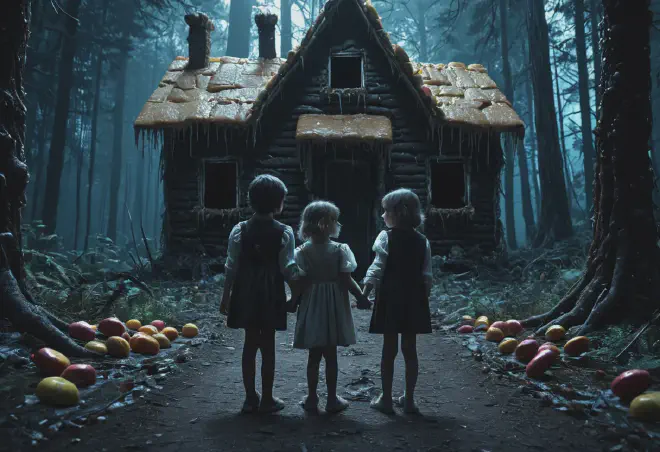
It is a tale of parents making the ultimate, horrific choice to abandon their own blood and flesh (child abandonment) to save their own lives. It is a story of a world so hungry that human beings were no longer neighbors, but “meat.”
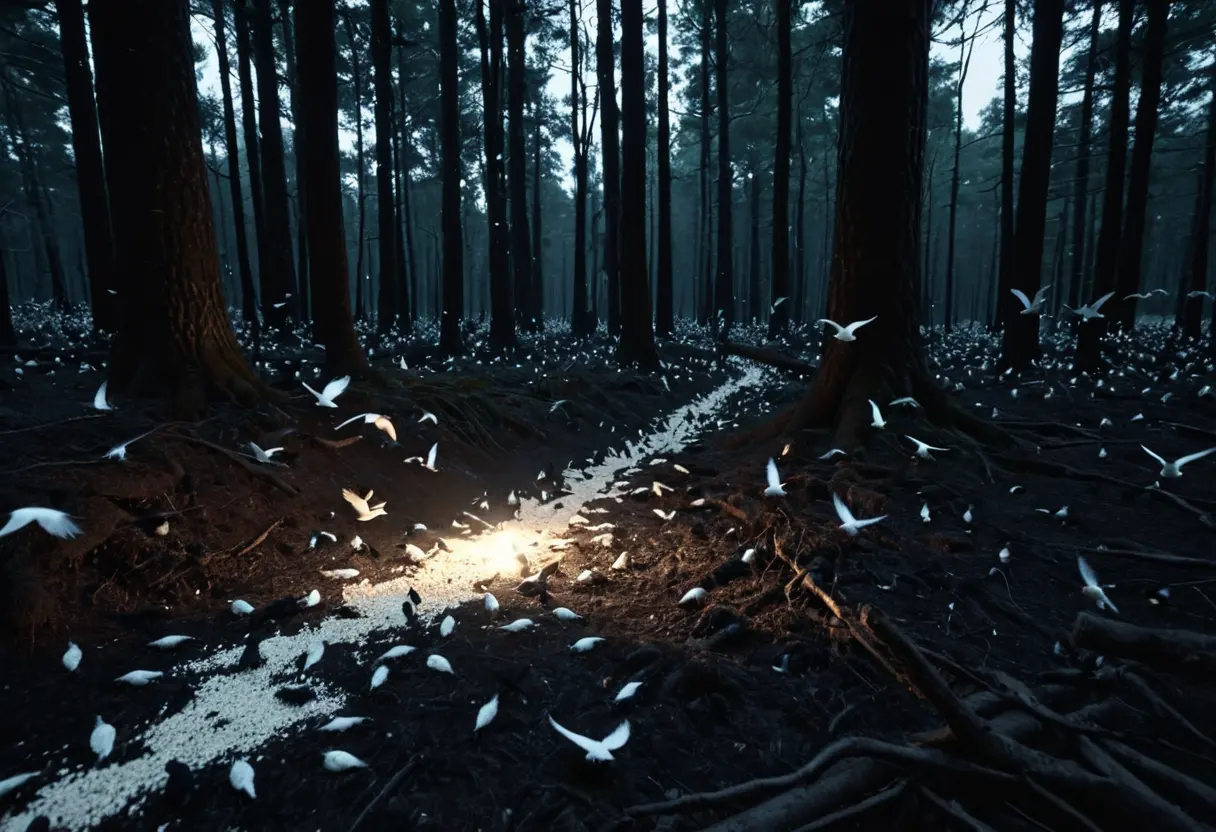
1. 1315: The Reality of “Thinning the Mouths”
The background of the story is rooted in the most catastrophic crop failure in European history. *Mouth-Thinning (Kuchinashi) : During years of relentless rain and famine, livestock was eaten until none remained. To prevent the entire family from perishing together, the weakest—the children—were actually abandoned in the deep woods. *The Mother as Monster : In the original 1812 edition of the Brothers Grimm, it was the biological mother , not a stepmother, who demanded the children be left to die. The story was later “sanitized” to protect the sacred image of motherhood.
2. The Candy House: Hallucination of the Dying?
The description of a house made of sweets in the middle of a forest carries a morbid subtext. *The Seductive Bait : The witch lures the children by feeding them the richest foods to “fatten them up.” This represents the absolute loss of human dignity—the children are literally being prepared like livestock for a meal. *The Vision of Death : Some psychologists interpret the candy house as a “terminal hallucination” experienced by children dying of starvation—a beautiful, impossible dream occurring moments before the mind shuts down.
3. The Victory of the Oven: The Awakening of Killers
The climax sees Gretel tricking the witch and pushing her into the pre-heated stone oven. *The Reversal of Roles : By burning the witch, the children don’t just “defeat evil”; they become the ultimate survivors. They loot the witch’s house of its treasures and return to the parents who abandoned them. This ending suggests that in a world of famine, one must be willing to kill and plunder to survive. The “innocence” of the children is burned away in the same oven as the witch.
4. The Whisper of the Hunger
Today, we view the “Gingerbread House” as a symbol of whimsey. But beneath the frosting lies the scream of abandoned children and the echo of the Great Famine.
If you ever find an offer of “unconditional abundance” in a place of scarcity, be wary. Is it a gift to fill your stomach, or a preparation to fill someone else’s?