Folklore & Cryptids of Europe: The Shadows of Ancient History

Europe. A continent where every stone has a memory, and every forest has been walked by a thousand years of feet.

In contrast to the wild, chaotic dread of the Americas, European folklore is rooted in the Weight of History . The monsters here are often legacies of ancient kingdoms, remnants of industrial-era panics, or the dark, original versions of fairy tales that were once told to keep the peasantry in line. From the crushing depths of the Atlantic to the haunted castles of the East, we decode the “Cruel Truths” of the Old World.


1. Ancient Relics & Aquatic Horrors

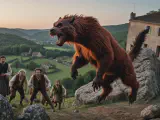
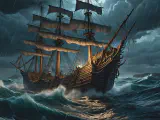
Remnants of a biological or spiritual past that still stir in the deepest corners of the continent. *Nessie: The Sovereign of Loch Ness : Explore the long-necked enigma of the Scottish Highlands. *Kraken: The Titan of the North Sea : The giant that pulled ships into the abyss long before modern science. *Beast of Gévaudan: The Reign of Terror : A historical account of a 18th-century “wolf” that defied every biological classification.


2. Gothic Urban Myths & Phantoms

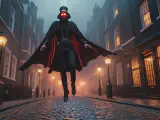
Urban legends born from the soot-filled air of the industrial revolution and the cobblestone streets of growing cities. *Spring-Heeled Jack: The Victorian Nightmare : The blue-flame breathing jumper who terrorized London. *The Pied Piper of Hamelin: A True Tragedy? : Decoding the historical disappearance of 130 children in 1284.


3. Dark Roots: The Original Fables

Before Disney and sanitized bedtime stories, European fairy tales were survival manuals filled with blood and warnings of “True Evil.” *Snow White: The Iron-Hot Dance : The original story of narcissism and ritualistic revenge. *Hansel and Gretel: The Hunger of the Woods : A grim record of famine and child abandonment. *Baba Yaga: The Witch in the Mortar : The Slavic guardian of the threshold between life and death.


The Cold Whisper of the Old World

To explore European folklore is to peel back the layers of civilization and find the ancient, cold heart underneath. When the wind whistles through a castle’s arrow slit or a ripple appears on a black lake, know that you are not witnessing a “new” mystery—you are witnessing a memory that has finally woken up.
Regional Navigation Great Britain: Highlanders and Urban TerrorsThe Continent: Beasts and Dark Spires*The Nordic & Slavic Depths: Ice and Witches

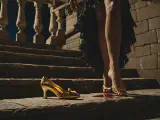
Cinderella: The Blood-Stained Gold Slipper

It is a story of quiet, patient vengeance and the madness of a world willing to mutilate its own flesh to climb the social ladder. 1. Mutilation for the Crown: “Cut off the Toe” To fit into the gold slipper (it was gold, not glass, in the Grimm version), the stepmother gives her daughters an order that freezes modern ethics. *The Severed Toe : The eldest sister cuts off her big toe.

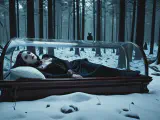
Snow White: The Wedding of Iron and Torture

1. The Mother’s Malice: The First Edition In the original 1812 edition, the one attempting to kill Snow White was not a “Step-mother,” but her biological mother . *The Madness of Beauty : The mother’s inability to accept her daughter surpassing her in beauty reflects the lonely, high-stakes competition of aristocratic women in medieval society, where beauty was a primary survival asset. *The Feast of Organs : The Queen demanded Snow White’s “lungs and liver” as proof of death.

Little Red Riding Hood: The Warning in Crimson

Little Red Riding Hood is not a story about staying on the path. It is a raw, biological warning about the “Wolf” that wears human clothing and hides in the polite societies of our world. 1. Perrault’s Despair: A Warning for the Courteous In Charles Perrault’s 1697 version, the story ends at the bed. *The Absolute End : The girl is tricked into stripping her clothes and climbing into bed with the wolf, where she is eaten.

Hansel and Gretel: The Hunger of the Woods

It is a tale of parents making the ultimate, horrific choice to abandon their own blood and flesh (child abandonment) to save their own lives. It is a story of a world so hungry that human beings were no longer neighbors, but “meat.” 1. 1315: The Reality of “Thinning the Mouths” The background of the story is rooted in the most catastrophic crop failure in European history. *Mouth-Thinning (Kuchinashi) : During years of relentless rain and famine, livestock was eaten until none remained.

Baba Yaga: The Witch in the Mortar

1. The Icons of the Witch Baba Yaga’s dwelling and mode of transport are highly symbolic and ritualistic. *The House on Chicken Legs (Izba) : Her hut stands on two massive, scaly legs that allow it to run through the forest. It has no doors or windows until she commands it to face the intruder. The perimeter is guarded by a fence of human skulls whose eye sockets glow with an unnatural light at night.

The Pied Piper of Hamelin: The Disappearance of 1284

1. The Real Record: A City in Mourning What separates this from other fables is its documented reality. *The Hamelin Chronicle : The earliest town records from 1384 state simply: “It is 100 years since our children left.” There is no mention of rats in the original 13th-century accounts—only the disappearance of the children. *The Street of No Music (Bungelosenstrasse) : This street still exists in Hamelin today. It is where the children were last seen dancing.

Spring-Heeled Jack: The Victorian Jumper

In Victorian London, a city of both unprecedented prosperity and impenetrable smog, a legend was born in the shadows of the gaslights. Spring-Heeled Jack. First reported in 1837, this entity terrorized the British Isles for more than half a century. He was a figure of absolute anomalies: a man-like being who could breathe blue flames, possessed metallic claws, and could leap over ten-foot walls with a single, laugh-filled bound. Was he a twisted prankster, a mass hallucination of a soot-choked city, or something far more “extraterrestrial”?

The Beast of Gévaudan: The Reign of Terror in 18th-Century France

This is not a mere legend of a “big wolf.” It is a historical dossier involving royal hunting parties, aristocratic conspiracies, and a puzzle that remains France’s greatest unsolved mystery. 1. The Predation: An Intelligent Killer What plunged the people of Gévaudan into extreme panic was the beast’s unnatural behavior and morphology. *The Appearance : Eyewitnesses described a creature the size of a cow or donkey, with reddish-brown fur, a dark ridge along its spine, and a long, panther-like tail.

Kraken: The Titan of the North Sea

To the sailors navigating the freezing, treacherous waters of Norway and Iceland, there was something far more terrifying than any storm. The Kraken. Since Bishop Erik Pontoppidan described it in the 18th century, this entity has served as the apex of maritime horror. A beast so large it could be mistaken for an island, and so powerful it could drag a fully masted warship into the crushing depths of the abyss in a matter of seconds.

Nessie: The Sovereign of Loch Ness

1. 1934: The Surgeon’s Photograph and the Century’s Trick The image that turned Nessie into a global superstar was published in the Daily Mail in 1934. *Birth of an Icon : The silhouette of a long, graceful neck rising from the water was exactly what the public imagined a “Plesiosaur” would look like. *The Shocking Confession : In 1994, over 60 years later, one of the participants confessed that the photo was a hoax—a toy submarine with a plastic wood neck attached.