Yeti: The Mountain King of the Himalayas
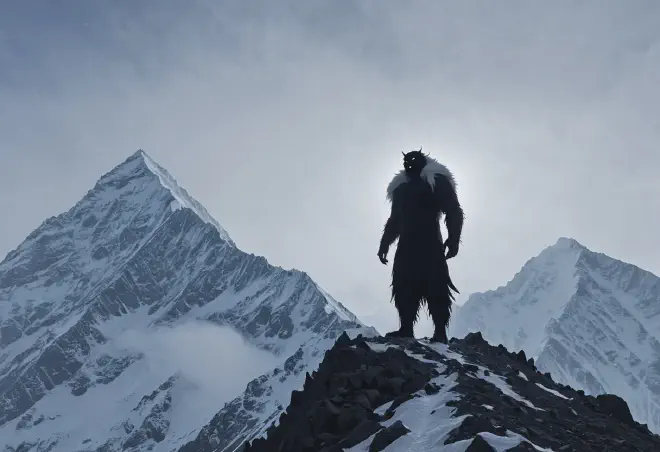
While the Western world became obsessed with the “Abominable Snowman” during the golden age of mountaineering, the reality of the Yeti sits at a crossroads between prehistoric biology and ancient spiritual belief.
1. 1951: The Shipton Footprint and the “Scalp”
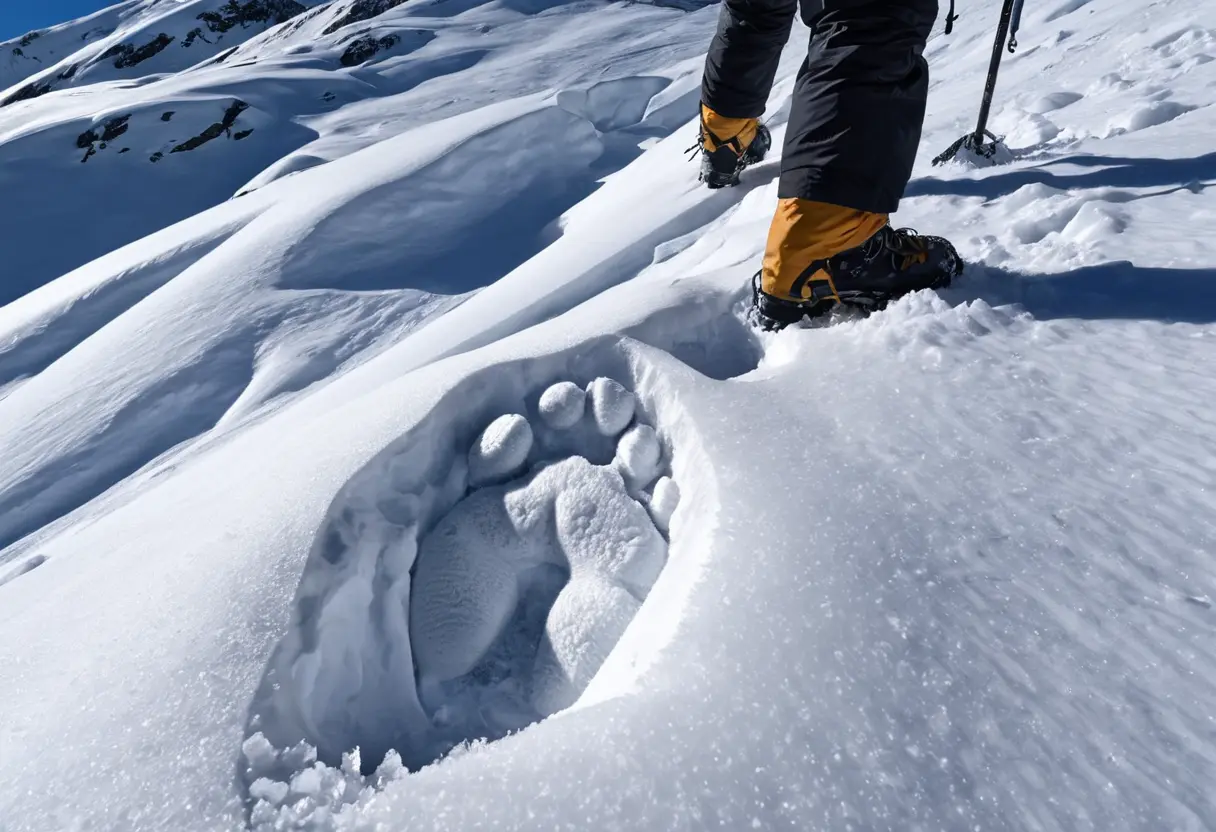
The global mystery of the Yeti was set ablaze by Eric Shipton, an English mountaineer who captured one of the most famous photographs in cryptozoology history. *The Impossible Print : Discovered on the Menlung Glacier, the footprint was 13 inches long and showed a thumb-like toe flared outward—a feature that matched no known species of primate or bear in the region. *The Monastery Treasures : Remote monasteries like the one in Khumjung house what are claimed to be “Yeti Scalps”—conical, hairy artifacts used in religious ceremonies. While modern science has identified some as serow (antelope) hide, to the local people, these are sacred relics representing the “Presence” of the mountain king.
2. Biological Truth: The Ancient Polar Bear Theory
In 2014, a major DNA study led by Professor Bryan Sykes of Oxford University provided a groundbreaking scientific lead. *40,000-Year-Old Genes : Analysis of hair samples claimed to be from the Yeti revealed a genetic match with a species of ancient polar bear that was thought to have gone extinct over 40,000 years ago. *A Living Fossils? : This suggests that the “Yeti” may be a surviving hybrid or a unique subspecies of bear that evolved to survive in high altitudes by walking upright—continuing a lineage that science had written off as lost.
3. The Guardian of the Silence
In Sherpa culture, a Yeti sighting is not a treasure—it is an ill omen. *The Taboo : Sherpas believe that to look directly at a Yeti is to invite madness or death. This legend served a practical purpose: it warned climbers of the dangers of high-altitude hallucinations and the “White Silence” that can break the human mind in the thin air of the peaks.
4. The Last Sanctuary
The Yeti remains a symbol of the last great wilderness on Earth. In an era where GPS and satellites map every inch of the planet, the high Himalayas remain a place where the “White Silence” can still hide a giant.
If you are climbing at twilight and see a silhouette that moves too fast for a man and too high for a bear… do not follow. It is the mountain’s way of telling you that you are a guest, and your time in the high places is over.