Folklore & Cryptids of Asia: Ancient Spirits and Mountain Giants

Asia. The largest and most diverse continent on Earth, where the oldest civilizations stand alongside vast, unexplored wilderness.

In Asian folklore, the line between the “physical monster” and the “spiritual entity” is often blurred. The cryptids here are not just biological anomalies; they are often guardians, omens, or manifestations of the land’s own will. From the high-altitude silence of the Himalayas to the bamboo forests of Japan and the vast deserts of Mongolia, we explore the deep mysteries of the East.


1. High-Altitude Enigmas: The Mountain Kings

The world’s highest peaks house legends that have guarded the passes for centuries. *Yeti: The Abominable Snowman : The giant of the Himalayas that bridges the gap between bear and man. *Mongolian Death Worm: The Terror of the Gobi : The acid-spitting predator of the shifting sands.


2. East Asian Anomalies & Spirits

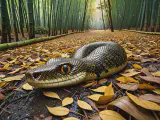
Legends born from the dense forests and islands of East Asia, reflecting a unique blend of nature worship and urban dread. *Tsuchinoko: The Elusive Fatty Snake : Japan’s most famous and beloved cryptid. *Jiangshi: The Stiff Corpse/Chinese Vampire : The hopping predator driven by residual vital energy. *Isshie and Kusshie: The Guardians of the Lakes : Japan’s answer to Nessie, living in the deep blue waters of Hokkaido and Kagoshima.


The Breath of the Land

To understand Asian folklore is to understand that the land itself is alive. When you hear the snow crunch behind you in Nepal or see a shadow move in a Japanese bamboo grove, you are not just looking at a monster—you are meeting a part of history that refuses to be recorded.

Regional Navigation The Himalayas & Central Asia: The Roof of the WorldEast Asia: Islands and Ancient Kingdoms*Southeast Asia: Jungles and Shifting Shapes

Issie: The Black Shadow of Lake Ikeda

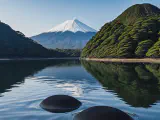
1. 1978: The Mass Sighting at Noon What sets Issie apart from other lake monsters is the sheer number of simultaneous witnesses during its primary appearance. *The Collective Witness : On September 3, 1978, over 20 citizens gathered for a family memorial service witnessed a massive “black, humped object” swimming across the lake at midday. *The Video Record : Later that year, video footage was captured showing elongated shadows and unnatural ripples moving at 20 km/h under the surface, solidifying Ikeda’s reputation as the “Loch Ness of Japan.

Jiangshi: The Hopping Vampire of the East

But behind the strange movements and the colorful costumes lies a somber reality: a legend born from the desperate need of the dead to return to their ancestral homes. 1. Origins: Ganshi—The Art of Walking the Dead The root of the Jiangshi legend lies in the Chinese cultural belief of “Falling leaves return to the roots”—the absolute necessity for a person to be buried in their hometown. *The Logistics of Death : For those who died in distant provinces or battlefields, transporting a corpse thousands of miles home before it rotted was nearly impossible.

Mongolian Death Worm: The Acid-Spitting Intestine of the Gobi

The Mongolian Death Worm . A thick, blood-red tube of flesh that supposedly kills from a distance using lethal electricity and corrosive acid. Is it a misidentified snake, or a biological anomaly perfected for the most extreme environment on Earth? 1. Living Weaponry: Lethal Specs The terror of the Death Worm comes from its reported ability to kill without physical contact. *Electric Discharge : The most baffling claim is that the worm can emit high-voltage shocks from its body, capable of killing a human or a camel instantly from several feet away.

Tsuchinoko: Japan's Elusive 'Bottle-Snake'

1. Anomalous Biology: The Jack-of-All-Trades Cryptid The Tsuchinoko’s reported characteristics are a bizarre blend of the biological and the mythic. *The ‘Bottle’ Shape : Reaching only 12 to 30 inches in length, its midsection is abnormally wide, resembling a beer bottle with a thin, pointed tail. *Impossible Mobility : Legand has it that the Tsuchinoko can jump over 6 feet vertically, and can also bite its own tail to form a “wheel,” rolling down mountain paths like a runaway tire.

Yeti: The Mountain King of the Himalayas

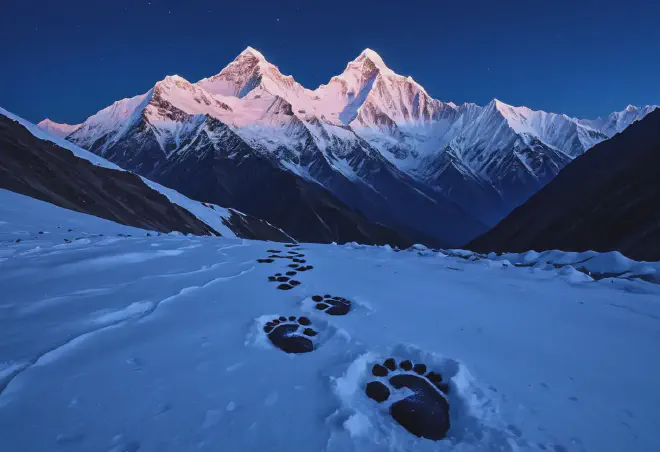
While the Western world became obsessed with the “Abominable Snowman” during the golden age of mountaineering, the reality of the Yeti sits at a crossroads between prehistoric biology and ancient spiritual belief. 1. 1951: The Shipton Footprint and the “Scalp” The global mystery of the Yeti was set ablaze by Eric Shipton, an English mountaineer who captured one of the most famous photographs in cryptozoology history. *The Impossible Print : Discovered on the Menlung Glacier, the footprint was 13 inches long and showed a thumb-like toe flared outward—a feature that matched no known species of primate or bear in the region.

Kusshie: The Guardian of Lake Kussharo — Ainu Legends and the Giant Deep within the Caldera

“Kusshie: The Guardian of the Caldera.” In the eastern reaches of Hokkaido lies Lake Kussharo, Japan’s largest caldera lake. It is a place of profound mystery, where the entire surface freezes in winter and the ice groans and heaves in a phenomenon known as Omiwatari(The God’s Crossing). In this beautiful but unforgiving environment, a historic sighting occurred in 1973: nearly 40 middle school students on a field trip simultaneously witnessed a “massive something” swimming across the lake.