Skyfish: The Optical Phantoms of the Digital Age
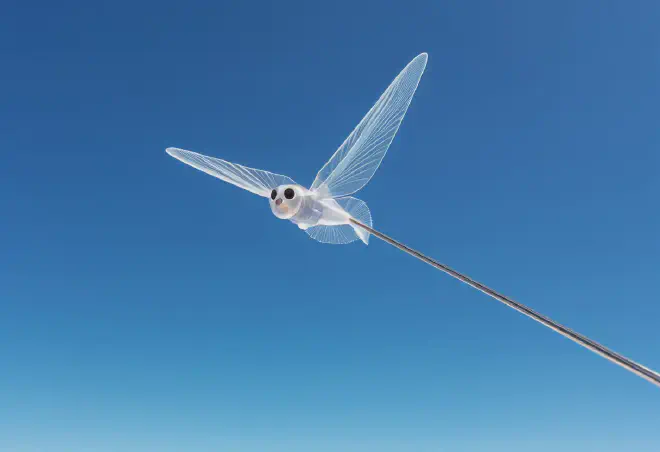
They were called Skyfish , or Rods . Sighted exclusively through the lenses of video and digital cameras, these “unseen neighbors” became an instant sensation in the early days of the internet, representing a new type of cryptid (UMA) born from the limitations of technology itself.
1. The Cambrian Connection: Living Fossils of the Air?
The bizarre morphology of the Skyfish led to wild biological theories. *The Anomalocaris Theory : Some suggested that Skyfish were descendants of the Anomalocaris, the apex predator of the Cambrian period. Instead of becoming extinct, these creatures supposedly moved from the ancient oceans to the “ocean of air,” evolving to “swim” through the atmosphere with their multiple fins. *Impossible Speeds : Estimates based on video frames suggested the Skyfish traveled between 200 and 600 mph (300 to 1,000 km/h). This led enthusiasts to believe they were a form of life that existed in a “faster time-stream” than humans.

2. The Science: The Trap of Motion Blur
As high-speed cameras and digital sensors improved in the 2000s, the mystery of the Skyfish met a definitive scientific reality. *The Insect Identity : High-speed footage eventually proved that Skyfish were nothing more than common insects —flies, dragonflies, or moths—flying close to the camera lens. *The Optical Bug : The “rods” and “multiple fins” were an artifact of the video camera’s shutter speed. When an insect flaps its wings and moves across the frame during a single exposure (frame), its path is recorded as a “rod” and each wingbeat creates a “fin.” This is known as Motion Blur .
3. The Legacy: The Ghost in the Sensor
Even though they have been “debunked,” the legend of the Skyfish remains a powerful cultural symbol. *The Digital Cryptid (DUMA) : They were the first cryptids that weren’t found in a jungle or a lake, but in a “data-stream.” They bridged the gap between natural folklore and the “Digital Horror” of the 21st century. *Influence on Fiction : The elegant, swimming design of the Skyfish continues to live on in video games (like Monster Hunter) and anime (like JoJo’s Bizarre Adventure), where they are more real than the insects that inspired them.
4. The Truth is Behind the Lens
The Skyfish taught us two lessons: that what we see with our eyes is not the whole truth, and that what cameras see can also be a lie.
The next time you catch a mysterious white streak in your phone’s photo or video, ask yourself: is it just a moth, or is it one of the ancient “Swimmers of the Air” that science has finally managed to ignore?