Killswitch: The Irreversible Tragedy of Self-Destructing Code

In 1989, a mysterious Soviet entity known as the “Karvina Corporation” released a limited run of 5,000 copies of a PC game titled Killswitch. The reason it became a legend in both video game history and performance art lies in its avant-garde core: the “Self-Destruction Protocol.”
1. The Erasure Protocol: Life as an Irreversible Experience
The moment a player reaches the “Game Over” screen or successfully finishes the game, the program **completely wipes all associated data from the hard drive.***A Non-Reproducible Experience : Due to powerful security locks, copies cannot be made. Once play begins, it is a singular event. It shattered the fundamental promise of video games—that one can always “try again”—and forced players to confront the “Finality of Choice” inherent in life itself. *Vanishing Narratives : Regardless of the outcome, no evidence of the ending remains. The story exists solely within the memory of the player, having physically vanished from the digital world forever.
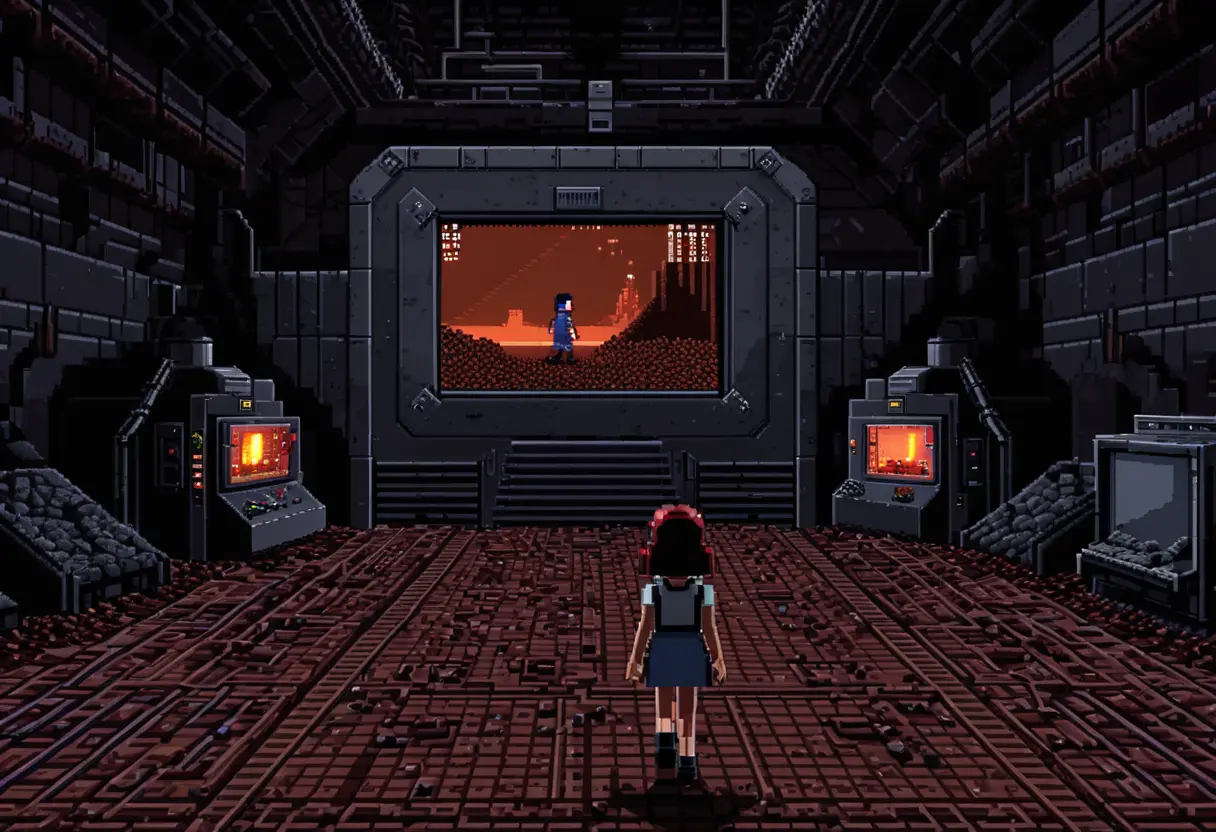
2. Dual Protagonists: The Invisible Demon and the Fragile Human
Upon starting Killswitch, players must choose between two distinct characters: *Ghast : An invisible, powerful demon. He can attack enemies without being detected, making the game easy to complete. However, the game’s core secrets remain forever out of reach for those playing as Ghast. *Porto : A fragile human woman capable of altering her size, though controlling her is notoriously difficult. The difficulty spike is near-impossible, yet only this “Vulnerable Human” can unlock the secrets of the mines and the truth of the Karvina Corporation.
Most players chose Ghast, unknowingly erasing the game without ever understanding its purpose. Only those who braved the hellish trials as Porto earned the right to touch the “Truth.”
3. Ryuichi Yamamoto: One Minute of Silence
In 2005, a Japanese man named Ryuichi Yamamoto won an unopened copy of Killswitch on eBay for the staggering sum of $733,000. He promised the global community that he would record and upload his entire playthrough.
However, the video he released was not of the game.
The camera captured a single shot: A man sitting before a flickering PC monitor, weeping silently and uncontrollably. Behind him, the screen showed nothing but a blank desktop wallpaper—the visual confirmation that the data had been successfully and permanently purged.
Did he reach the truth as Porto? Or did he fail at the final threshold? The purity of his tears remains the only legacy of the lost data, a “Legend” that can never be deciphered.
*Polybius: The Arcade Cabinet of State Secrets : Investigating the machine designed for mass psychological manipulation. *Lost Media: The Fragments of Irretrievable Memory : Exploring the items that have drifted into the abyss of the net. *The Art of the Singular: Aesthetics of Destruction : Decoding the history of art that refuses to be reproduced.