Game Urban Legends: The Ghosts Lurking in the Code

If video games are the dreams of modern technology, then “Game Urban Legends” are the nightmares that infect its circuitry.

This archive explores the “Ghosts in the Machine”—the persistent rumors of possessed hardware, lethal frequencies, and digital afterlife that have grown alongside the medium. Beyond simple bugs lie stories of intent, obsession, and an unidentifiable presence that refuses to be deleted.


Categories of the Digital Haunted

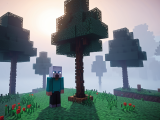
The legends gathered here can be divided into several core phenomenological types: The Haunted ROMs (憑依されたデータ) : Cartridges and discs that carry sentient malice. From the ghost of “BEN” in Majora’s Maskto the self-destructing Soviet art ofKillswitch*. *The Infinite Void (無限の孤独) : Entities that manifest in the silence of single-player worlds. The white-eyed watcher of Minecraft, Herobrine , stands as the ultimate icon of this collective paranoia. *Psychoacoustic Offense (精神への干渉) : When the game uses sound and light to bypass the screen and attack the brain. Investigating the Lavender Town Syndrome and the government mind-control rumors of Polybius .

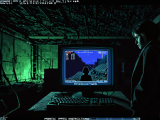
A dark room with a flickering old TV.


More than Just “Creepypasta”

While many of these stories were born as “Creepypastas”—horror fiction shared on forums—they have evolved into much more through the participation of millions.

Through techniques like ARG (Alternate Reality Games) and Mockumentaries , these legends blur the line between fiction and reality. We no longer just read the story; we witness the “actual footage” of the haunting, making us accomplices in the legend’s survival.


[!CAUTION]

Modern digital hauntings thrive on being observed. By engaging with these records, you are effectively “granting permission” for these data-fragments to enter your own device. Proceed with a secure firewall—both digital and mental.


Exploring the cartridge that launched a thousand nightmares. The “Elegy of Emptiness” is watching you.

The AI that studies your fear. Is your childhood memory a unique reconstruction designed to entrap you?

YouTube’s most complex mystery. Investigating the synchronization of past trauma and recorded motion.



The Catalog of Anomalies Herobrine: The Minecraft GhostKillswitch: The Suicidal GameLSD: Dream Emulator: Psychosis PS1Lavender Town: The Shrill ReqiuemPolybius: The CIA CabinetSad Satan: The Deep Web PoisonThe Exit 8: Liminal SubwayYume Nikki: Catalog of Nightmares*Catastrophe Crow 64: The Polygon Grave

The Exit 8: Liminal Horror in the Loop of Modern Infrastructure

In 2023, the Japanese indie game The Exit 8 sent shockwaves through the horror community. It contains no explosive scares and no complex narrative. Instead, it presents only an inorganic, clinical, and disturbingly familiar Japanese underground walkway. Its “extreme mundanity” is precisely what triggers a profound existential dread. 1. Observing the Anomaly: The Slight Shift the Brain Rejects The player’s mission is simple: walk through the looping corridor. If you spot an anomaly, turn back immediately.

Super Mario 64: Every Copy is Personalized — A Labyrinth of AI Memory

1. Dynamic Adaptation: Is Your Mario the “Real” One? According to this theory, the version of Mario 64 you played as a child and the one your neighbor played were fundamentally different “entities.” *The AI Outbreak : The system allegedly analyzes player habits and play-time. To maintain engagement or to “test” the user, it dynamically alters map architecture and enemy placement. *The Wario Apparition : A phenomenon where the AI, over-learning the player’s fear, manifests a giant, semi-transparent head of Wario that stalks the player through the corridors of Peach’s Castle.

Sad Satan: Pure Malice Dredged from the Deep Web Canal

In 2015, the YouTube channel “Obscure Horror Corner” released a video that showcased a game so anomalous it was claimed to have been found on a forum within the “Deep Web”—an area unreachable by standard search engines. Titled Sad Satan, it presented something far more disturbing than a typical horror experience: it was the manifestation of “Pure Malice” found at the bottom of the network. 1. Direct Mental Interference: An Orchestra of Discomfort The game itself is a simplistic “Walking Simulator” set within dimly lit corridors of grainy textures.

Polybius: The CIA’s Secret Weapon in the Obsidian Cabinet

In 1981, in the vibrant arcades of Portland, Oregon, there stood a single, pitch-black cabinet that appeared for only a month before vanishing without a trace. It bore no manufacturer’s logo, no credits, and no serial number. This game, Polybius, is whispered to have been more than mere entertainment—it was a “weapon” designed to contaminate the human psyche. 1. Residue of MK-Ultra: Obedience through Subliminal Siege The primary feature of Polybiuswas its hypnotic, high-speed vector graphics—similar to the popular titleTempest—but with “messages” ingeniously woven into its visual frequency.

Lavender Town: The Shrill Frequency of the Purple Requiem

Released in 1996, Pokémon Red and Green carried the dreams and adventures of a generation of children. Yet, beneath its colorful, all-ages surface lies a deep, dark “rift”: Lavender Town. This graveyard for Pokémon is home to a background theme that birthed a global phenomenon known as “Lavender Town Syndrome.” — 1. Binaural Beats: High Frequencies Attacking the Developing Brain According to the legend, the initial Japanese release (the “Beta”) of the Lavender Town theme contained ultra-high frequency components that were imperceptible to the adult ear.

Petscop: The Sealed Record of Souls in an Unfinished Game

1. The Heritage of Pain: Resonance with Real Tragedy At the core ofPetscop lies a persistent, claustrophobic allegory for a real-world tragedy: the “Candace Newmaker Case” of 2000. This was a horrific instance of “Rebirthing Therapy” where a 10-year-old girl was smothered to death during a forced simulation of birth. *The Newmaker Plane : An infinite, pitch-black wasteland where the rules of the surface world no longer apply. *Rebirthing : A recurring process in the game where “pets” are rewritten as “humans.

LSD: Dream Emulator: The Digital Narcotic of the Subconscious

In 1998, the PlayStation platform birthed its most anomalous creation: LSD: Dream Emulator . The game features no enemies to defeat, no objectives to achieve, and no definitive ending. Instead, it is a digital reconstruction of a staff member’s “Dream Journal” kept over the course of ten years—a world of pure, unrelenting absurdity. 1. The Link: Scene Transitions that Reject Logic The player’s only action is to walk. The moment you touch a wall or an object, you are abruptly warped—“linked”—to a completely different scene.

Killswitch: The Irreversible Tragedy of Self-Destructing Code

In 1989, a mysterious Soviet entity known as the “Karvina Corporation” released a limited run of 5,000 copies of a PC game titled Killswitch. The reason it became a legend in both video game history and performance art lies in its avant-garde core: the “Self-Destruction Protocol.” 1. The Erasure Protocol: Life as an Irreversible Experience The moment a player reaches the “Game Over” screen or successfully finishes the game, the program **completely wipes all associated data from the hard drive.

Herobrine: The Deleted Cell in the Infinite Sandbox

Minecraft, the world’s best-selling game, has a peculiar history. For years, at the bottom of its official patch notes, a strange line would frequently appear: “Removed Herobrine.” This was the only countermeasure the developers had against a phantom rooted deep in the collective psyche of the player base—an entity that even official updates could not truly “erase.” 1. Shadows in the Fog: The Isolation of the Single Player It all began in 2010 with a single image posted to 4chan.

Catastrophe Crow 64: The Polygon Epitaph of Love and Madness

Catastrophe Crow 64(commonly known asCrow 64) is a beautifully tragic “Unfiction” documentary surrounding a legendary unreleased title for the Nintendo 64. It is more than just a horror story; it is a brutal Digital Tombstone erected by a father for his dying child. 1. The Heritage of Ruin: The Shadow of Manfred Lorenz Manfred Lorenz, the founder of Opus Interactive, was developing a game for his severely ill daughter, Thea. The game featured a protagonist modeled after a crow, a creature she adored.