Game Lore Analysis: The Logic of Engineered Despair

“A superior game tells its story without relying on words.”

In this archive, we explore the abyss of existing horror games constructed through meticulous world-building (Lore). This is the process of excavating truths hidden on the flip side of the world—truths not explicitly stated in manuals or cinematic sequences. It is a journey to trace the “living proof” of those who were once there.


1. Environmental Storytelling: The Eloquence of Silence

An abandoned chair, blood-stained writing on a wall, or a single flower placed with intent.

In every piece of scenery that the player simply passes by, the developer’s intent and the echoes of “past tragedies” are engraved. Like archeologists, we connect these fragments to reconstruct a single, grand tragedy.


2. The Logic of Terror: Why “It” Was Born

Creatures created as biological weapons, vengeful spirits born from parent-child resentment, or executioners manifesting from personal guilt.

The “enemy” in a horror game always embodies the logic of that world. Analyzing their forms and behaviors is equivalent to touching the core of that world’s reality.


3. Analysis: Beyond Immersion

Deepening your knowledge of the world-building is not for the purpose of reducing fear; it is preparation to “fear more deeply.”

When you understand “why that monster is there,” fear transforms from a mere reflex into an inescapable empathy for a doomed fate. We invite you to enjoy the designed despair sleeping at the bottom of the digital labyrinth.


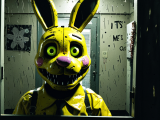
Investigating the possession of childhood mascots and the tragedy of the Afton family.

The biological reality of the T-Virus and the ethics of a pharmaceutical giant.

A psychological descent into a town that mirrors the sins of the visitor.

Reconstructing a dying myth through the fragments of a broken kingdom.

Decoding the failed rituals and the sorrow of sacrificial maidens in traditional Japan.

Exploring the red water and the horrifying unity of a closed mountain village.

When the game system judge the player’s capacity for violence.

The heavy responsibility of choice in the face of ancient Native American taboos.

Until Dawn: The Butterfly Effect and the Curse of the Wendigo

Released in 2015, Until Dawn successfully placed extreme accountability on the player by adopting the framework of a classic “Teen Slasher” film (where youth are hunted in a mountain lodge) and combining it with the multi-branching narrative unique to video games. 1. The Butterfly Effect: The Causality of Mercy and Cruelty The core of the game is the “Butterfly Effect” system. Much like the wings of a single butterfly can trigger a storm on the other side of the world, a player’s trivial action can determine the death of a character hours later.

Undertale: The RPG where No One Has to Die — or So You Thought

Created by Toby Fox, Undertale initially appears to be a heartwarming homage to retro RPGs. However, its true essence is a piercing inquiry directed at the “Player as Observer.” Beneath the kindness of the slogan “The RPG where no one has to die” lies a brutal logic where the game system itself becomes a blade of condemnation. 1. Deconstruction: The Scent of Blood Hidden in the Stats Undertale boarders on deconstruction by inverting the traditional meaning of RPG metrics: *EXP (Execution Points) : Not experience point, but a way of quantifying the pain you have inflicted on others—a measure of your desensitization to their suffering.

SIREN: The Red Water and the Desperate Scream of a Dying Village

Released in 2003, SIREN(known internationally asForbidden Siren) planted a seed of absolute “despair” in the hearts of its players. The terror it depicts transcends physical grotesqueness, distilling the “physiological discomfort” of indigenous Japanese beliefs and closed village societies to its extreme. This is the record of Hanyuda Village—a place where the residue of the Showa era has been overwritten by the logic of the abyss. 1. Sightjacking: Objectifying the Self through the Predator’s Eyes SIREN’s greatest innovation is the “Sightjacking” (Genshi) system, which allows players to tap into the visual perception of others.

Fatal Frame: The Requiem of the Camera Obscura

The Fatal Frameseries (known in Japan asZero) presents an approach to confronting fear that differs from any other horror genre. Without firearms or blunt weapons, the player steps into the realm of the dead armed only with an antique piece of technology: the Camera Obscura . 1. The Camera Obscura: A “Quiet Weapon” that Forces Recognition The mechanics of Fatal Frame are engineered to maximize physiological dread. To repel spirits, players must consistently track their faces through the viewfinder and wait until the exact moment of an attack—the “Fatal Frame”—to release the shutter.

Dark Souls: An Archeological Journey through a Dying Myth

FromSoftware’s Dark Souls fundamentally redefined narrative structure in video games. It presented an experience that wasn’t passively “told” through cutscenes, but rather an Archeological experience where players must piece together fragments of a shattered world themselves. 1. Environmental Storytelling: Silent Corpses, Eloquent Blades In the world of Lordran, there are no NPCs who politely explain the history of the realm, and no long cinematic sequences. History is tucked away in the silence of physical matter.

Silent Hill: The Labyrinth of Manifested Trauma

Established in 1999, Silent Hill represents a turning point in horror gaming by shifting the source of fear from “external threats” to the “internal psyche.” The town itself functions as a massive, sentient “Psychological Mirror,” warping its reality to reflect the mental state of any visitor drawn to its fog. 1. The Three Layers of Reality: A Mil-feuille of Nightmares Silent Hill is composed of three distinct phases (layers) overlapping in the same geographic space: *The Real World : The town as it once was—a quiet, idyllic resort destination.

Resident Evil: Corporate Malice under a Laboratory White Coat

Established in 1996, Resident Evil(known in Japan asBiohazard) defined the survival horror genre. The essence of its terror lies not in demons from hell or the curses of the dead, but in “Death as a Weapon,” manufactured in clinical laboratories under cold, logical calculation. 1. Umbrella: The Sins of a Pharmaceutical Giant The Umbrella Corporation, a massive pharmaceutical conglomerate, is the source of all ruin. Behind the facade of “protecting global health,” they poured their resources into researching “B.

Five Nights at Freddy's: The Echo of Screams Sealed in Plastic

Blending 1980s nostalgia with the modern terror of the “Uncanny Valley,” Five Nights at Freddy’s is far more than a simple security guard simulator. It is an Electronic Age Ghost Story —a narrative where the intense resentment of victims is physically encased within inorganic plastic and metal. 1. The Disappearance: Children Vanished within the Mascots The core of the tragedy is the “Missing Children Incident” of 1985 at Freddy Fazbear’s Pizza, where five children were abducted and murdered.