Tieflings: The Shadows of Blood and the Unyielding Will to Defy
In the hierarchy of fantasy, Tieflings are the most striking “Outsiders.”
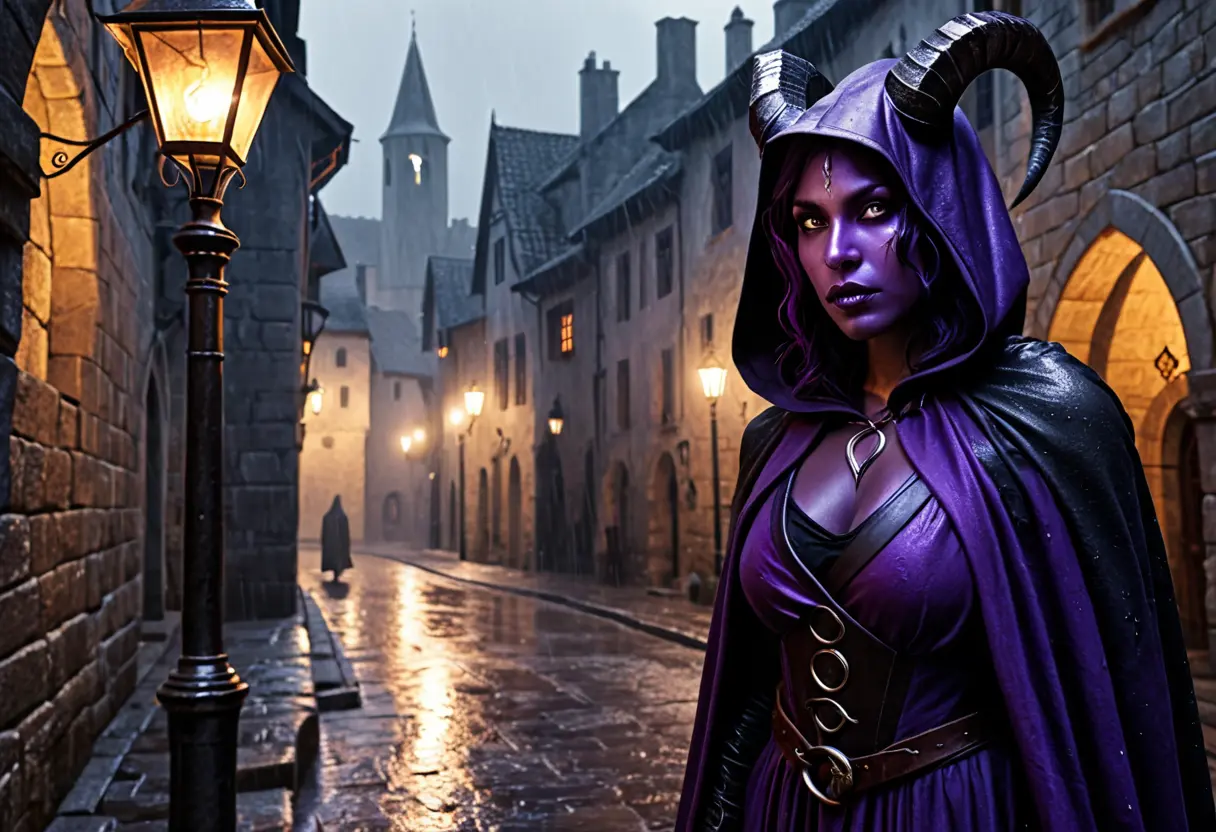
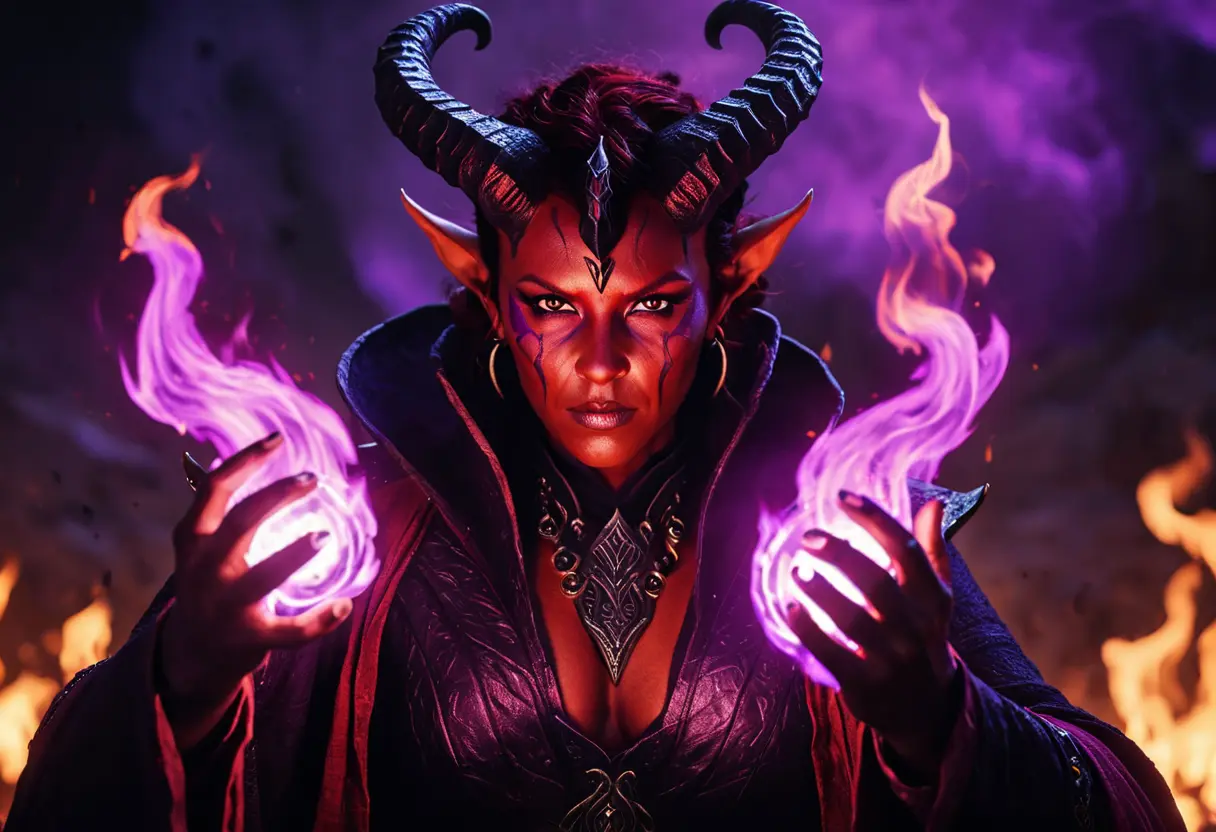
With their horns, pointed tails, and skin in shades of deep red or purple, their appearance screams of a “Demonic Heritage.” They are the scions of a bloodline touched by the lower planes—the living proof of a sin committed by an ancestor long ago. Yet, the Tiefling’s story is not about evil, but about the “Intolerance” of the world and the “Defiance” required to survive it.
1. Origins: The “Infernal Debt” of an Ancestor
The term “Tiefling” (derived from the German tief—deep, and the suffix -ling) was established by the Planescape setting of D&D in 1994. *The Price of Power : They are not chosen, but “Inherited.” Their ancestors—often humans—made pacts with devils or demons for power, knowledge, or survival. The Tiefling is the “Interest” on that ancient debt, manifesting in the flesh generations later. *Humanity Retained : Crucially, Tieflings are not half-monsters. They are humans whose “Essence” has been tainted. They feel human emotions, possess human souls, and are born with the same capacity for good or evil as any other person.
2. Character: The “Aesthetics of the Pariah”
Because of their appearance, Tieflings are born into a world that “Expects them to be Evil.” *The Cycle of Prejudice : Being treated as a monster from childhood creates two paths: either falling into the darkness society predicts, or developing a “Hardened Pride” that refuses to be defined by blood. *Self-Reliance : Tieflings are masters of “Survival on the Fringes.” They are quick-witted, silver-tongued, and often develop a flair for the dramatic—turning their “Curse” into an “Intimidating Aura” to keep others at a safe distance.
3. Culture: No Homeland but the “Bond of Fate”
Tieflings have no ancestral kingdoms or mountain halls. Their culture is one of the Underground and the Diaspora . *Hidden Communities : In large cities, Tieflings often form tight-knit underground communities where they can be “Normal.” They are the masters of information and grey-market trade. *Art as Rebellion : Many Tieflings express their internal turmoil through music or art. A Tiefling’s song often carries a haunting resonance that “Normal” people can never achieve—the sound of someone who has stared into the abyss and survived.
4. Cultural Context: The Mirror of “Otherness” and Social Stigma
The Tiefling resonates deeply with anyone who has felt “Different” or “Ostracized” for things they cannot change.
They represent the struggle of the “Minority”—living under the shadow of a label they didn’t ask for. The Tiefling’s journey is a powerful metaphor for “Self-Definition” ; they prove that while we cannot choose our blood, we can always choose our path. To walk as a Tiefling is to prove that light shines brightest in the deepest shadows.
*Warlock : A class frequently chosen by Tieflings, sometimes to understand the sources of their own blood. *Aasimar : The celestial counterparts to Tieflings—the scions of light who face their own set of expectations. *Half-Elves : Fellow “Misfits” who also seek to bridge two worlds. *Hell (Jigoku) : The origin of the infernal lineage that haunts the Tiefling’s dreams.