The One Ring: The Malice of Power and the 'Gold Curse' That Erodes the Soul
In J.R.R. Tolkien’s The Lord of the Rings, “The One Ring” is not a mere convenient magical tool. It is the embodiment of “Absolute Power” that holds the fate of all Middle-earth, and a “Curse with a Will” that corrupts the soul of anyone who touches it from within.
Rarely has a fantasy artifact been burdened with such profound philosophical and ethical weight.
1. The Logic of Temptation: Not Hiding, but “Dragging In”
While the Ring’s most famous function is “Invisibility,” its true essence lies elsewhere. *The Price of Invisibility : Wearing the Ring does not mean vanishing from the physical world; it means stepping into the spiritual “Wraith-world.” There, one cannot hide from Sauron’s “Eye”—rather, it becomes a beacon alerting the enemy to the bearer’s presence. *The Distorted Longing for a God’s-Eye View : The Ring shows the bearer sweet visions of “Ruling the World.” Even if the goal is a noble one like “Saving the World,” by using the evil means of the Ring, the owner invariably falls into the same slavery of desire as Sauron.
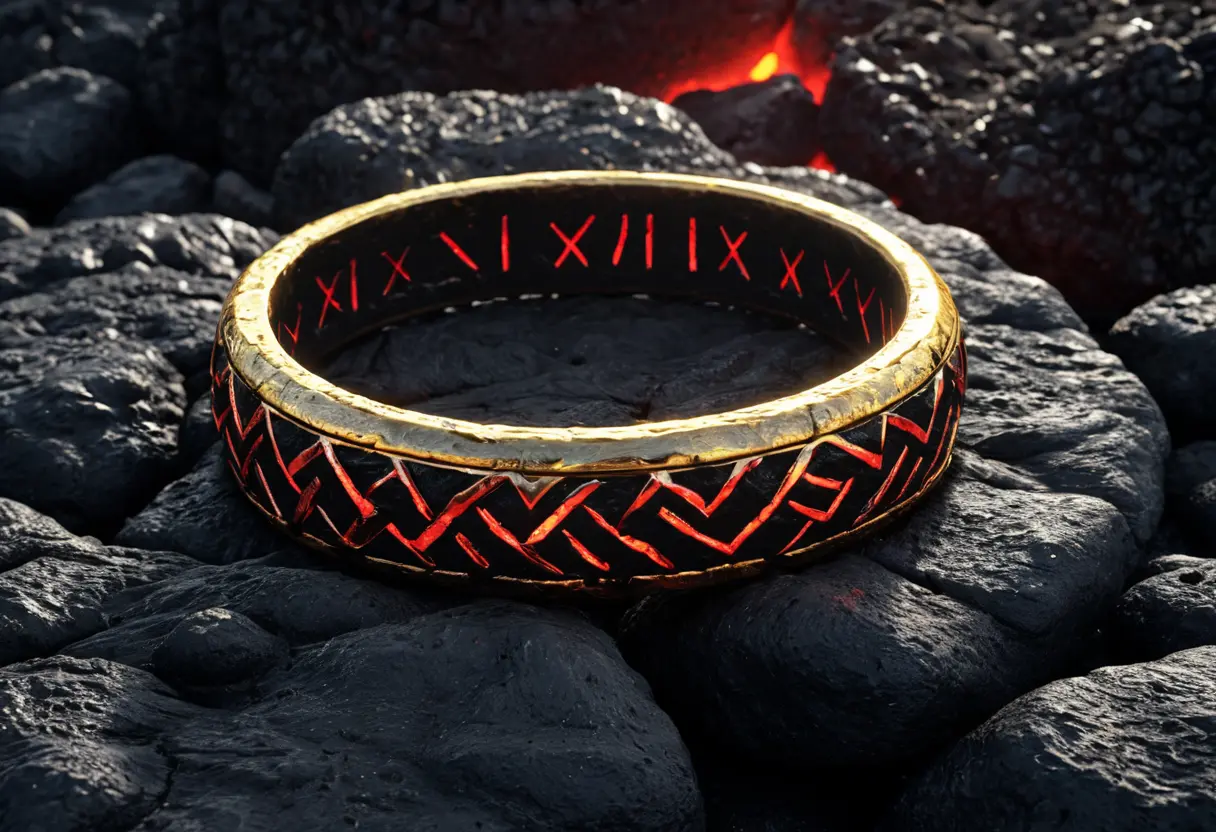
2. Victims of Corruption: “My Precious”
How the Ring erodes the soul is vividly depicted in its victims. *Gollum’s Dehumanization : Once a peaceful relative of Hobbits, his obsession with the Ring led him to murder his friend and transformed him into a hideous creature over five hundred years of isolation. His words “My Precious” symbolize not love, but the desperate dependence of one completely ruled by the object. *Boromir’s Agony : Even for a noble warrior, the Ring uses “Sense of Justice”—the desire to save his country—as its easiest entry point. The moment he temporarily lost his reason and attacked Frodo symbolizes the horror of the “Mental Collapse” the Ring brings.
3. A Quest to Discard: The “Absolute Release” from Power
While typical heroic epics aim for “Obtaining a Treasure,” The Lord of the Rings depicts a paradoxical journey toward “Destroying the ultimate treasure as soon as possible.” *Why Frodo? : Hobbits, “Little People” who are not on the stage of history and are strangers to ambition, were chosen as Ring-bearers because they had the highest resistance to the poison of power. *Failure at Mount Doom : Yet, remarkably, even Frodo succumbs to the Ring’s magic at the very end, refusing to destroy it and putting it on his finger. What finally turned the Ring to ash was not human will, but the ironic providence of the “struggle” with Gollum, who was obsessed with the Ring.
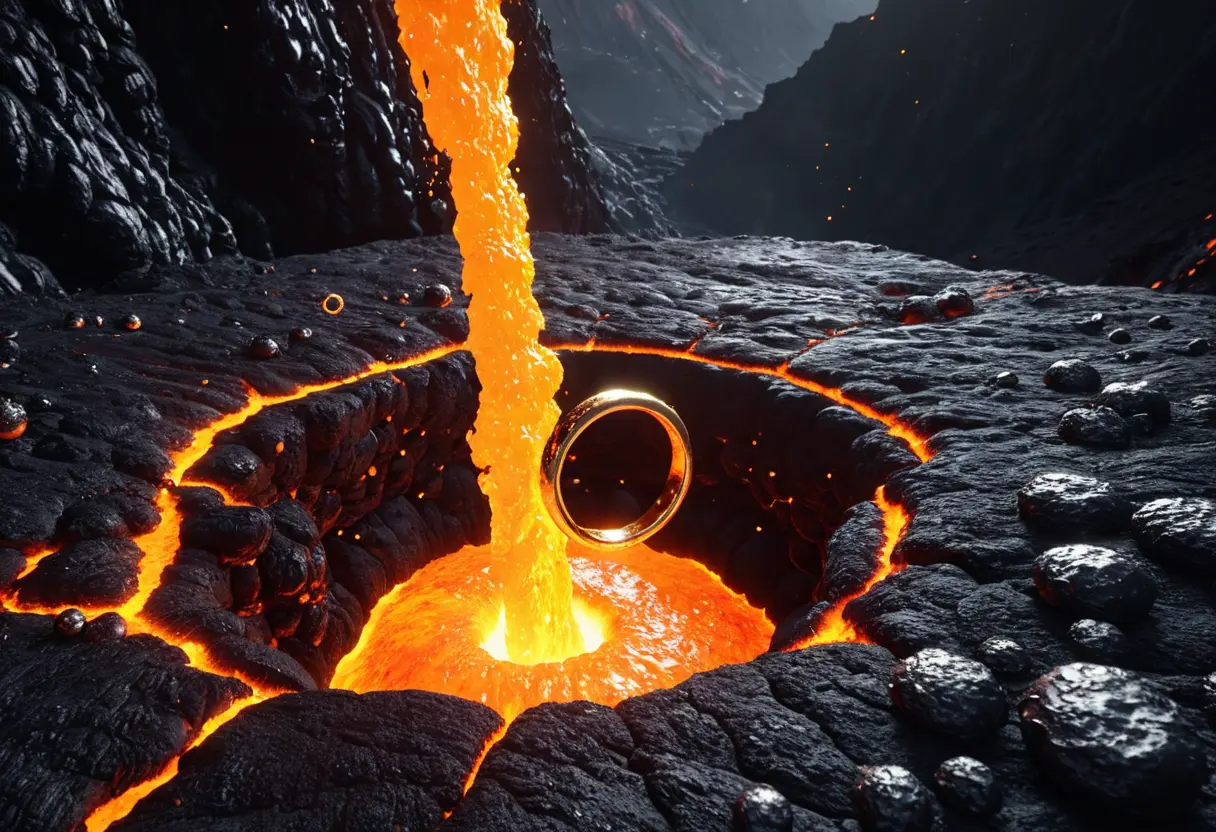
4. Cultural Context: What the Ring Warns Us About
Through “The One Ring,” Tolkien warns of how the primal human desire for power can easily flip into madness.
Even in modern times, we may hold “Rings” in the form of social media influence, wealth, or technology. Tolkien’s story never fades because the question of how to face this “Demonic nature of Power”—and sometimes the “Courage to Discard it”—is universal across all eras.
▲ Back to Fantasy Dictionary Top