William Morris: The 'Rebel of Beauty' Who Tilled the Soil of Modern Fantasy
If J.R.R. Tolkien is the “Father of Fantasy,” William Morris is the “Pioneer” who tilled the soil and sowed the first seeds.
While famous in some circles as a textile designer, in literary history he occupies an absolute position as one of the first authors to seriously depict an entirely independent “Secondary World” not part of the primary reality.
1. Rebellion Against the Industrial Revolution: “Middle Ages” Resisting Smoke and Iron
The 19th-century Britain when Morris began writing was an era where cities were covered in smog and traditional hand-craftsmanship was replaced by mass-produced goods. *Spirit of the Arts and Crafts Movement : Morris loathed the dehumanization caused by machine civilization and advocated for a return to the “Beauty of Medieval Craftsmanship.” This intense nostalgia for a “good old idealized past” is the primary reason many modern fantasies adopt medieval European settings. *Fantasy as Aesthetics : For him, an adventure tale was not mere entertainment; it was a “Craft” that reconstructed lost beauty through words.
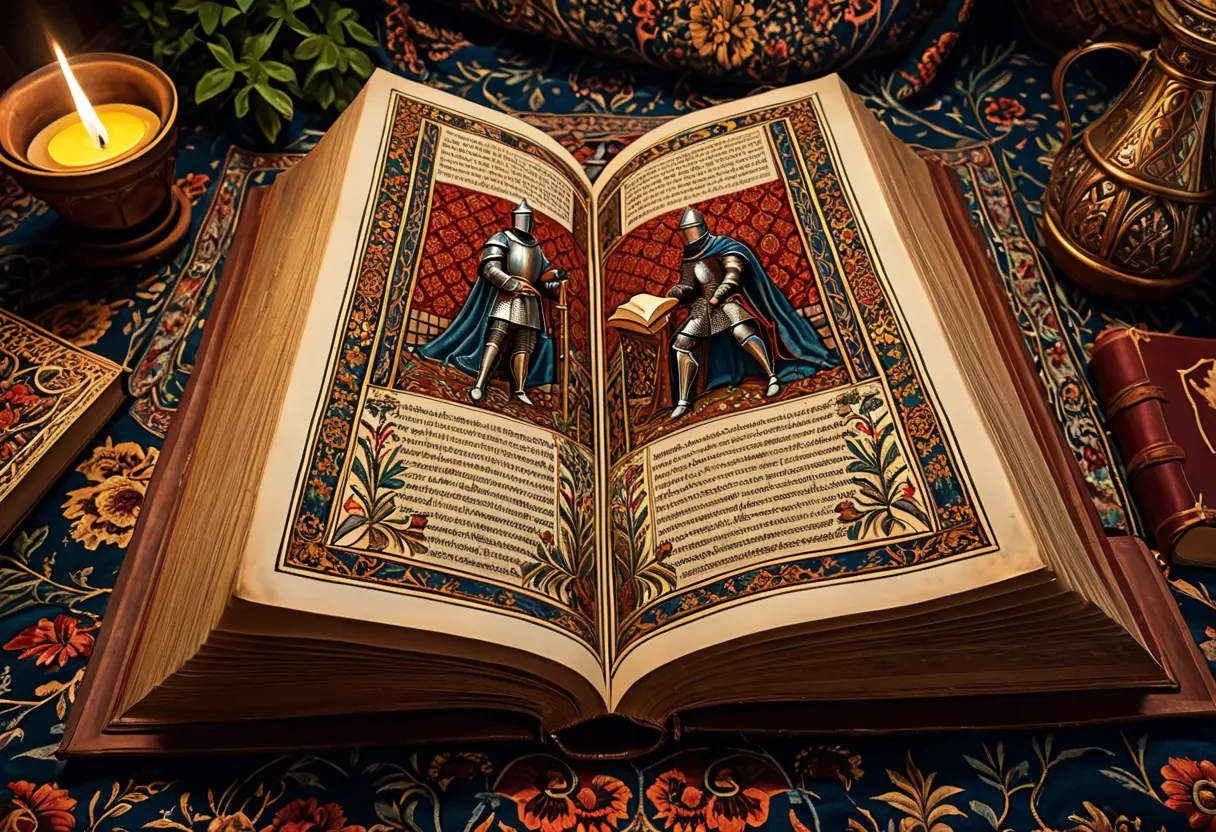
2. Creation of Secondary Realities: The “Wood Beyond the World”
Morris’s greatest literary achievement was creating an “independent layered world entirely unrelated to reality,” rather than depicting a “mysterious place somewhere in reality” like previous folklore. *** The Shock of *The Wood Beyond the World : The world with its own geography and customs depicted in this work became the direct prototype for the concept Tolkien would later call “Sub-creation.” Establishing Archaic Prose **: Morris intentionally used “Archaic English” to weave his stories. This style of “intentionally telling it as something old” granted the genre of fantasy a unique dignity and the persuasiveness of “it was a long time ago,” inherited by Tolkien and C.S. Lewis.
3. Bridge to Tolkien: The Inherited “Beautiful Otherworld”
Tolkien is known to have been a passionate reader of Morris.*** Reinterpreting Romance ** : The format of “Romance”—magic, adventure, and noble people living in harmony with nature—depicted by Morris serves as the spiritual backbone of Tolkien’s The HobbitandThe Lord of the Rings. *Obsession with Maps : Morris’s own artistic sensitivity led to a mania for detail—the depiction of plants, the decoration of rooms, and geographical consistency—which became an essential element of “Worldbuilding” in modern fantasy.

4. Cultural Context: Why Read Morris Now?
The worlds William Morris depicted are the archetype of “Fantasy as an Escape” that we head toward when tired by waves of digital and efficiency culture.
He proved that fantasy is not a mere “lie” but “another truth” that our souls require. Morris, who found magic in the patterns of wallpaper or the depths of a forest story, was the first gardener of the vast garden that is modern fantasy.
▲ Back to Fantasy Dictionary Top