Loki: The Shapeshifting Trickster, or the 'Absurdist Chaos' That Ends the World
In Norse mythology, no existence is more difficult to define, yet more fascinating, than Loki .
Though born of giant’s blood, he entered the circle of the gods by swearing a blood-brotherhood with the high god Odin. He is not merely “evil.” He is the Trickster who stirs up stagnant order and brings unpredictable change; his very existence completed the countdown to the end of the world: Ragnarök.
1. Role: The One Who Carries “Benefit” and “Calamity” Simultaneously
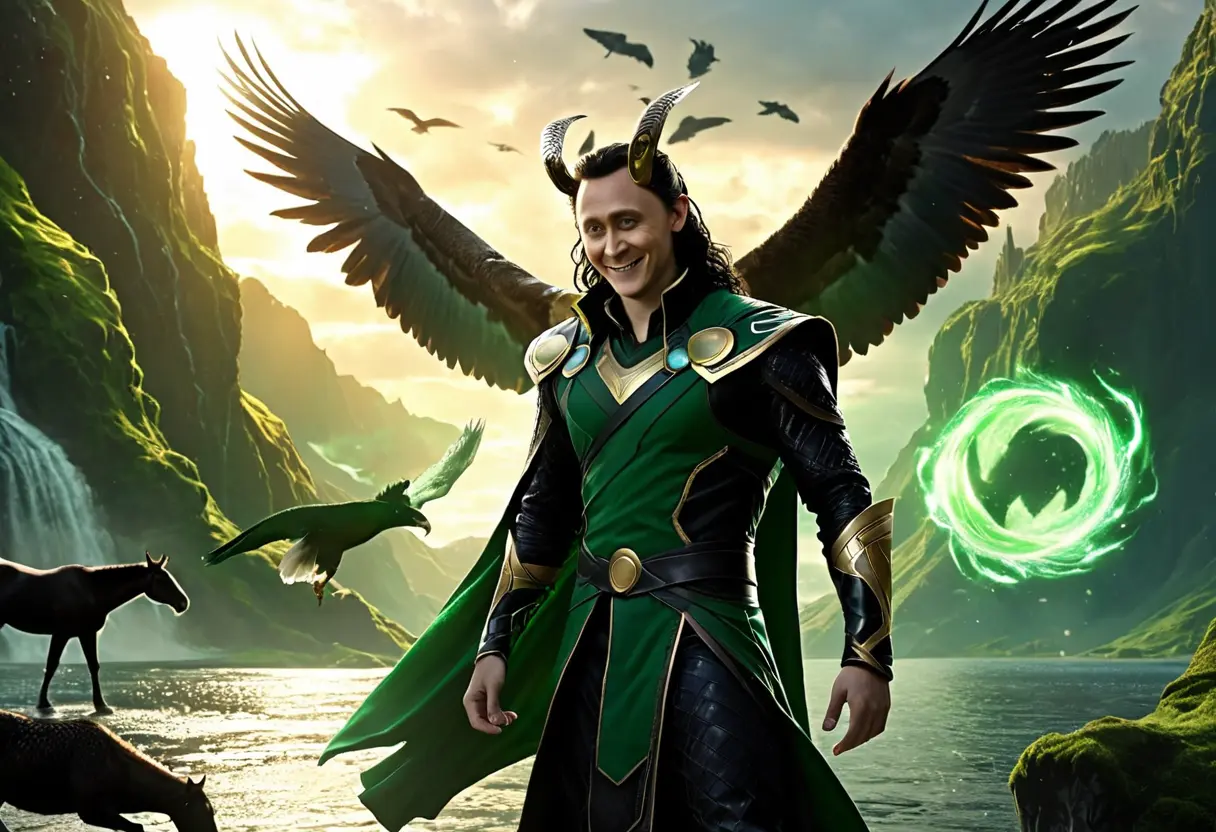
The principle of Loki’s actions always rests on a precarious balance between destruction and creation. *The Professional Problem Solver : Whenever the gods fell into a predicament, it was always Loki who provided the solution with his cunning wit. It was his achievement to recover Thor’s hammer (Mjölnir) and to complete the walls of Asgard at (nearly) no cost. *The Master of Transformation : Transforming into a mare to give birth to the noble steed Sleipnir, or becoming a fly or a salmon to escape pursuers. His shapeshifting is the ultimate attainment of the “Shapeshifter” or “Illusionist” in fantasy.
2. Transition: From Mischief to “Murderous Intent”
Loki’s tale deepens from innocent mischief (like shaving Sif’s hair) into irreversible grand crimes. *The Assassination of Baldur : Baldur, the god of light who had received an oath from everything in the world “not to be harmed.” Loki discovered the sole exception, the “Mistletoe,” and deceived the blind god Höðr into killing Baldur. This was a decisive victory of chaos (darkness) over order (light). *The Punishment of the Venomous Snake : Having incurred the wrath of the gods, he was bound with the intestines of his own beloved son, with the venom of a snake dripping onto him from above. It is said that the earth-shaking roars of his agony are the true identity of “Earthquakes” on the ground.
3. The End: The “Conductor” of Ragnarök
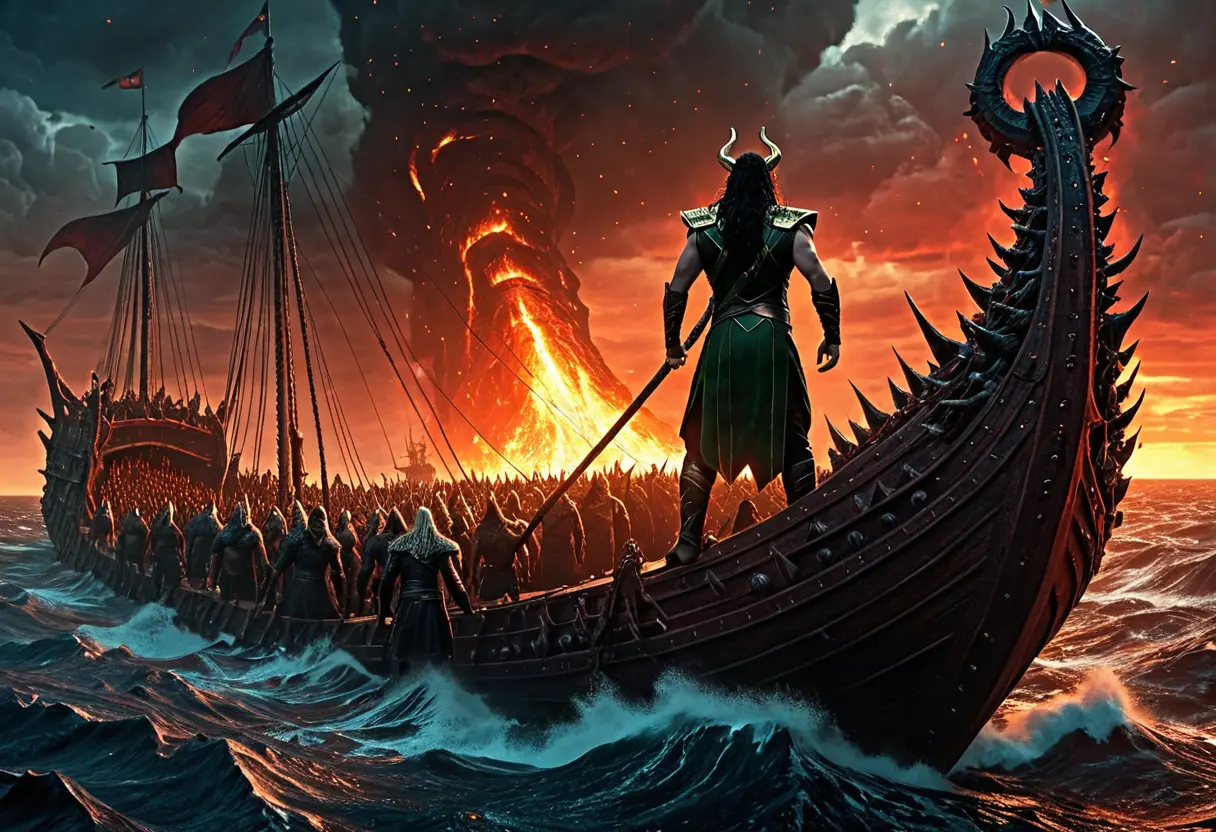
When the bonds are broken and Ragnarök arrives, Loki is no longer a friend of the gods. *Father of Monsters : The wolf Fenrir who swallows the world, the giant serpent Jörmungandr who encircles it, and Hel , the queen of the realm of the dead. As the father of these absurdist monsters, Loki himself commands the ship Naglfar, built from the nails of the dead, to revolt against the gods. *Mutual Destruction with Heimdall : The finale where he and the guardian of light, Heimdall, strike each other down. This is a philosophical period where surveillance (Order) and deception (Chaos) ultimately erase one another.
4. Cultural Context: Why We Can’t Hate “Loki”
In modern entertainment (especially in works like Marvel), Loki enjoys immense popularity as an anti-hero.
It is because among the perfect gods, Loki alone moves with intensely human passions: “Jealousy,” “Alienation,” and “The desire to break the status quo.” The mirror of Loki reflects the “Self as an Outcast” that we harbor within society, while simultaneously stimulating our longing for that “destructive creativity.”
▲ Back to Fantasy Dictionary Top