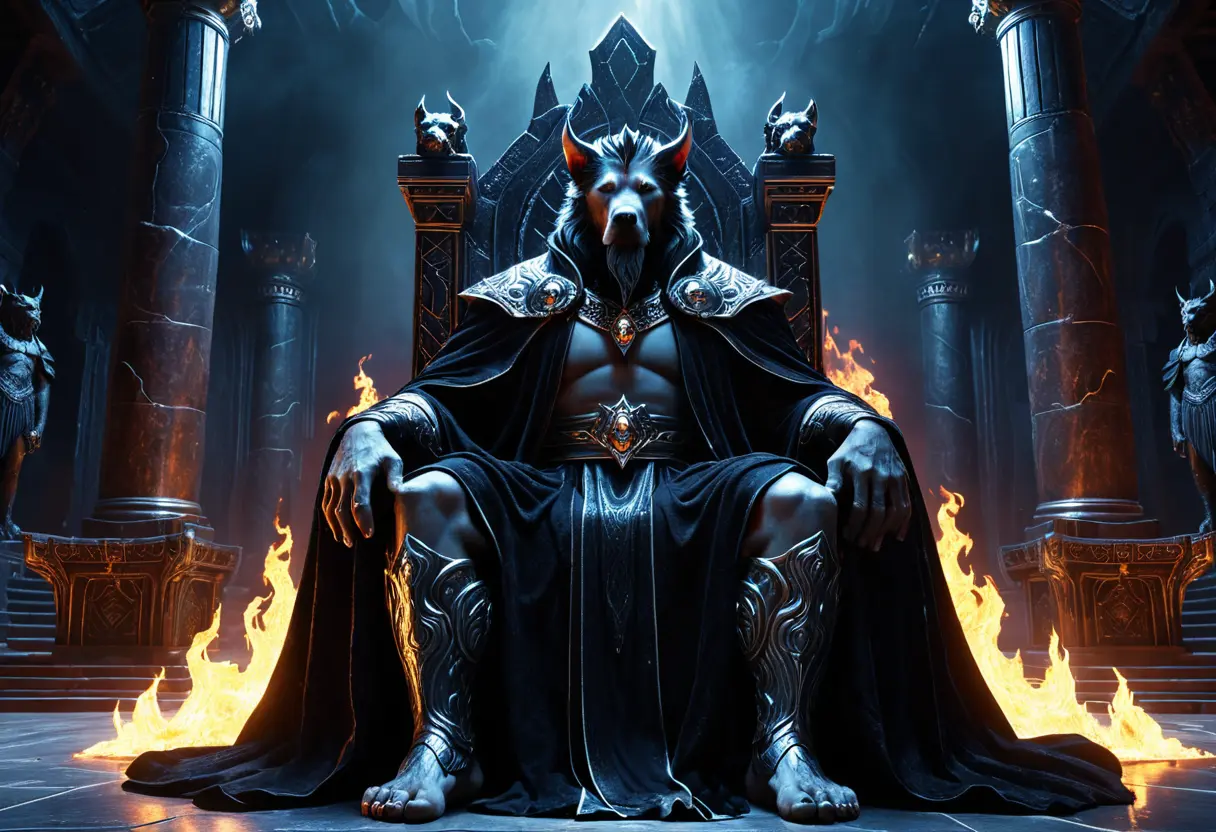
Hades: Lord of the Obsidian Throne, the Cold 'Guardian of Wealth and Souls'
In Greek mythology, Hades defines the concept of the “Underworld” and the “Order of Death” in fantasy.
While often depicted as a villain in modern entertainment, his original persona was that of an extremely fair and rational “Administrator” whom even Zeus respected. Death, in his realm, is not chaos but part of a rigid system under his governance.
1. Authority: The Unseen One and “Subterranean Wealth”
The name Hades means “The Unseen One,” and his essence is always hidden from the surface world. *The Helm of Darkness (Aidos) : An ultimate stealth item that allows the wearer to disappear even from the eyes of gods. This attribute of “absolute concealment” was inherited by the abilities of assassins and shadow walkers in later fantasy. *Plouton (The Wealthy One) : All precious metals and gems buried underground are considered the property of Hades. Consequently, he is the wealthiest of the Olympians. The classic fantasy trope of “hidden treasures deep within a dungeon” originates from this background of subterranean wealth he governs.
2. Governance: Fair Trials and the “Law of the Dead”
Hades does not rule over a hopeless hell. His is a realm of “Perfected Order” that the living must never violate. *The Rigid Guardian : He employs the three-headed demon dog Cerberus to ensure that no living soul enters and no dead soul ever escapes. This absurdist level of “border enforcement” gives the underworld its absolute reality. *Impartial Judgment : He is not the god who takes life (that is Thanatos), but the one who guides and judges the souls after they have been taken. His stance of honoring contracts and showing no irrational favoritism bestows upon him the dignity of a true king, transcending the clamor of the world above.
3. Passion: Persephone and the “Origin of Winter”
The only moment the silent Hades showed intense passion was during the abduction of Persephone, the goddess of spring. *The Cosmic Cycle : When Hades took her to the underworld as his queen, her mother Demeter grieved, bringing “Winter” to the earth. This myth suggests that the attribute of “Ice/Winter” was born not merely as a weather phenomenon, but as a result of “Loss and Love.” *The Pomegranate Seeds : Those who consume the food of the underworld can never return to the world above. This motif of the “Forbidden Meal” became an ironclad rule in fantasies involving the Otherworld (such as Fairyland).
4. Cultural Context: A Device for “Understanding” Death
The figure of Hades functioned as a device to transform the fathomless terror of death into an understandable “system of governance.”
To the question “What happens when we die?”, Greek mythology provided the answer: “You go to a massive underground kingdom managed by a fair king.” We fear the silence of underground labyrinths, yet we dream of the treasures hidden within them because the complicity between “Death and Wealth” governed by Hades is etched into our primal instincts.
▲ Back to Fantasy Dictionary Top