Gargoyles and Frankenstein: Architectural Guardians and the Tragedy of Artificial Life
In the world of fantasy, “Moving Statues” where life dwells in inorganic matter and “Artificial Humans” stitched from the dead symbolize human arrogance and longing for the mysterious.
One was born from architectural function; the other from scientific pursuit. Let us unravel how these two “aberrations” became the “boundaries of life” that continue to stimulate our imagination.
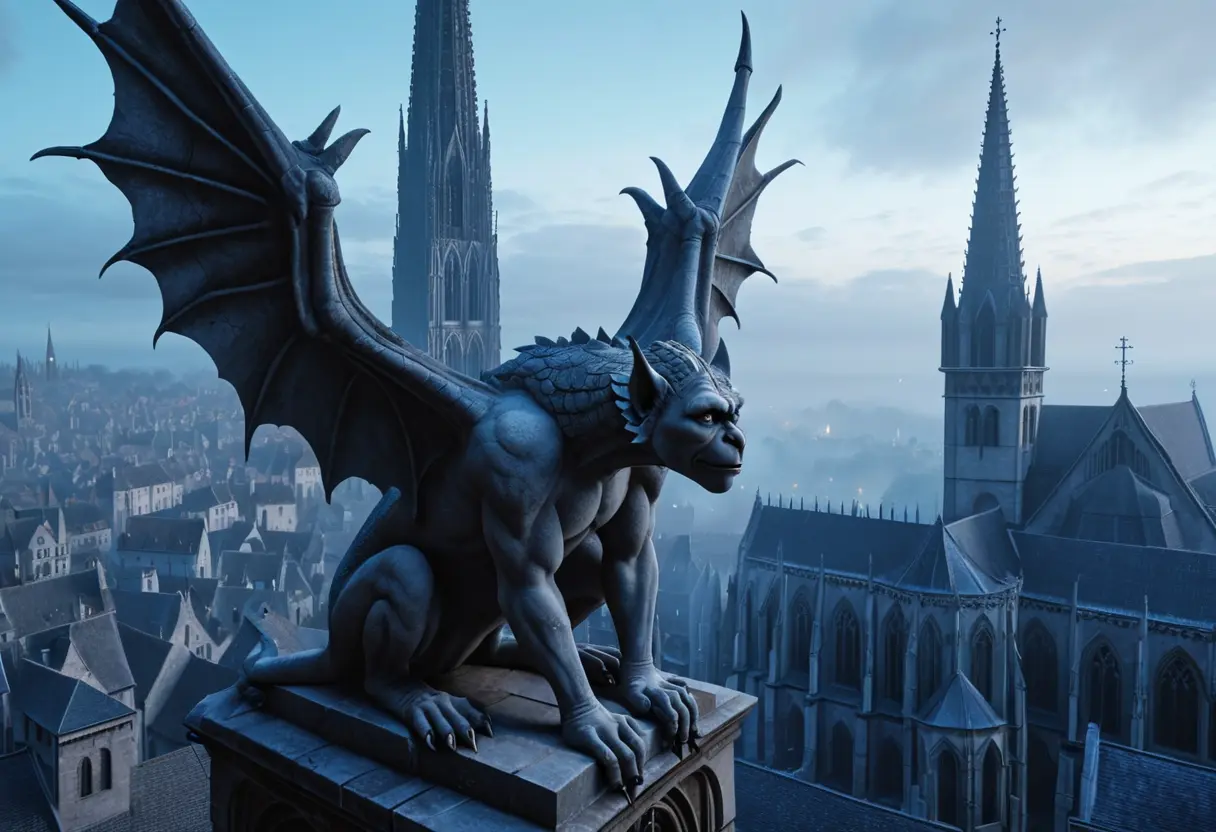
1. Gargoyles: From Rainspouts (Ducts) to “Moving Guardians”
The origin of the Gargoyle lay in an extremely practical architectural innovation. *Function as a Rainspout : Originally, gargoyles were “rainspouts” on Gothic cathedrals used to direct rainwater away from the walls. The name itself comes from the Old French gargouille, meaning “throat,” because water was vomited through their mouths. *Fighting Evil with Evil : Why the hideous monster form? It was based on the “Apotropaic” belief of showing “even more hideous forms” to ward off evil spirits and protect sacred places. *Leap into the Fantastic : In 19th-century literature and modern RPGs, they were redefined as “monsters that wake and move from their stone bonds only at night.” This was the moment when part of the architecture (hardware) attained an autonomous will (software).
2. Frankenstein: The “Sacrilege of Life” Stitched Together
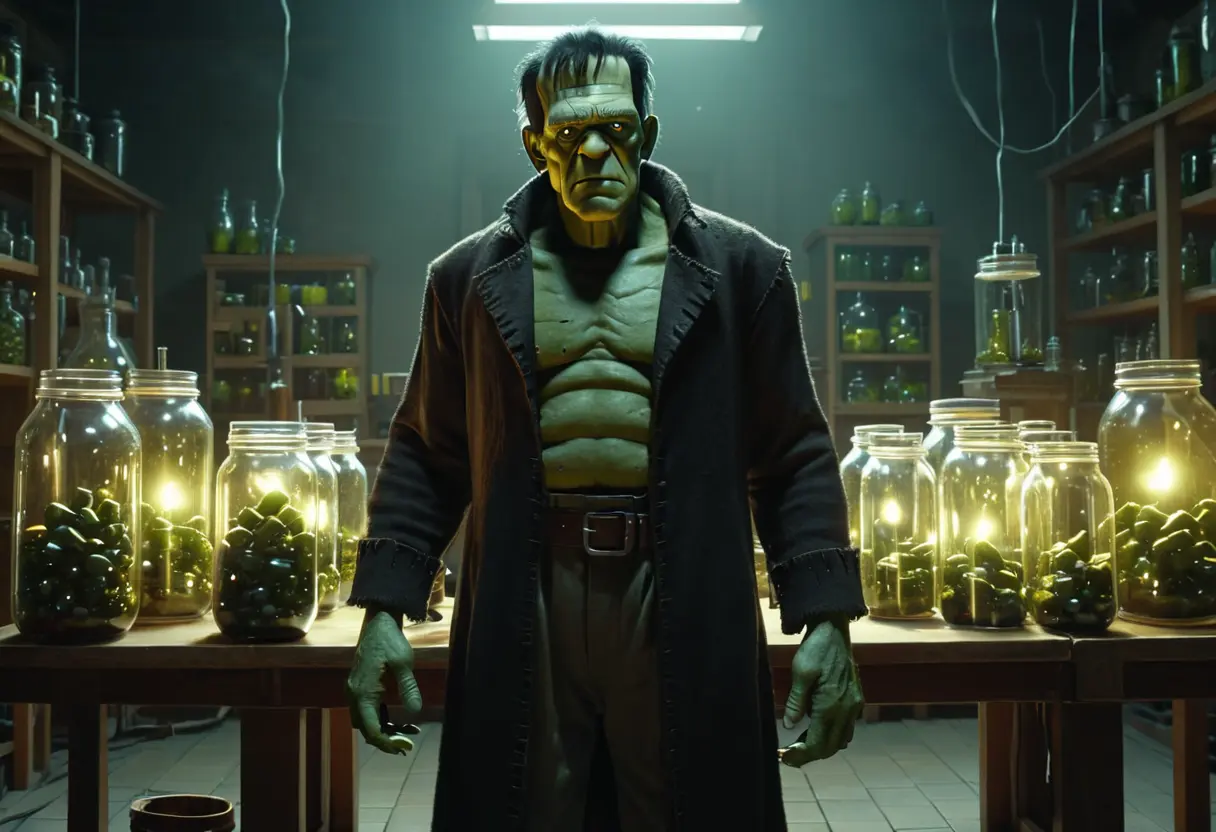
In 1818, Mary Shelley depicted a creature that became a symbol of the human tragedy of attempting “Life Creation,” an act reserved for God. *The Nameless Monster : It is a common misconception, but “Frankenstein” is the name of the “doctor creator”; the creature itself has no name. This symbolizes the loneliness of one who was never granted a “place” (the right to be named) by society or God. *The Scientific Golem : Brought to life not by magic but by “Electricity (Galvanism),” he is a precursor to modern SF. Despite his high intelligence, his body—stitched from parts of corpses—could not find compatibility (empathy) with human society. *The Counterattack of the Abandoned Product : Because the doctor abandoned his responsibility (education and love) for his creation, the monster turned into an avenging demon. This story remains a contemporary warning, questioning ethical responsibility toward the technologies we create.
3. Commonality: Compassion for the Created “Other”
Both the Gargoyle and Frankenstein’s monster share the point of being “made by human hands yet alienated from humanity.” *Stasis and Pulse : The gargoyle, who endures as stone in the same place forever, and the monster, who wanders unable to bear the weight of his stitched life. Their figures use the context of their respective eras (architecture and science) to express the anxiety of us human beings, “cast into this world” as incomplete existences.
4. Cultural Context: Why We Seek Life in “Objects”
We are obsessed with “created life” because it is a reflection of ourselves.
The desire to animate the inorganic (Gargoyles) and the fear of the biological boundary (Frankenstein) both stem from the same root: “The desire to touch the forbidden spark of life.” As long as we build cities and pursue science, these created “Others” will continue to gaze back at us from the rooftops and the shadows.
▲ Back to Fantasy Dictionary Top