Dungeons & Dragons (D&D): The 'First Grammar' That Defined Adventure
If we trace the origins of every RPG we play today—Dragon Quest, Final Fantasy, or Elden Ring—we will invariably arrive at a small box born in America in 1974: ‘Dungeons & Dragons’ (D&D) .
This was more than just a game release; it was a singularity in entertainment history where humanity obtained a “Common Language (Protocol) for Sharing Stories.”
1. Departure from Wargames: From Legion to “Single Hero”
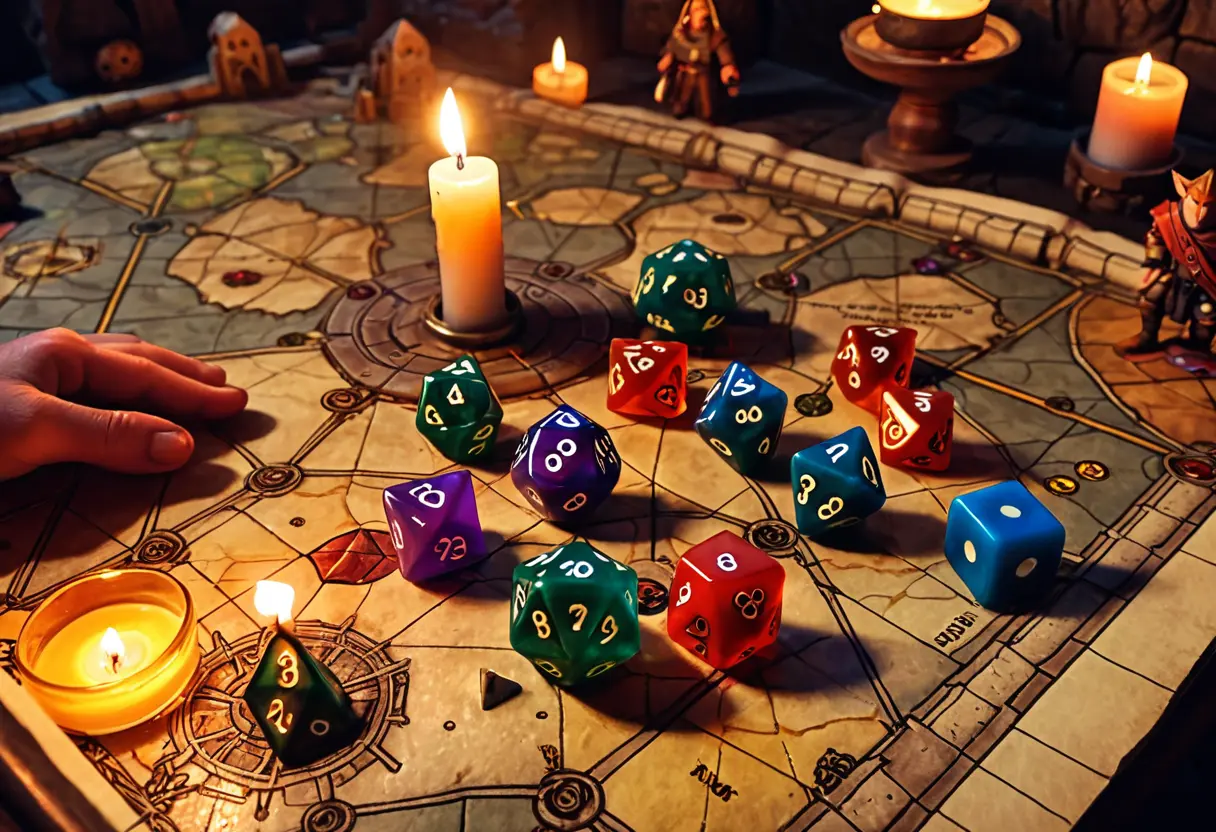
Before D&D, simulation games meant “Wargames” where one moved hundreds of soldiers. *The Discovery of the Role : Gary Gygax and Dave Arneson devised a way to focus on a single soldier or hero within the legion, following their individual personality and growth. This was the sprout of the concept of “Role-playing.” *Quantified Personality : Systematizing a character’s traits with “Ability Scores” like STR (Strength) and INT (Intelligence), and determining results with a 20-sided die (d20). This brought strict reality and fairness to what had previously been subjective “make-believe.”
2. Merging Two Origins: Fusion of Tolkien and Howard
The world of D&D miraculously merges the spirits of the High Fantasy master Tolkien and the Sword & Sorcery founder Howard. *Systematized Magic and Monsters : It adopted Tolkien’s racial settings like Elves and Dwarves as “Player Characters,” while incorporating the wild adventure and game-changing magic of Howard’s Conan into the rules. *Introduction of “Alignment” : It defined axes of Law vs. Chaos and Good vs. Evil as character guides. This showed that not just strength but “how that person lives”—their morality—could become a game parameter.
3. Genes into Digital: As the “OS” of RPGs
As computer performance increased after the 1980s, the rules of D&D were ported directly to digital format. **** WizardryandUltima : D&D’s classes, levels, and monster bestiaries were inherited by these early CRPGs. The tropes we take for granted in RPGs—“saving experience points to level up” or “treasure chests at the end of a dungeon”—are the adventure templates established by D&D. Shared Imagination **: D&D enabled people in different places to share the same image of words like “Dragon” or “Fireball.” One could say modern fantasy culture itself is an application running on the vast “OS” that is D&D.
4. Cultural Context: Why We Return to the “Table” Now
In modern times with extremely evolved digital technology, D&D (TRPGs)—where you roll dice and advance the story through conversation—are being re-evaluated.
Perhaps it’s because no matter how beautiful graphics become, they cannot defeat the experience of the “Live Sensation” of the infinite canvas of human imagination and sharing moments of miracle or failure with companions. D&D is the modern version of the “Myths Passed Down by the Fireside” that we almost forgot during the process of civilization.
—** ▲ Back to Fantasy Dictionary Top **