Arthurian Legend: The Sacred Scar That Forged the 'Main Road' of Fantasy
The Arthurian Legend is the most perfect systematization of the core elements of fantasy: “The King and his Knights,” “The Holy Sword,” and “The Wizard Mentor.”
While his historical existence remains a subject of debate, the “Anguish of the Chosen One” and the “Collapse of a Noble Ideal” depicted in this legend serve as the eternal prototype to which all modern RPGs and fantasy works must return.
1. Selection and Succession: The “Destiny” of Two Swords
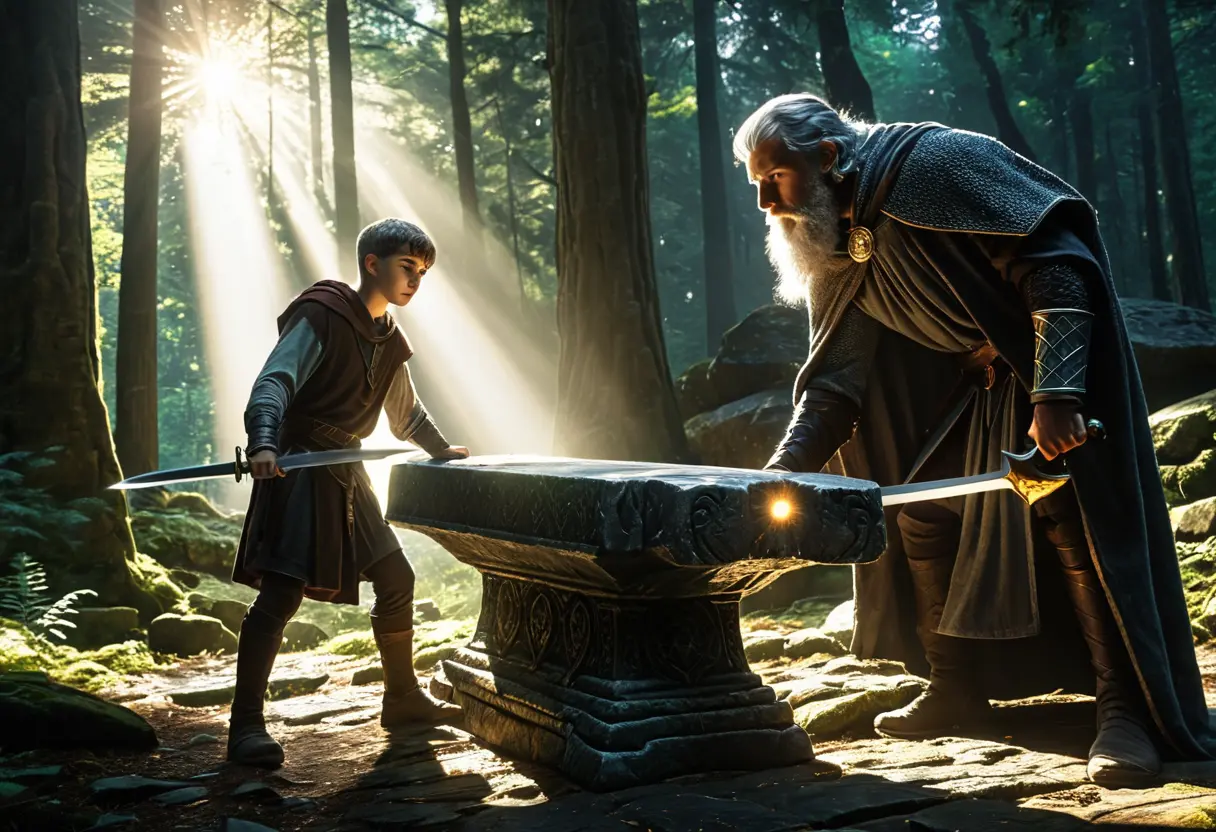
The story of King Arthur features two swords that are often confused but carry distinct and critical meanings. *The Sword in the Stone (Sword of Selection) : The sword Arthur pulled from an anvil to prove his true kingship despite his seemingly lowly origin. This symbolizes “Selection by Fate” and the “Legitimacy of Sovereign Power,” defining the modern concept of the “Hero” (the chosen one). *Excalibur (The Sword of the Lake) : The true holy sword granted by the Lady of the Lake under Merlin’s guidance after the stone sword shattered. possessing magical properties such as protecting its bearer from death so long as they hold the scabbard, it became the ultimate symbol of the “Greatest Weapon” in fantasy.
2. The Philosophy of the Round Table: Equal Bonds and “Chivalry”
The “Round Table” Arthur established in his capital, Camelot, is the spiritual backbone of the “Party” (companions) in fantasy. *Bonds of Equality : A circular table with no head or foot signifies that the King and his knights are “Comrades sharing an ideal,” transcending simple hierarchy. The title “Knights of the Round Table” has become synonymous with elite groups and ultimate combat units in modern media. *The Chivalric Code : Aiding the weak, honoring women, and fighting for honor. These medieval moral values defined the standard of “Justice” in fantasy worlds.
3. The Grail Quest and the Aesthetics of Ruin: The Limits of Utopia
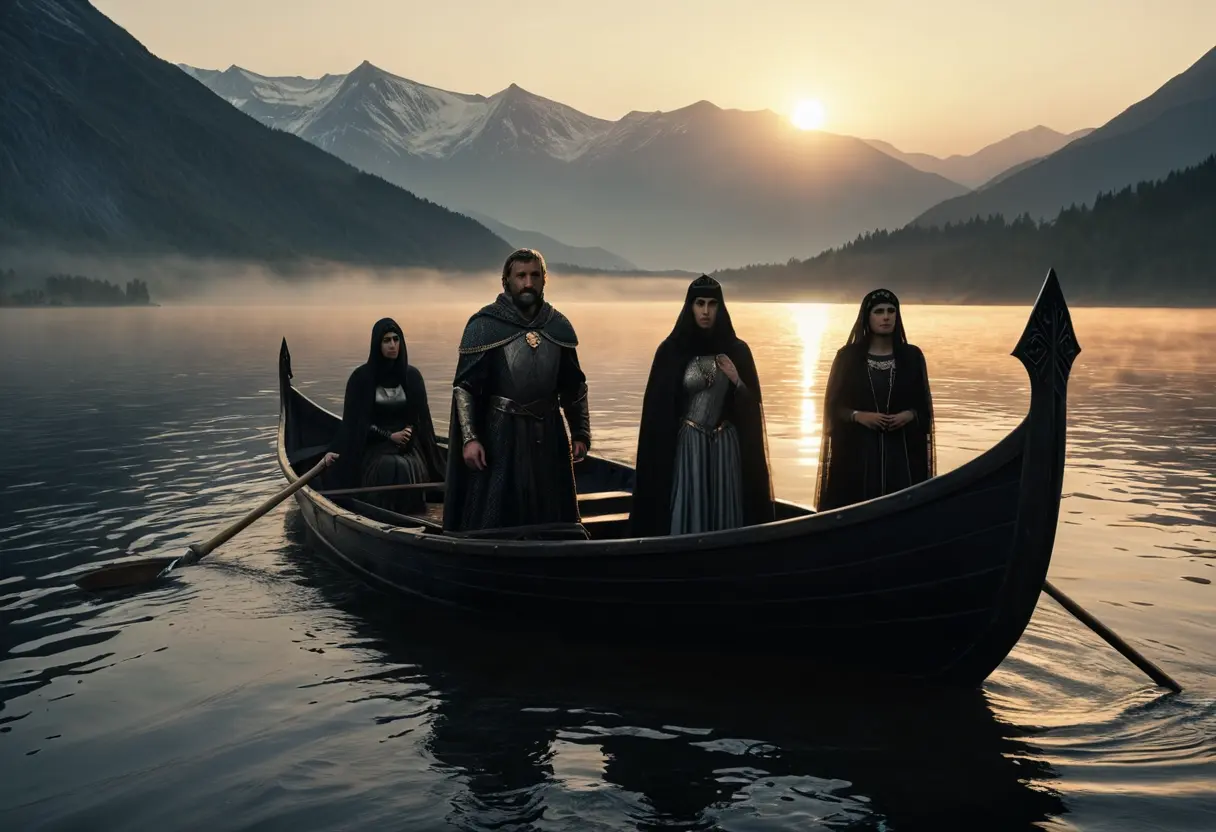
Arthurian Legend goes beyond mere heroics because it is etched with deep “Tragedy” and “Loss.” *Thirst for the Holy Grail : In pursuit of ultimate purification, the knights disperse and the kingdom is exhausted. Here lies the theme of collapse caused by pursuing an ideal too fervently. *The Battle of Camlann and Departure for Avalon : Adultery, betrayal, and the killing of kin. Fatally wounded, King Arthur returns his sword to the lake and departs for the legendary isle of Avalon. He is believed to be the " Once and Future King ," who will one day return to save the world.
4. Cultural Context: Why “Arthur” is Immortal
The icon of King Arthur never loses its luster because he is an “Ideal Leader with Human Weakness.”
He holds up the most noble ideal (Camelot) only to have it crumble due to broken human relationships and personal emotions. It is this imperfect beauty that resonates deeply with our hearts today. To tell the tale of Arthur is to speak of our nostalgia for a “Lost Golden Age,” which aligns perfectly with the fundamental emotions of fantasy itself.
▲ Back to Fantasy Dictionary Top